Distribution and solicitation policy (Indiana): Free template
Got contracts to review? While you're here for policies, let Cobrief make contract review effortless—start your free review now.
Customize this template for free
Distribution and solicitation policy (Indiana): Free template
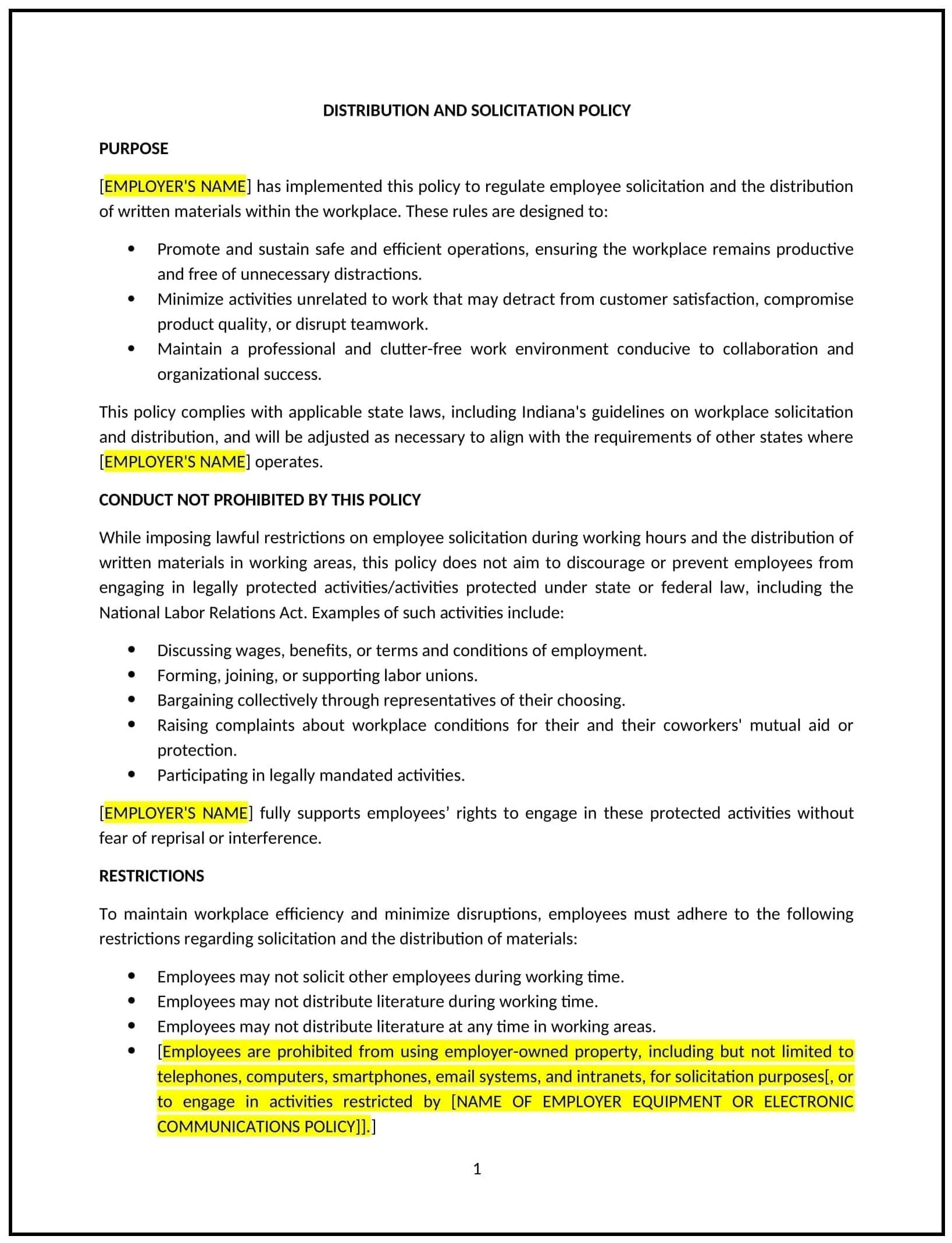
The distribution and solicitation policy helps Indiana businesses regulate the distribution of promotional materials, the solicitation of employees, customers, or visitors, and other activities related to marketing, fundraising, or business operations. This policy outlines the processes and expectations for any external parties or employees involved in solicitation or distribution activities, ensuring that such actions do not disrupt business operations or violate company guidelines. By using this template, businesses can create a controlled and fair environment for marketing and outreach while protecting their brand and reputation.
By implementing this policy, Indiana businesses can ensure that distribution and solicitation activities align with their goals, respect employee privacy, and avoid unnecessary disruption in the workplace or business premises.
How to use this distribution and solicitation policy (Indiana)
- Define solicitation and distribution: Clearly outline what constitutes solicitation and distribution under the policy. This may include fundraising activities, the distribution of flyers, pamphlets, and advertisements, or the solicitation of donations or signatures.
- Establish rules for employees: Specify what employees are allowed and not allowed to do regarding solicitation and distribution on company premises. For example, employees may be prohibited from soliciting for non-work-related causes during work hours or in specific areas of the office.
- Set rules for external parties: Define the guidelines for external parties or vendors who wish to distribute materials or solicit business from employees, customers, or visitors. This may include requiring approval before solicitation can occur and specifying designated areas where such activities are permitted.
- Identify acceptable methods and locations: Provide guidance on the acceptable locations within the business premises for distribution or solicitation activities, such as common areas or designated tables. The policy should also include any prohibited locations, such as near entrances or in sensitive areas like workstations.
- Address approval and permission processes: Specify how employees or external parties can request permission to distribute materials or engage in solicitation activities. This may involve submitting a formal request to HR or management and receiving approval before proceeding.
- Specify time limitations: Establish time frames during which solicitation and distribution activities are permitted, such as after business hours, during lunch breaks, or on specific days. The policy should aim to minimize disruption during business hours.
- Protect privacy and confidentiality: Ensure that solicitation and distribution activities do not violate the privacy of employees, customers, or visitors. The policy should specify that personal data should not be collected without consent and that individuals’ privacy rights must be respected.
- Define consequences for policy violations: Outline the consequences for employees or external parties who fail to comply with the policy, such as revocation of solicitation privileges or disciplinary actions for employees who breach the guidelines.
Benefits of using this distribution and solicitation policy (Indiana)
Implementing this policy provides several key benefits for Indiana businesses:
- Maintains a focused and productive work environment: The policy ensures that solicitation and distribution activities do not disrupt day-to-day operations, allowing employees to focus on their work without unnecessary interruptions.
- Protects employee privacy: By setting clear boundaries around solicitation, businesses can protect employee privacy and ensure that personal information is not shared or exploited without consent.
- Promotes fairness: The policy provides a fair framework for both employees and external parties to engage in solicitation and distribution activities, ensuring equal opportunities for all while preventing favoritism or unwanted disruptions.
- Reduces legal risks: By adhering to the policy, businesses can avoid potential legal issues, such as claims of harassment, discrimination, or violations of employee rights related to solicitation and distribution activities.
- Enhances company reputation: A well-established policy shows that the business is thoughtful and proactive about managing external interactions, which can enhance its reputation with employees, customers, and the public.
- Streamlines operations: By defining clear rules and approval processes for distribution and solicitation activities, businesses can streamline operations and prevent confusion or miscommunication.
Tips for using this distribution and solicitation policy (Indiana)
- Communicate the policy clearly: Ensure that all employees and relevant third parties are aware of the distribution and solicitation policy. This should be communicated through employee handbooks, posted notices in common areas, and during onboarding or training sessions.
- Enforce the policy consistently: Apply the policy consistently to all employees and external parties to avoid confusion or allegations of favoritism. Ensure that requests for solicitation and distribution are evaluated based on the same criteria for all parties.
- Track approved activities: Keep records of all approved solicitation and distribution activities, including who requested permission, what was distributed, and when. This helps ensure transparency and avoid conflicts.
- Monitor activity to avoid disruption: Regularly monitor areas where solicitation and distribution are permitted to ensure that the activities are conducted professionally and in accordance with the policy. Address any concerns promptly to prevent disruption.
- Review and update the policy regularly: Periodically review the policy to ensure it reflects current legal requirements, business needs, and best practices. Updates may be needed to account for changes in the law or changes in business operations.