Distribution and solicitation policy (Minnesota): Free template
Got contracts to review? While you're here for policies, let Cobrief make contract review effortless—start your free review now.
Customize this template for free
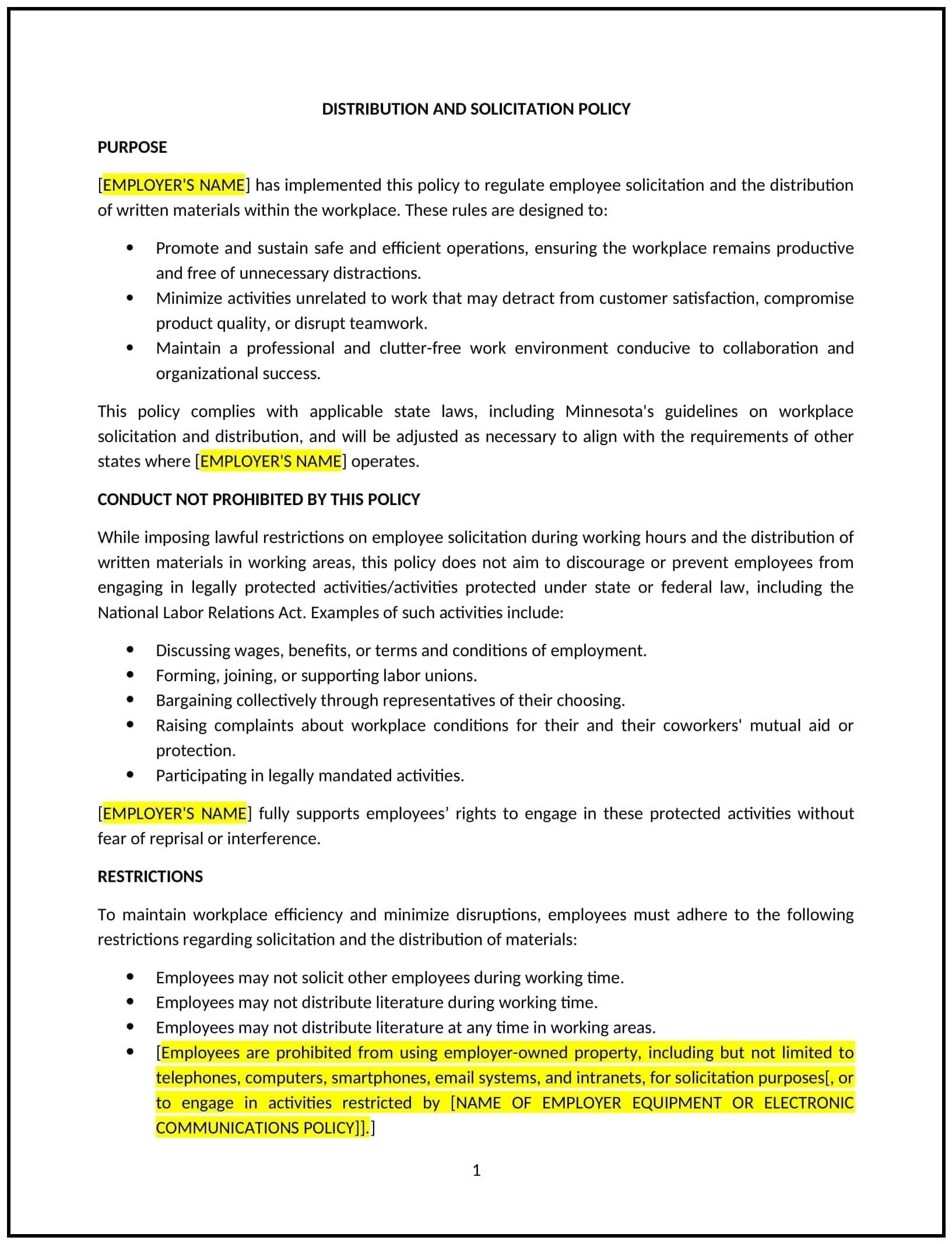
Distribution and solicitation policy (Minnesota)
This distribution and solicitation policy is designed to help Minnesota businesses manage and regulate the distribution of materials and solicitation activities within the workplace or on company property. It outlines guidelines for employees, contractors, and external parties on what types of distribution or solicitation are permitted, ensuring that these activities do not interfere with work or disrupt the workplace environment.
By implementing this policy, businesses can maintain a productive, respectful work environment while controlling outside influences and ensuring fairness in communication practices.
How to use this distribution and solicitation policy (Minnesota)
- Define permissible activities: Specify which types of solicitation and distribution are allowed (e.g., charitable donations, union representation, or internal employee communications) and which are prohibited (e.g., personal sales, non-company-related advertising).
- Establish approval procedures: Outline the process for obtaining approval to solicit or distribute materials within company premises, including submitting requests to management or HR.
- Set times and locations: Determine when and where solicitation or distribution can take place (e.g., during designated breaks or in specific areas like lunchrooms or common areas) to minimize disruptions to work.
- Address employee participation: Clarify that while employees can engage in certain solicitation activities, they must do so in a manner that respects colleagues’ time and space.
- Outline prohibited behaviors: Specify actions that will not be tolerated, such as aggressive solicitation, harassment, or disruptive behavior.
- Address third-party solicitation: Establish guidelines for how third-party vendors, charities, or other external parties can approach employees, including any necessary approval or scheduling.
Benefits of using a distribution and solicitation policy (Minnesota)
Implementing this policy provides several advantages for Minnesota businesses:
- Maintains a professional environment: Ensures that work-related activities are not disrupted by inappropriate solicitation or distribution of materials.
- Promotes fairness: Establishes a clear process for allowing solicitation and distribution in a manner that respects employees' rights and privacy.
- Reduces workplace conflicts: By setting boundaries and expectations, the policy minimizes potential conflicts between employees or between employees and external solicitors.
- Enhances productivity: Prevents disruptive behavior and unnecessary distractions, allowing employees to remain focused on their tasks.
- Reflects Minnesota-specific considerations: Tailors the policy to comply with local laws and community expectations regarding solicitation and distribution activities.
Tips for using this distribution and solicitation policy (Minnesota)
- Communicate clearly: Ensure that all employees are aware of the policy, especially the guidelines for engaging in solicitation and distributing materials on company property.
- Provide training: Offer periodic training or reminders on what constitutes acceptable solicitation and distribution practices within the workplace.
- Monitor adherence: Regularly monitor solicitation and distribution activities to ensure compliance with the policy and address any concerns promptly.
- Create a process for exceptions: Allow for flexibility where appropriate, such as allowing exceptions for charity drives or employee-related initiatives that align with company values.
- Update regularly: Periodically review the policy to ensure it is up to date with any legal changes or evolving company practices in Minnesota.