Distribution and solicitation policy (Nevada): Free template
Got contracts to review? While you're here for policies, let Cobrief make contract review effortless—start your free review now.
Customize this template for free
Distribution and solicitation policy (Nevada)
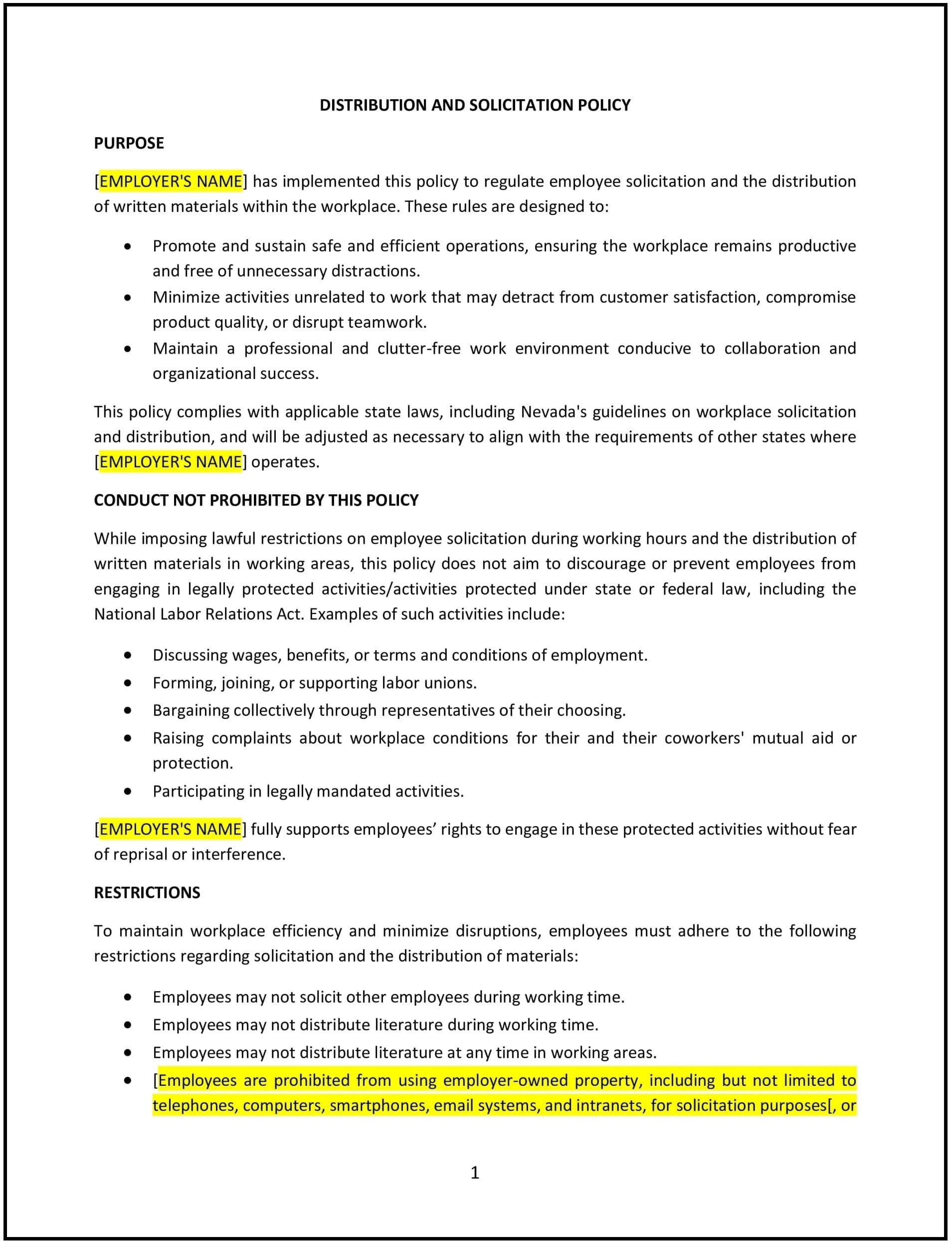
This distribution and solicitation policy is designed to help Nevada businesses regulate the distribution of materials and solicitation activities within the workplace or on company property. It outlines the rules and guidelines for employees, contractors, and external parties who wish to distribute materials, solicit donations, or promote services or products while maintaining a professional and orderly work environment.
By adopting this policy, businesses can protect their operations from disruptions, safeguard employee time and focus, and ensure that solicitation and distribution activities are appropriate, non-discriminatory, and aligned with the company's values.
How to use this distribution and solicitation policy (Nevada)
- Define solicitation and distribution: Clearly define what constitutes solicitation and distribution within the context of the workplace, such as selling goods, promoting services, distributing flyers, or collecting donations.
- Set guidelines for internal solicitation: Specify if and when employees are allowed to solicit within the workplace (e.g., during lunch breaks, in designated areas). Include any restrictions on the type of solicitation, such as sales pitches, political campaigning, or charity fundraising.
- Address external solicitation: Outline the rules for outside vendors, sales representatives, or other third parties who wish to solicit or distribute materials on company property. Specify areas where they are allowed to operate and any necessary permissions they must obtain.
- Establish designated areas for solicitation: Identify any areas on company premises where solicitation or distribution is permitted, such as common areas or employee break rooms, and outline any specific times during which these activities may take place.
- Prohibit disruptive activities: Clearly state that solicitation or distribution should not disrupt work activities or interfere with employees' ability to perform their job duties. This includes restrictions on noise, solicitation during meetings, or aggressive tactics.
- Set approval processes: Specify the process for obtaining approval to distribute materials or solicit on company property. This may include submitting requests in writing or through designated channels (e.g., HR, office manager).
- Clarify prohibited activities: Outline any specific types of solicitation or distribution that are prohibited, such as the promotion of illegal activities, offensive content, or activities that discriminate against employees or other individuals.
- Address non-retaliation: Ensure that employees who choose not to participate in solicitation or distribution activities are not subject to retaliation, pressure, or harassment.
Benefits of using this distribution and solicitation policy (Nevada)
This policy provides several key benefits for Nevada businesses:
- Protects employee focus: Helps prevent disruptions to the work environment by regulating solicitation and distribution activities, allowing employees to focus on their tasks.
- Promotes fairness: Ensures that all employees are treated fairly when it comes to solicitation and distribution, preventing any one group or individual from being unfairly targeted or excluded.
- Reduces workplace conflicts: By setting clear rules for solicitation and distribution, the policy helps avoid conflicts or tensions among employees, ensuring that personal, political, or religious views do not create division.
- Safeguards the company’s reputation: Helps maintain a professional and respectful environment by regulating the types of materials and messages that can be distributed or solicited on company property.
- Supports legal compliance: By adhering to state and federal regulations related to solicitation and distribution, businesses can minimize legal risks associated with employee rights, free speech, or public policy issues.
Tips for using this distribution and solicitation policy (Nevada)
- Communicate the policy clearly: Ensure all employees understand the policy and its guidelines, including any restrictions on solicitation or distribution. This may be part of the employee handbook or company training.
- Establish a process for approval: Make it clear how employees and external parties can obtain permission to engage in solicitation or distribution activities, including specific forms or channels to submit requests.
- Monitor compliance: Regularly monitor solicitation and distribution activities to ensure compliance with the policy, addressing any violations promptly to avoid workplace disruptions.
- Respect employee privacy: Ensure that any solicitation or distribution activities respect employees’ privacy and are voluntary in nature, especially when it comes to sensitive topics or causes.
- Regularly review the policy: Review the policy periodically to ensure that it remains up to date with changes in workplace dynamics, state laws, or company practices.