Diversity, equity, and inclusion (DEI) policy (Massachusetts): Free template
Got contracts to review? While you're here for policies, let Cobrief make contract review effortless—start your free review now.
Customize this template for free
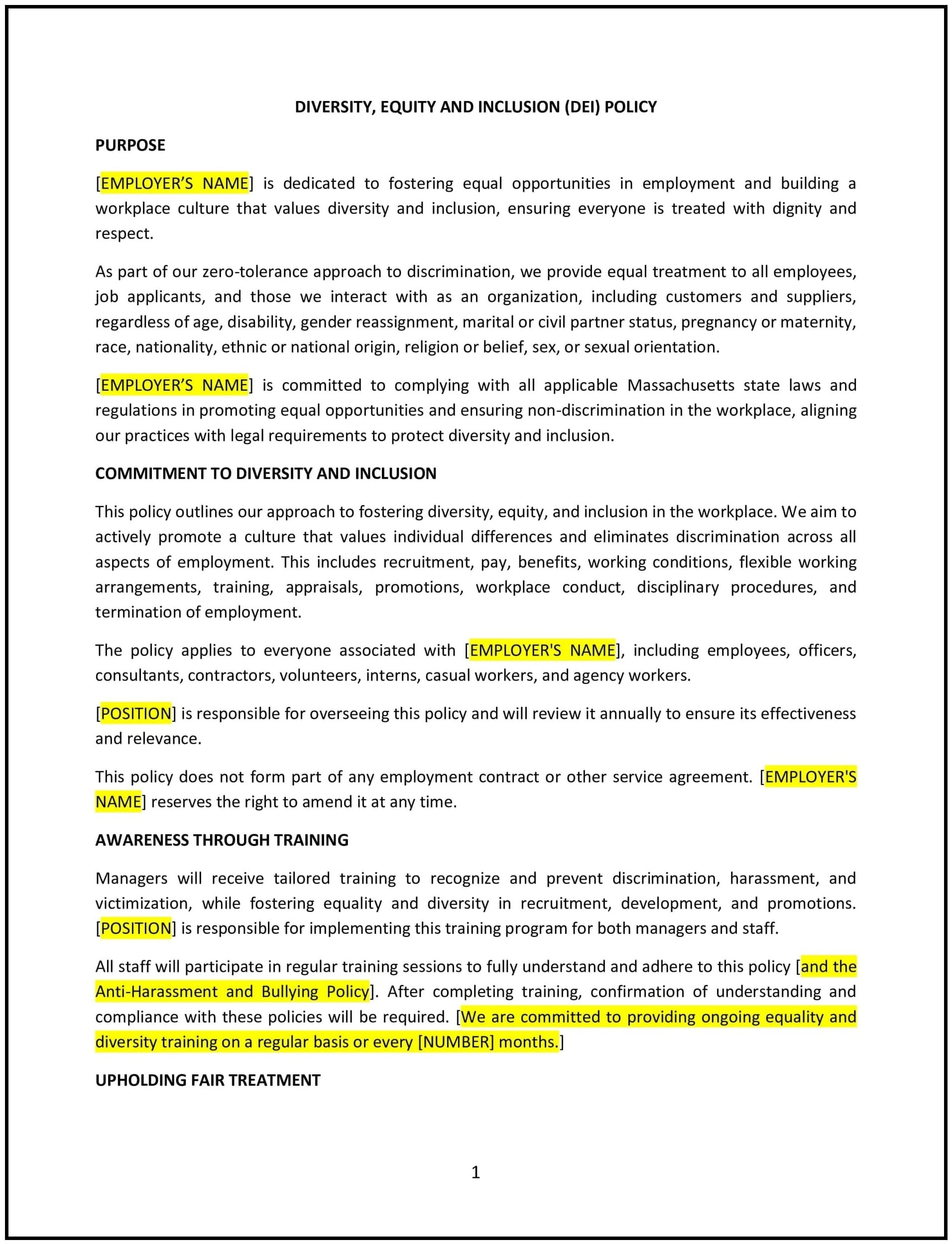
This diversity, equity, and inclusion (DEI) policy is designed to help Massachusetts businesses foster a workplace environment that is diverse, equitable, and inclusive. The policy outlines the company’s commitment to ensuring that all employees, regardless of their race, gender, ethnicity, sexual orientation, disability status, or any other characteristic, are treated fairly and with respect. It sets the framework for promoting diversity in recruitment, training, promotions, and everyday operations, with the goal of creating an environment where everyone feels valued and included.
By adopting this policy, businesses can enhance their workplace culture, improve employee satisfaction, and improve compliance with Massachusetts and federal laws related to workplace discrimination.
How to use this diversity, equity, and inclusion (DEI) policy (Massachusetts)
- Define DEI objectives: Clearly define the company’s goals for diversity, equity, and inclusion. This may include increasing representation of underrepresented groups, creating fair opportunities for all employees, and fostering an inclusive work culture.
- Outline recruitment practices: Specify how the company will promote diversity in hiring, including strategies to ensure diverse candidate pools, such as outreach to diverse communities, partnerships with organizations that support underrepresented groups, and using unbiased recruitment practices.
- Set expectations for inclusive behavior: Establish expectations for inclusive behavior in the workplace, such as treating all employees with respect, avoiding discrimination and bias, and actively promoting an inclusive environment where everyone feels welcome.
- Implement DEI training: Provide regular DEI training for employees at all levels, focusing on topics such as unconscious bias, inclusive communication, and cultural competency. The policy should specify how often training will take place and how employees will be engaged in DEI initiatives.
- Address pay equity: Outline how the company will ensure pay equity for all employees, regardless of gender, race, or other factors. The policy may include measures to evaluate and address any pay gaps within the organization and ensure equal compensation for equal work.
- Promote career development and advancement: Specify how the company will provide equitable opportunities for career growth and advancement for all employees, including mentorship programs, leadership development opportunities, and a clear path to promotion.
- Provide accommodations for diverse needs: Address how the company will accommodate employees with diverse needs, including those with disabilities, religious practices, or other personal considerations that may require adjustments to work schedules, environments, or duties.
- Create accountability measures: Outline how the company will track and measure progress towards DEI goals, including collecting and analyzing diversity data, setting measurable objectives, and holding leadership accountable for DEI outcomes.
- Ensure compliance with Massachusetts and federal laws: Ensure the policy complies with Massachusetts state laws and federal regulations related to workplace discrimination, such as the Massachusetts Anti-Discrimination Law and the Civil Rights Act of 1964.
Benefits of using this diversity, equity, and inclusion (DEI) policy (Massachusetts)
This policy offers several benefits for Massachusetts businesses:
- Fosters an inclusive workplace culture: By promoting diversity and inclusion, the policy helps create a work environment where all employees feel respected, valued, and able to contribute to their fullest potential.
- Attracts and retains top talent: A strong DEI policy helps businesses attract diverse candidates, enhancing their ability to recruit top talent from a broad pool of qualified candidates. Employees are also more likely to stay with a company that values and supports their diverse backgrounds and needs.
- Improves employee satisfaction and engagement: When employees feel that their voices are heard and that they are treated equitably, they are more likely to be satisfied with their work environment and engaged in their roles.
- Promotes innovation and creativity: A diverse and inclusive workplace encourages the exchange of different perspectives and ideas, which can lead to greater innovation, problem-solving, and creativity.
- Strengthens the company’s reputation: A business that is committed to diversity, equity, and inclusion is often viewed more positively by customers, clients, and the public, which can enhance its reputation and brand image.
- Reduces legal risks: By adhering to DEI principles and complying with Massachusetts state laws and federal regulations, businesses can reduce the risk of legal claims related to discrimination, harassment, or inequality in the workplace.
- Increases productivity and performance: Inclusive workplaces tend to have higher levels of employee morale and productivity. When employees feel that they are treated fairly and have equal opportunities for growth, they are more likely to perform at their best.
Tips for using this diversity, equity, and inclusion (DEI) policy (Massachusetts)
- Communicate the policy clearly: Ensure that all employees understand the company’s commitment to diversity, equity, and inclusion by communicating the policy through employee handbooks, orientation sessions, and regular internal communications.
- Offer training and development programs: Provide ongoing DEI training and development opportunities to ensure employees are well-equipped to contribute to a diverse and inclusive workplace.
- Monitor and track progress: Regularly track the company’s progress toward its DEI goals, collecting and analyzing diversity data, and setting measurable objectives to improve diversity and inclusion within the workforce.
- Provide support for underrepresented groups: Offer mentorship programs, networking opportunities, and leadership training to employees from underrepresented groups to help them advance in their careers.
- Address feedback promptly: Encourage employees to provide feedback on the company’s DEI efforts and address any concerns or suggestions for improvement in a timely manner.
- Review and update regularly: Periodically review and update the DEI policy to ensure it remains relevant, effective, and is compliant with Massachusetts state laws and federal regulations, as well as aligned with the company’s evolving goals and business needs.