Diversity, equity and inclusion policy (DEI) (Colorado): Free template
Got contracts to review? While you're here for policies, let Cobrief make contract review effortless—start your free review now.
Customize this template for free
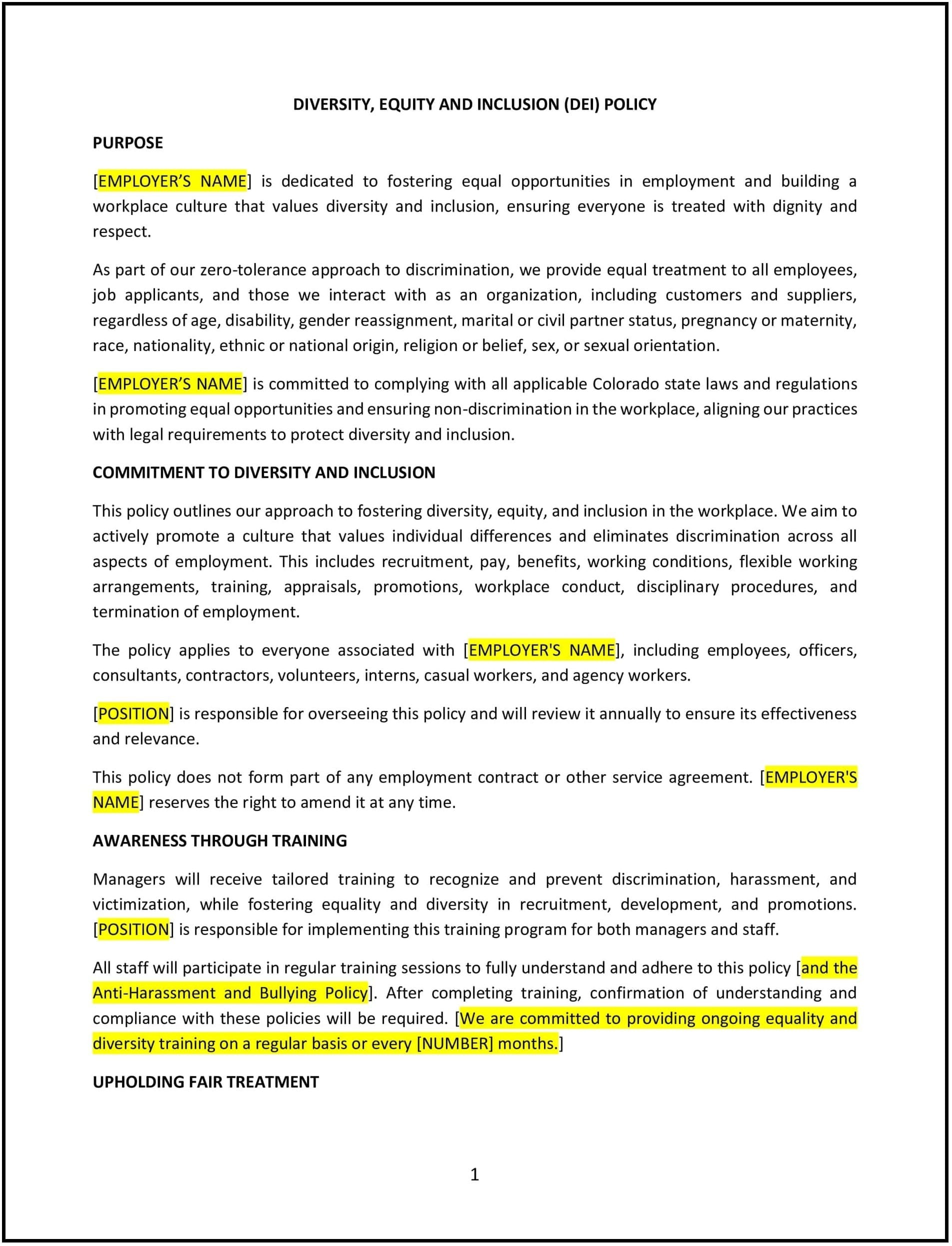
Diversity, equity, and inclusion (DEI) policy (Colorado)
In Colorado, a diversity, equity, and inclusion (DEI) policy provides businesses with guidelines for creating an inclusive and equitable workplace where all employees, regardless of their background, identity, or experience, have equal opportunities to succeed. This policy ensures that the business promotes diversity in hiring, respects individual differences, and fosters an environment where every employee feels valued, respected, and included.
By implementing this policy, Colorado businesses can create a more inclusive company culture, increase employee satisfaction and retention, and comply with state and federal diversity and anti-discrimination laws.
How to use this diversity, equity, and inclusion policy (Colorado)
- Define diversity, equity, and inclusion: Clearly define what diversity, equity, and inclusion mean for your business, focusing on areas such as race, ethnicity, gender, age, sexual orientation, disability, religion, and other personal characteristics.
- Establish DEI goals: Set specific, measurable DEI objectives for the organization, such as increasing diversity in hiring, improving representation at all levels of the business, or providing equal opportunities for career advancement.
- Promote a culture of inclusion: Outline how the business will foster an inclusive environment, including the implementation of employee resource groups, mentorship programs, or diversity training.
- Provide accommodations: Ensure the business makes reasonable accommodations to support employees from diverse backgrounds, including those with disabilities or other needs.
- Address discrimination and bias: Outline procedures for addressing complaints of discrimination, harassment, or bias, ensuring that employees have a safe and confidential way to report such incidents.
- Review and measure progress: Regularly review DEI efforts to assess their impact and make necessary adjustments to meet the organization’s diversity, equity, and inclusion goals.
Benefits of using this diversity, equity, and inclusion policy (Colorado)
This policy offers several advantages for Colorado businesses:
- Supports compliance: Ensures the business complies with Colorado and federal anti-discrimination laws, promoting equal employment opportunities for all employees.
- Enhances employee satisfaction: Fosters a supportive and respectful work environment where employees feel valued and empowered to perform their best work.
- Increases talent retention: Creating an inclusive environment helps retain a diverse workforce by addressing the needs of all employees and ensuring fair treatment.
- Strengthens company reputation: Businesses committed to diversity, equity, and inclusion enhance their reputation in the market, attracting top talent and improving relationships with clients and customers.
- Promotes innovation: A diverse and inclusive workforce can drive innovation by bringing together individuals with different perspectives, ideas, and experiences.
Tips for using this diversity, equity, and inclusion policy (Colorado)
- Reflect Colorado-specific laws: Ensure that the policy complies with Colorado’s laws regarding equal employment opportunities, non-discrimination, and reasonable accommodations.
- Provide DEI training: Offer ongoing training for all employees and leadership to increase awareness of unconscious bias, inclusive practices, and the importance of diversity in the workplace.
- Create accountability: Hold leadership accountable for meeting DEI goals and ensure they are committed to fostering a culture of inclusion through their actions.
- Involve employees: Encourage employee feedback on DEI initiatives and create channels for employees to share ideas on how to improve diversity and inclusion in the workplace.
- Review regularly: Regularly review and update the policy to ensure it remains aligned with evolving state laws, business goals, and employee needs.