Got contracts to review? While you're here for policies, let Cobrief make contract review effortless—start your free review now.
Customize this template for free
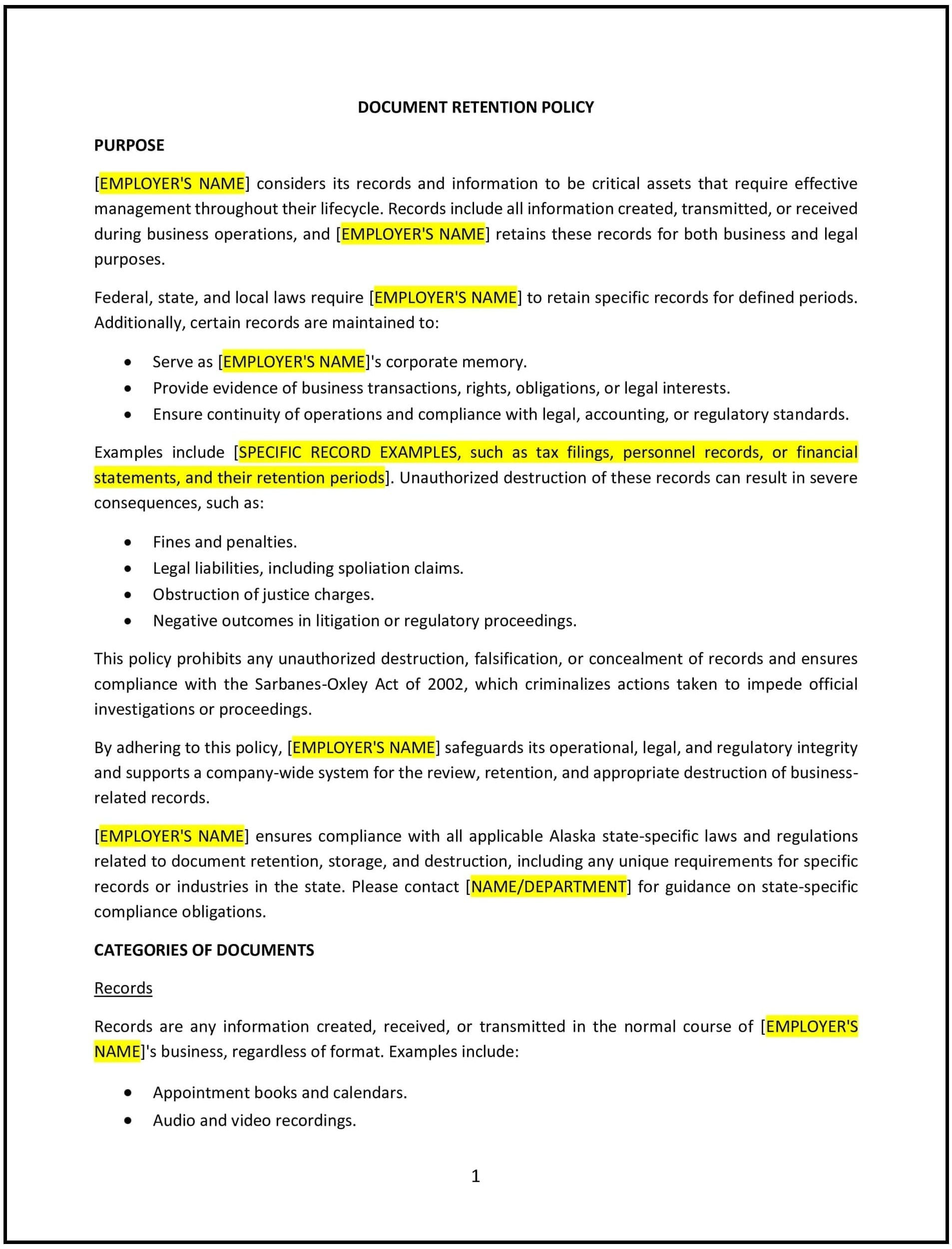
Document retention policy (Alaska)
In Alaska, a document retention policy establishes clear guidelines for managing the storage, accessibility, and disposal of business records. This policy helps businesses maintain compliance with legal requirements, protect sensitive information, and support operational efficiency by ensuring documents are retained or discarded appropriately. By implementing a structured approach, businesses can mitigate risks associated with data breaches or regulatory violations.
Given Alaska’s unique business conditions, such as remote operations and diverse industries, businesses may need to adapt their document retention practices to account for local considerations, including accessibility and environmental impacts.
How to use this document retention policy (Alaska)
- Define retention periods: Specify how long various types of documents must be retained, such as financial records, employee files, or contracts, based on legal requirements and business needs.
- Categorize documents: Organize records into categories (e.g., legal, financial, operational) and assign retention schedules to each category for consistency.
- Outline storage procedures: Provide guidelines for securely storing both physical and digital documents, ensuring accessibility while safeguarding sensitive information.
- Establish disposal methods: Include secure processes for disposing of documents that have surpassed their retention periods, such as shredding paper files or permanently deleting digital records.
- Ensure compliance: Regularly review the policy to ensure alignment with applicable laws and regulations, adapting practices as needed.
Benefits of using a document retention policy (Alaska)
A document retention policy provides numerous benefits for businesses in Alaska. Here’s how it helps:
- Supports compliance: Helps businesses adhere to federal and state regulations regarding record retention, reducing the risk of legal penalties.
- Protects sensitive information: Ensures secure storage and disposal practices to minimize the risk of data breaches or unauthorized access.
- Improves operational efficiency: Streamlines document management, making it easier to locate and access important records when needed.
- Reduces storage costs: Prevents unnecessary storage of outdated documents, optimizing space and resources.
- Enhances preparedness: Ensures key documents are available for audits, legal inquiries, or business planning, improving overall readiness.
Tips for using a document retention policy (Alaska)
- Tailor retention schedules: Customize retention periods to reflect Alaska-specific legal or industry requirements, such as environmental records in resource extraction industries.
- Leverage technology: Use document management systems to automate storage, retention tracking, and secure disposal of digital records.
- Train employees: Educate staff on the importance of document retention and their responsibilities under the policy to ensure consistent adherence.
- Conduct regular audits: Periodically review stored documents to confirm compliance with retention schedules and identify outdated records for disposal.
- Plan for emergencies: Include provisions for backing up critical documents and ensuring access during emergencies or remote operations.