Document retention policy (Arkansas): Free template
Got contracts to review? While you're here for policies, let Cobrief make contract review effortless—start your free review now.
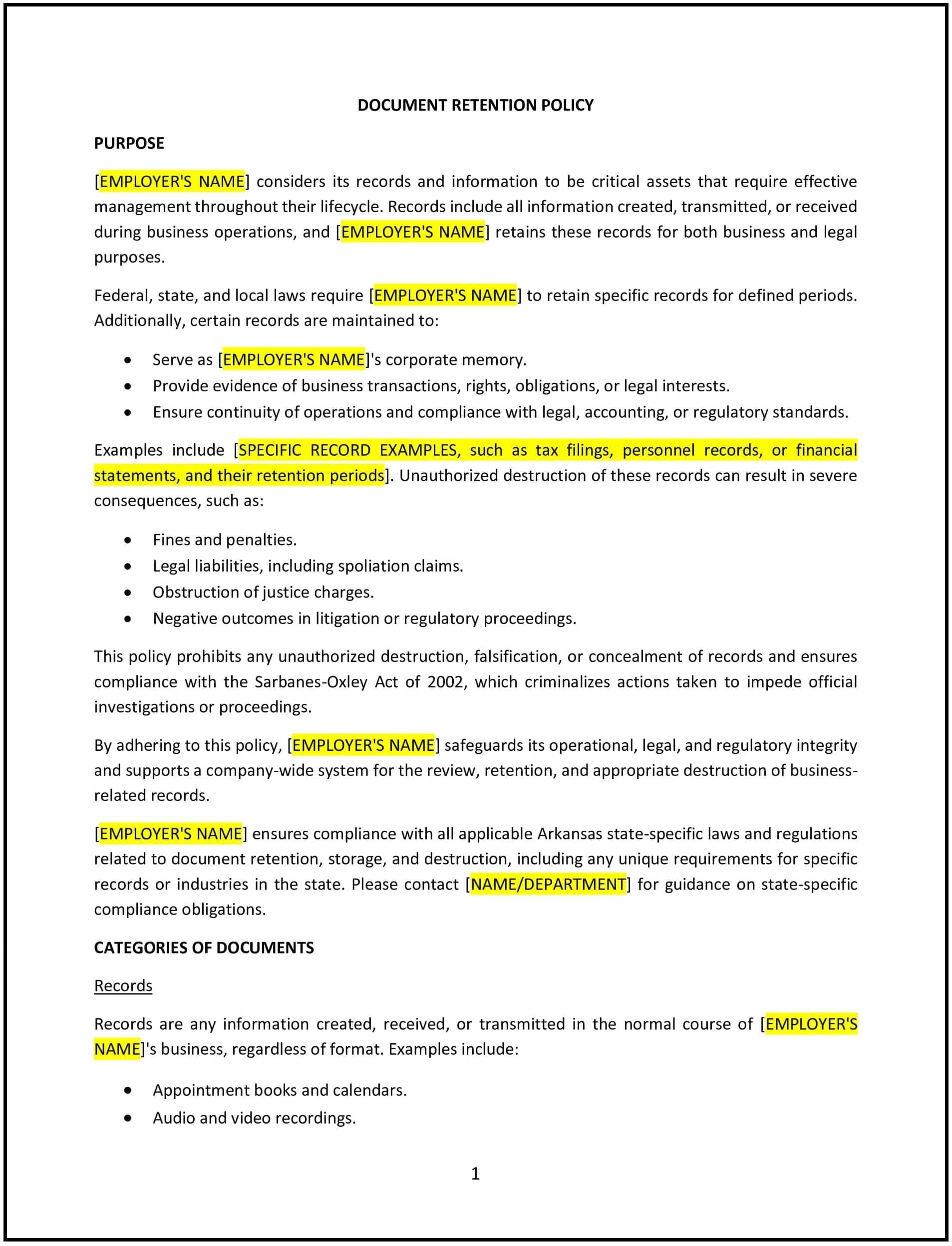
Customize this template for free
Document retention policy (Arkansas)
In Arkansas, a document retention policy provides businesses with guidelines for managing the storage, retention, and disposal of business records. This policy ensures compliance with state and federal regulations while protecting sensitive information and maintaining operational efficiency.
This policy outlines the types of documents covered, retention periods, and procedures for secure storage and disposal. By implementing this policy, Arkansas businesses can reduce legal risks, enhance data management practices, and ensure compliance with applicable laws.
How to use this document retention policy (Arkansas)
- Identify document categories: Specify the types of documents covered under the policy, such as financial records, employee files, contracts, and tax documents.
- Define retention periods: Provide clear timelines for how long different types of documents must be retained, based on Arkansas-specific laws and industry regulations.
- Establish storage protocols: Outline procedures for securely storing physical and electronic documents, ensuring they are easily accessible when needed.
- Implement disposal procedures: Define methods for securely disposing of documents after their retention period, such as shredding or data wiping, to protect sensitive information.
- Assign responsibilities: Designate employees or departments responsible for managing document retention and ensuring adherence to the policy.
Benefits of using this document retention policy (Arkansas)
This policy offers several advantages for Arkansas businesses:
- Ensures legal compliance: Aligns with Arkansas and federal laws regarding document retention, minimizing the risk of penalties or disputes.
- Reduces storage costs: Establishes clear guidelines for document disposal, preventing unnecessary accumulation of records and saving storage costs.
- Protects sensitive information: Ensures secure storage and disposal of documents, reducing the risk of data breaches or unauthorized access.
- Improves efficiency: Streamlines document management processes, making it easier to retrieve records when needed for audits, legal matters, or business operations.
- Demonstrates accountability: Establishes clear responsibilities and procedures, ensuring consistency and transparency in document handling.
Tips for using this document retention policy (Arkansas)
- Address Arkansas-specific considerations: Incorporate state laws governing document retention, such as requirements for tax or employment records.
- Use technology: Leverage document management software to track retention schedules, automate disposal, and ensure secure storage of electronic files.
- Provide training: Educate employees on the importance of document retention and secure handling procedures to ensure compliance with the policy.
- Conduct audits: Regularly review document management practices to ensure adherence to retention schedules and identify areas for improvement.
- Review and update: Periodically update the policy to reflect changes in regulations, business practices, or technology.