Document retention policy (Connecticut): Free template
Got contracts to review? While you're here for policies, let Cobrief make contract review effortless—start your free review now.
Customize this template for free
Document retention policy (Connecticut)
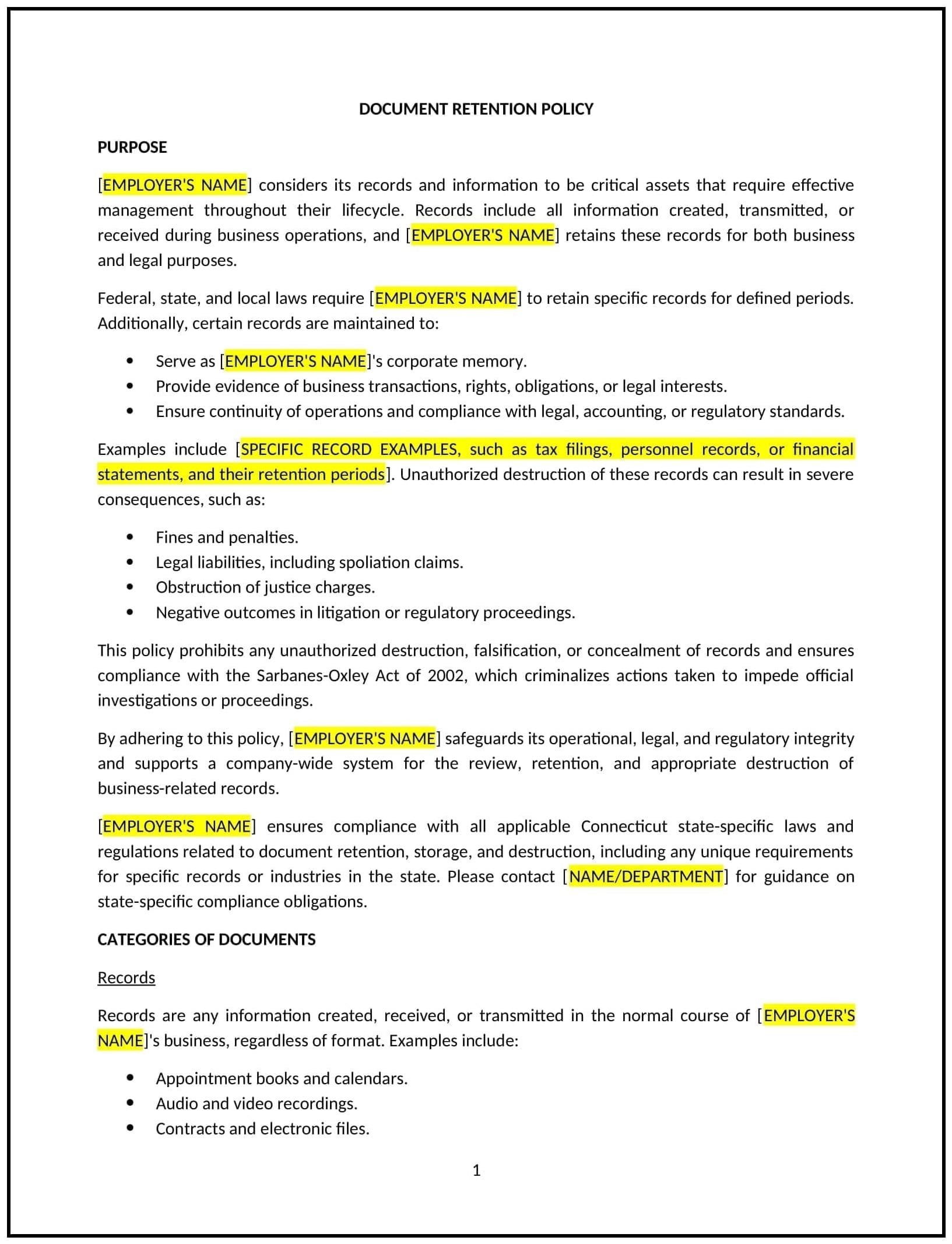
A document retention policy helps Connecticut businesses establish clear guidelines for managing, storing, and disposing of business documents. This policy outlines the types of documents that need to be retained, the duration for which they should be kept, and the proper procedures for destroying outdated or unnecessary documents, ensuring compliance with legal, regulatory, and business requirements.
By implementing this policy, businesses can protect important information, ensure efficient document management, and reduce the risk of non-compliance with data retention laws.
How to use this document retention policy (Connecticut)
- Define document types: Specify which documents need to be retained, such as contracts, financial records, employee files, tax records, and legal documents.
- Set retention periods: Establish clear retention periods for each type of document based on legal, regulatory, and business needs. For example, tax records may need to be kept for seven years, while employment records might need to be retained for a specific period after employment ends.
- Implement secure storage: Outline the procedures for storing documents securely, whether in physical or electronic form, and ensure that sensitive information is protected from unauthorized access.
- Specify destruction procedures: Clearly define the process for disposing of documents once they are no longer needed, including secure shredding of paper documents and proper deletion of electronic files.
- Monitor compliance: Regularly review and audit document retention practices to ensure compliance with the policy and relevant regulations.
Benefits of using this document retention policy (Connecticut)
This policy offers several benefits for Connecticut businesses:
- Supports legal compliance: Helps businesses comply with federal and state laws regarding document retention, such as tax and employment record requirements.
- Reduces liability: Reduces the risk of storing outdated or unnecessary documents that could be used in legal disputes or compliance investigations.
- Promotes operational efficiency: Helps businesses organize and manage documents more effectively, reducing clutter and improving access to important files.
- Protects sensitive information: Ensures that sensitive documents are securely stored and properly destroyed to prevent unauthorized access or data breaches.
- Enhances data governance: Establishes a clear and consistent framework for managing business records, contributing to better data governance practices.
Tips for using this document retention policy (Connecticut)
- Communicate the policy clearly: Ensure all employees are aware of the document retention policy and understand their responsibilities regarding document storage, retention, and disposal.
- Use digital tools: Consider implementing document management software to help store and manage electronic documents securely, streamline the retention process, and automate destruction schedules.
- Review regularly: Periodically review the retention periods for documents to ensure compliance with any changes in laws or business needs.
- Train employees: Provide training on how to handle sensitive documents and how to follow the policy for storing and disposing of records properly.
- Maintain proper documentation: Keep detailed records of document disposal and retention activities to demonstrate compliance during audits or legal investigations.