Got contracts to review? While you're here for policies, let Cobrief make contract review effortless—start your free review now.
Customize this template for free
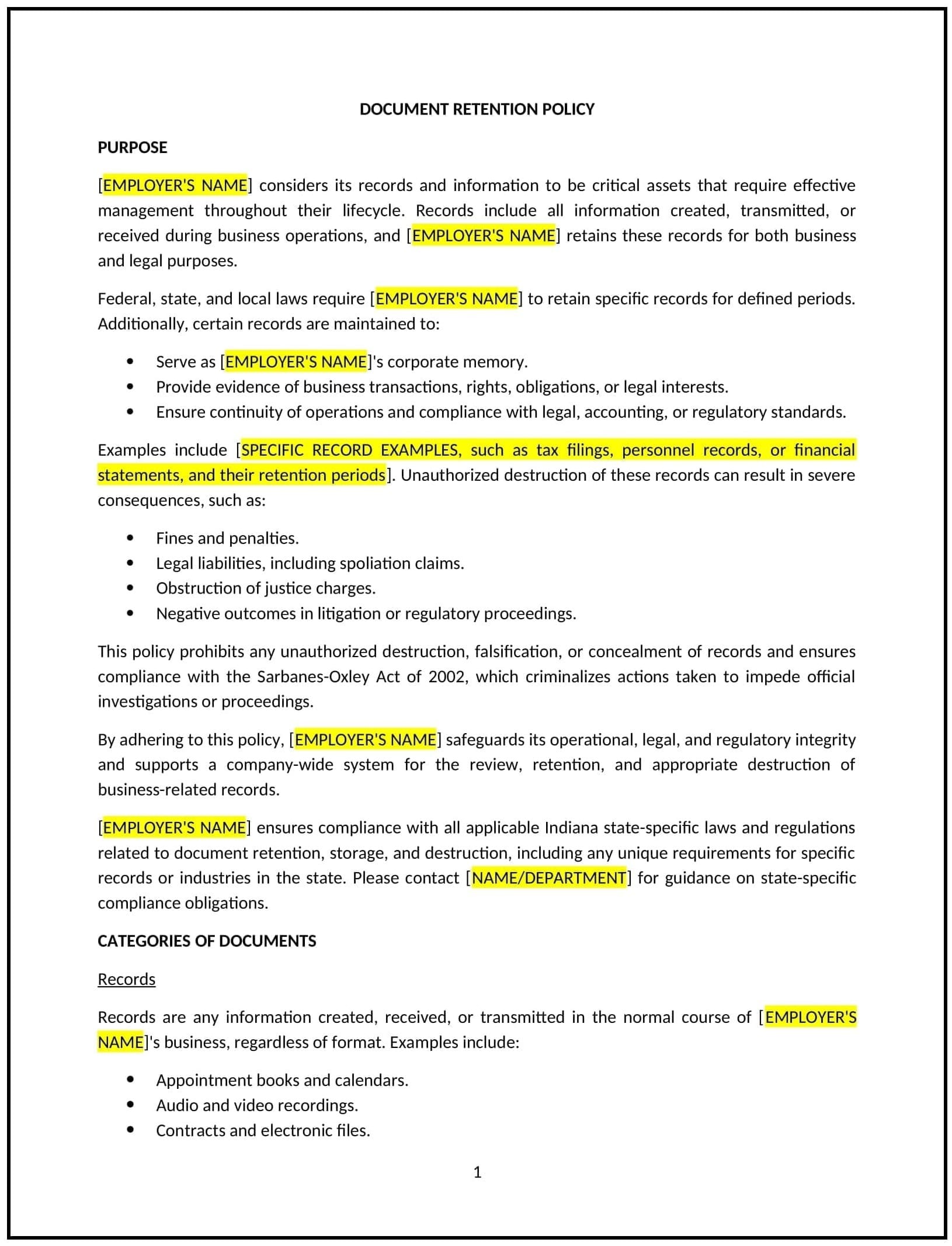
Document retention policy (Indiana): Free template
The document retention policy helps Indiana businesses manage the retention and disposal of records, ensuring that important documents are retained for appropriate periods while complying with legal and regulatory requirements. This policy outlines the types of documents that must be kept, the retention periods for each type, and the procedures for securely disposing of documents when they are no longer needed. By using this template, businesses can improve organizational efficiency, minimize legal risks, and support compliance with state and federal regulations.
By implementing this policy, Indiana businesses can streamline document management processes, reduce clutter, and safeguard sensitive information while maintaining compliance with applicable laws.
How to use this document retention policy (Indiana)
- Define document categories: Clearly categorize the types of documents that the business maintains, such as financial records, employment records, contracts, and corporate governance documents. The policy should define which documents are considered critical and need to be retained for long periods and which documents can be disposed of sooner.
- Establish retention periods: Specify the retention periods for each document category. This may include industry-specific retention requirements, legal obligations, or best practices. For example, tax records may need to be retained for seven years, while marketing materials may only need to be kept for one year.
- Identify legal and regulatory requirements: Ensure that the retention periods align with applicable state and federal laws. The policy should reference specific regulations, such as the Sarbanes-Oxley Act for financial records or HIPAA for healthcare-related documents, to ensure compliance.
- Define storage methods: Outline how documents should be stored during the retention period, including physical storage for paper records and digital storage for electronic documents. The policy should address security measures, such as encryption for digital records and locked cabinets for physical files.
- Provide guidelines for document disposal: Specify how documents should be disposed of once the retention period has expired. This may include shredding physical records and securely deleting electronic files. The policy should ensure that disposal methods protect confidential and sensitive information.
- Assign responsibilities: Designate individuals or departments responsible for managing document retention and disposal. This may include HR for employee records, finance for financial documents, or legal for contracts. Ensure that responsibilities are clearly defined and that staff is trained in proper document management procedures.
- Ensure confidentiality and security: Emphasize the importance of maintaining confidentiality and security during both the retention and disposal processes. The policy should provide guidelines for protecting sensitive data, including personal information and trade secrets, throughout its lifecycle.
- Review and update the policy regularly: The policy should be reviewed periodically to ensure it remains in compliance with legal requirements, business needs, and industry standards. As regulations change or business operations evolve, updates to the retention periods or procedures may be necessary.
Benefits of using this document retention policy (Indiana)
Implementing this policy provides several key benefits for Indiana businesses:
- Reduces legal and regulatory risks: By ensuring compliance with document retention laws, businesses can avoid penalties or legal disputes related to improper retention or disposal of records.
- Increases efficiency: A structured document retention policy helps businesses avoid clutter, streamline records management, and improve access to important documents when needed.
- Enhances data security: Proper document retention and disposal procedures help protect sensitive data from unauthorized access, loss, or theft, reducing the risk of data breaches.
- Improves organizational control: Clear guidelines for document retention and disposal ensure that records are managed consistently across the business, promoting accountability and transparency.
- Supports audits and investigations: A well-organized document retention system makes it easier for businesses to locate relevant records in the event of audits, legal inquiries, or regulatory investigations.
- Facilitates informed decision-making: By retaining important records for the required periods, businesses can ensure they have access to critical information for future decision-making, reporting, or legal purposes.
Tips for using this document retention policy (Indiana)
- Communicate the policy clearly: Ensure that all employees understand the document retention policy and their responsibilities regarding record-keeping, retention periods, and disposal procedures. Include the policy in the employee handbook, onboarding materials, and provide regular training on compliance.
- Implement an efficient filing system: Set up a system for storing documents that allows easy access to retained records while keeping them organized. For electronic records, consider using cloud storage or document management software to track retention dates and ensure secure storage.
- Monitor adherence to the policy: Regularly audit document retention practices to ensure compliance with the policy. This may include checking that documents are properly stored, that retention periods are followed, and that disposal procedures are being carried out securely.
- Protect sensitive information: Ensure that sensitive or confidential documents, such as financial records or employee information, are handled with extra care. Store these documents in secure locations and dispose of them in a manner that protects privacy.
- Review the policy periodically: Conduct annual or biannual reviews of the policy to ensure that retention periods and procedures are up to date with any changes in legal requirements, industry standards, or company practices.
Frequently asked questions (FAQs)
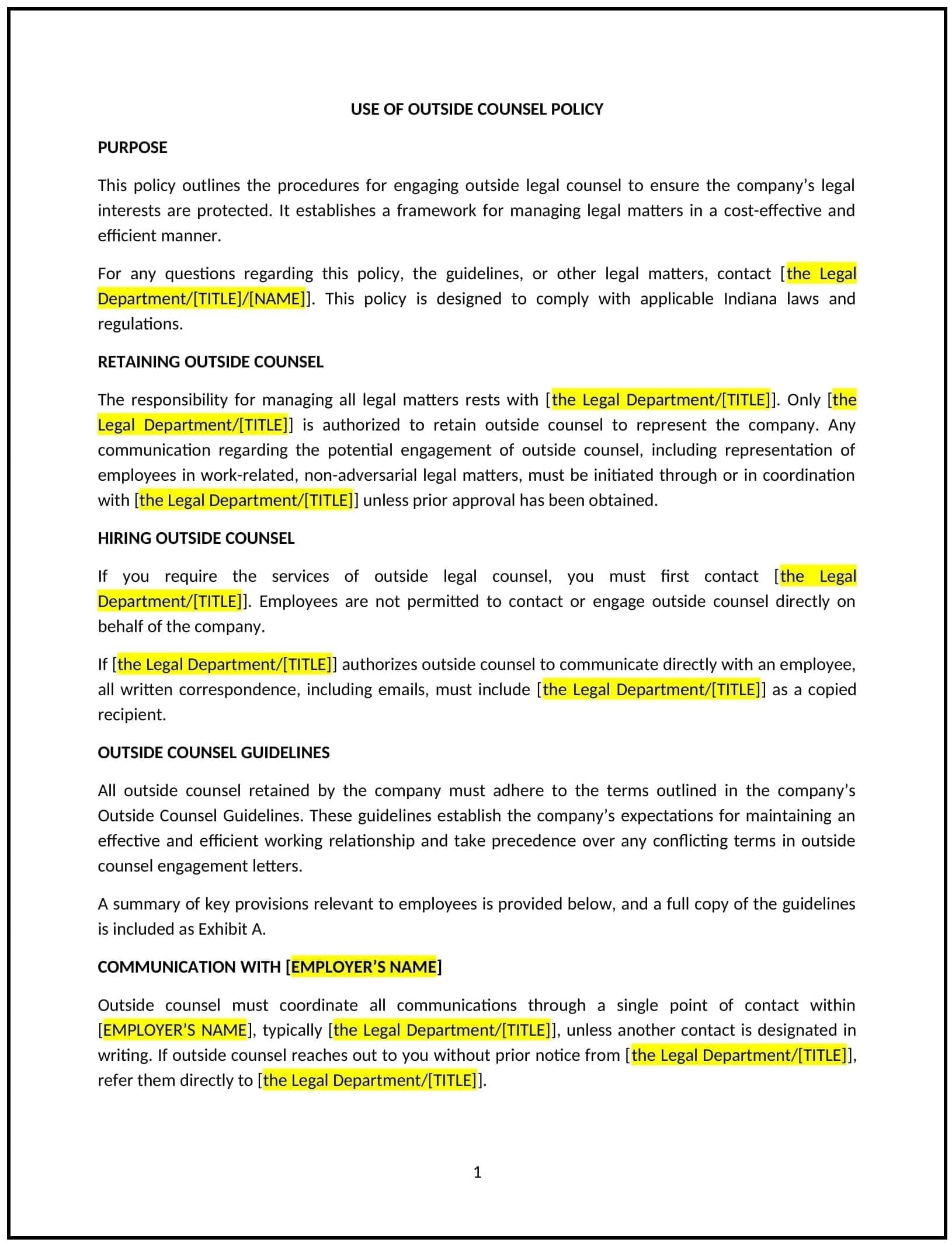
Outlines when Indiana companies should hire external legal support and how to manage approvals, billing, and oversight.
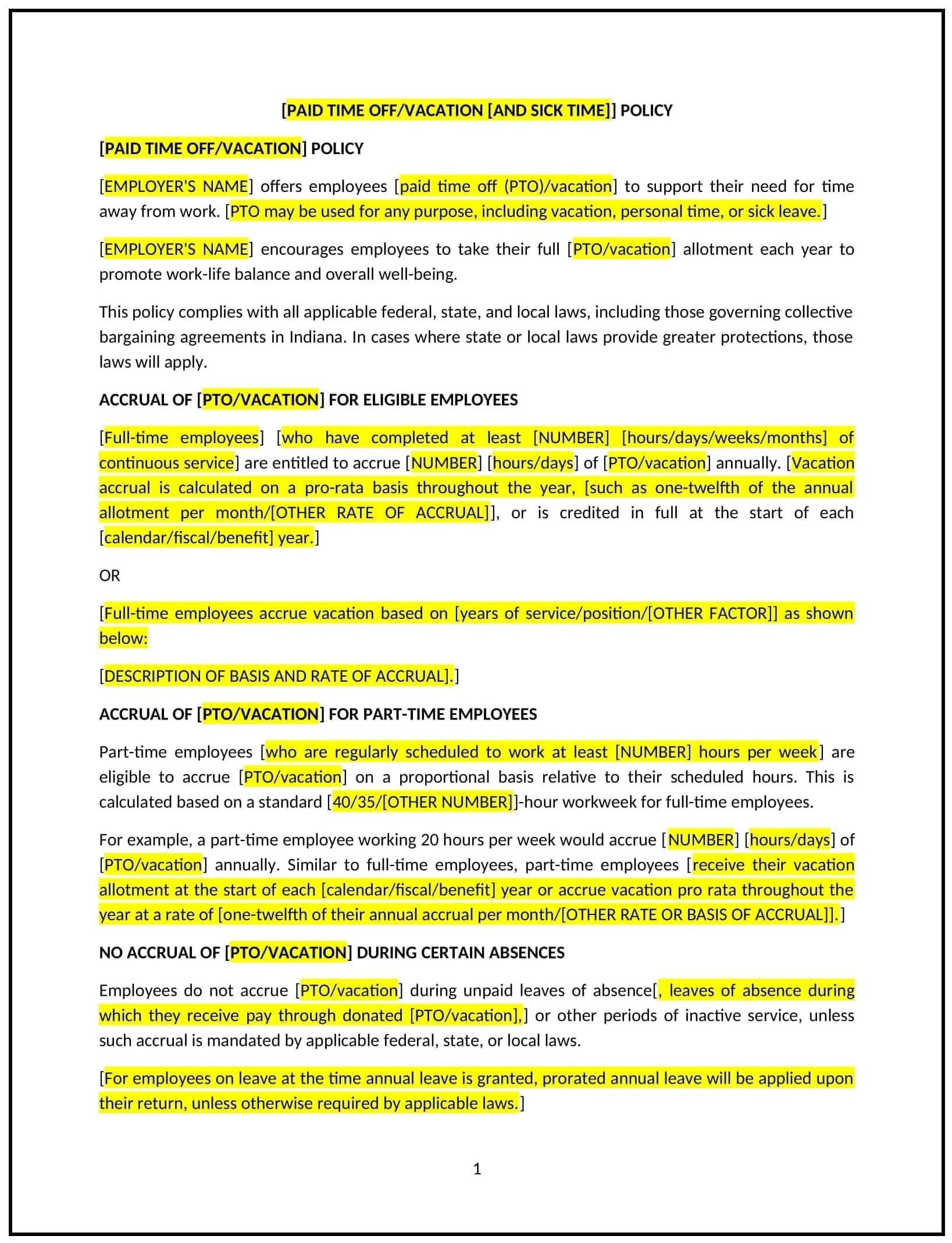
Defines how paid vacation is accrued, requested, and carried over for employees in Indiana, in compliance with company policy.
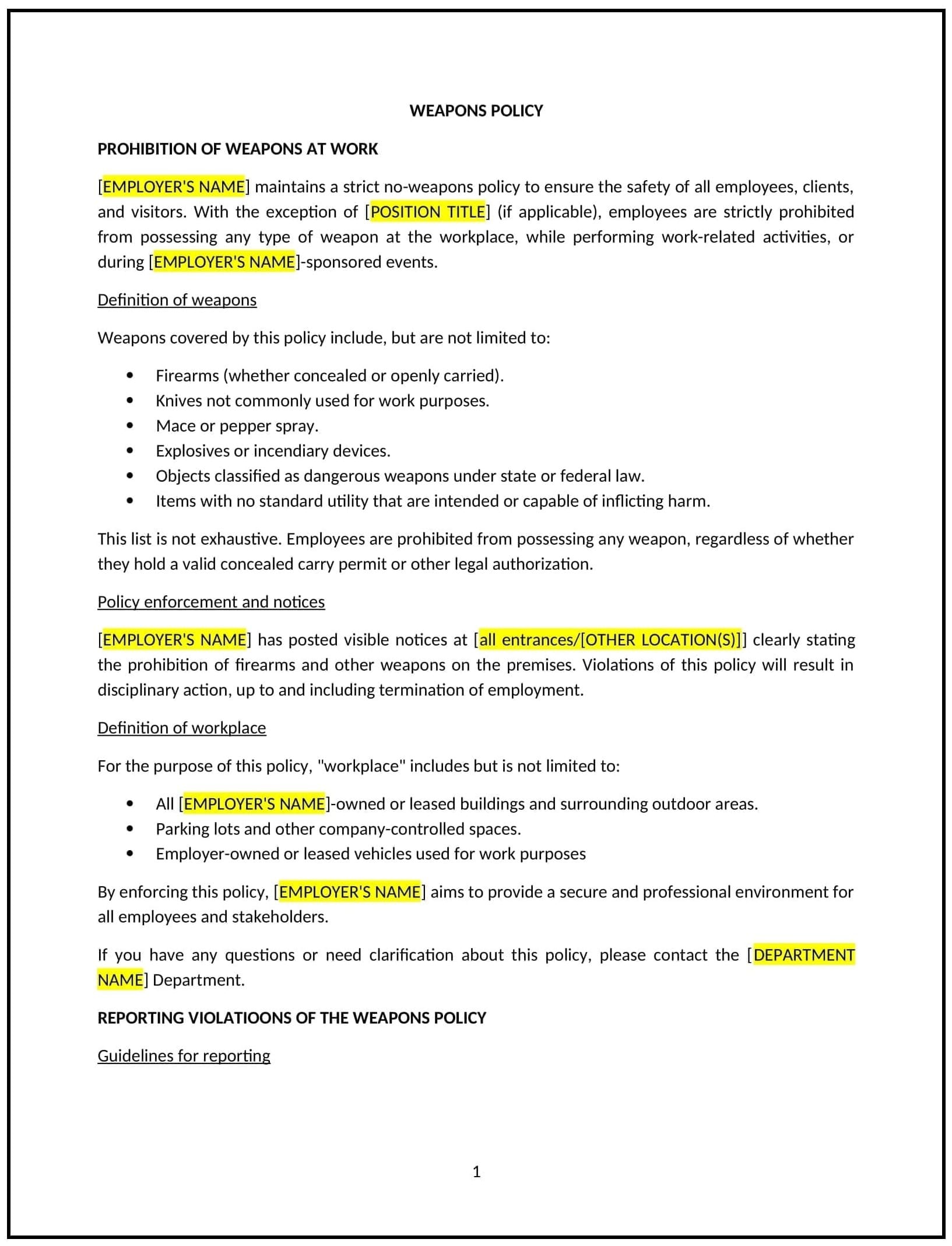
Restricts the possession of firearms and other weapons on Indiana company premises, with exceptions only as required by law.