Document retention policy (Mississippi): Free template
Got contracts to review? While you're here for policies, let Cobrief make contract review effortless—start your free review now.
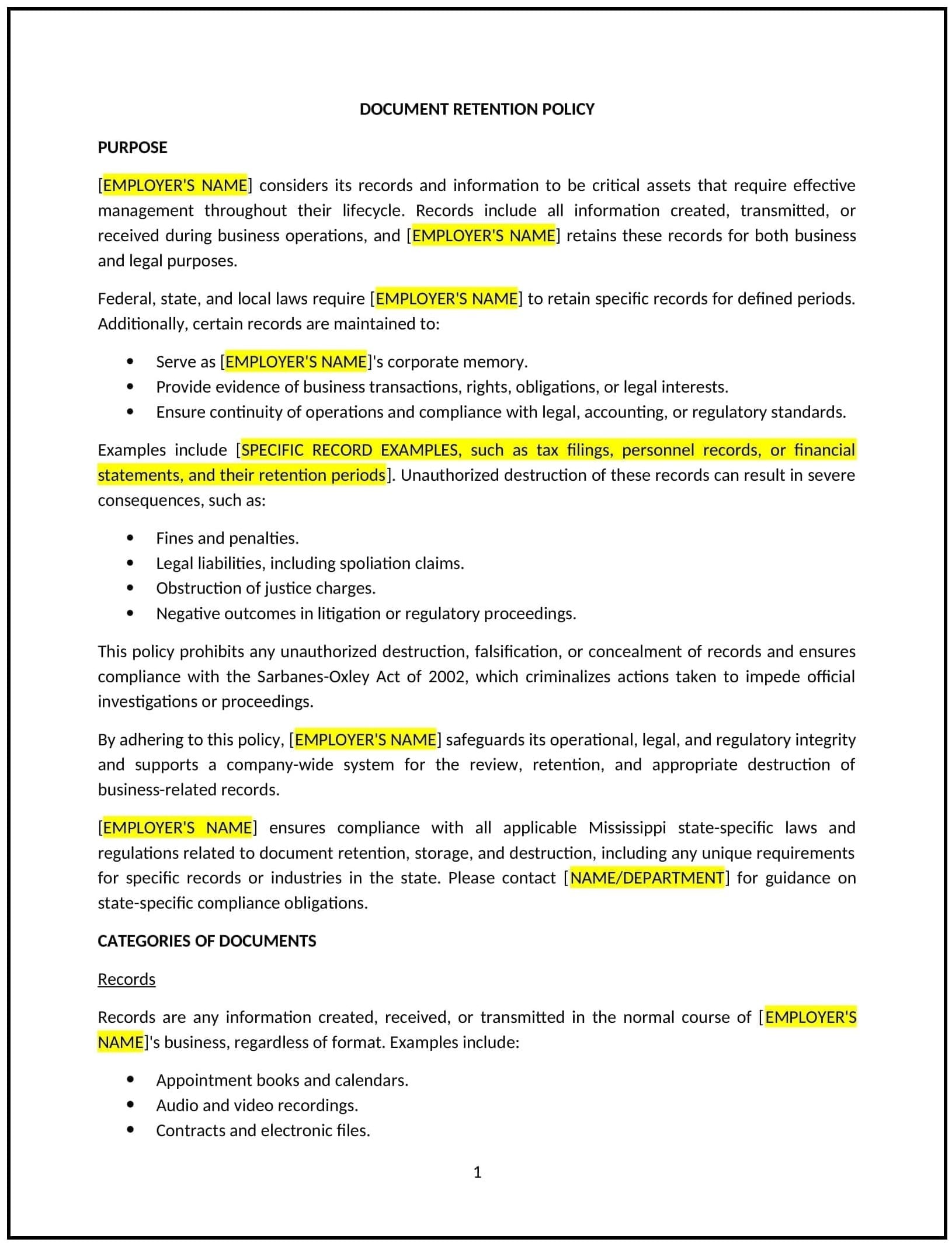
Customize this template for free
Document retention policy (Mississippi)
A document retention policy helps Mississippi businesses manage the storage, retention, and disposal of documents and records in compliance with legal, regulatory, and operational requirements. This policy outlines the types of documents that should be kept, the length of time they should be retained, and the proper procedures for disposing of documents once they are no longer needed.
By implementing this policy, businesses can reduce legal risks, improve organization, and ensure that important documents are accessible while eliminating unnecessary clutter.
How to use this document retention policy (Mississippi)
- Define the scope of the policy: Clearly specify what types of documents the policy applies to, including physical and electronic records, contracts, financial documents, employee records, and other business-related documents.
- Categorize documents: Create categories for different types of records, such as financial, legal, personnel, and operational, to make it easier to determine retention periods and applicable disposal methods.
- Establish retention periods: Define how long each type of document should be retained. Some documents, such as tax records or contracts, may need to be kept for several years, while others, like routine correspondence, may have shorter retention periods.
- Set up a disposal process: Outline how documents should be securely disposed of once they are no longer required. This may include shredding physical records and deleting electronic files from company systems.
- Assign responsibilities: Specify who is responsible for managing document retention, including the roles of employees, managers, and any designated staff members, such as compliance officers or IT personnel.
- Review and update regularly: Establish a regular schedule for reviewing and updating the document retention policy to ensure that it remains in line with changes in business operations, legal requirements, and best practices.
- Ensure security and confidentiality: Include provisions for ensuring that sensitive or confidential documents, such as employee records or proprietary business information, are securely stored and properly disposed of.
- Address digital records: Specify how digital records should be managed, including backup procedures, file organization, and protection against unauthorized access.
Benefits of using this document retention policy (Mississippi)
This policy provides several benefits for Mississippi businesses:
- Reduces legal risks: Proper document retention and disposal help businesses minimize the risk of legal complications, including violations of privacy laws or improper handling of confidential information.
- Enhances organizational efficiency: By establishing clear guidelines for document management, businesses can streamline record-keeping, making it easier to access important files when needed.
- Improves compliance: A well-implemented document retention policy helps businesses comply with industry regulations, legal requirements, and record-keeping best practices.
- Protects confidential information: Ensuring that sensitive documents are securely stored and disposed of protects employees, customers, and the business from identity theft, fraud, or information leaks.
- Reduces storage costs: By disposing of unnecessary documents in a timely manner, businesses can reduce the amount of physical and digital storage space needed, cutting down on associated costs.
Tips for using this document retention policy (Mississippi)
- Communicate the policy clearly: Ensure that all employees are familiar with the document retention policy and understand the importance of following it. This can be done through training, employee handbooks, and internal communications.
- Automate document retention processes: Consider using software solutions that automatically track and manage document retention schedules, making it easier to comply with retention periods and minimize human error.
- Set a schedule for review: Establish regular intervals (e.g., annually or bi-annually) for reviewing the policy to ensure it reflects the most current legal requirements and business practices.
- Involve relevant departments: Ensure that departments like HR, finance, and IT are involved in the development and execution of the policy to ensure it is comprehensive and functional across all areas of the business.
- Ensure proper disposal of sensitive information: Implement strict guidelines for disposing of confidential or sensitive information, such as shredding documents and securely deleting digital files.