Got contracts to review? While you're here for policies, let Cobrief make contract review effortless—start your free review now.
Customize this template for free
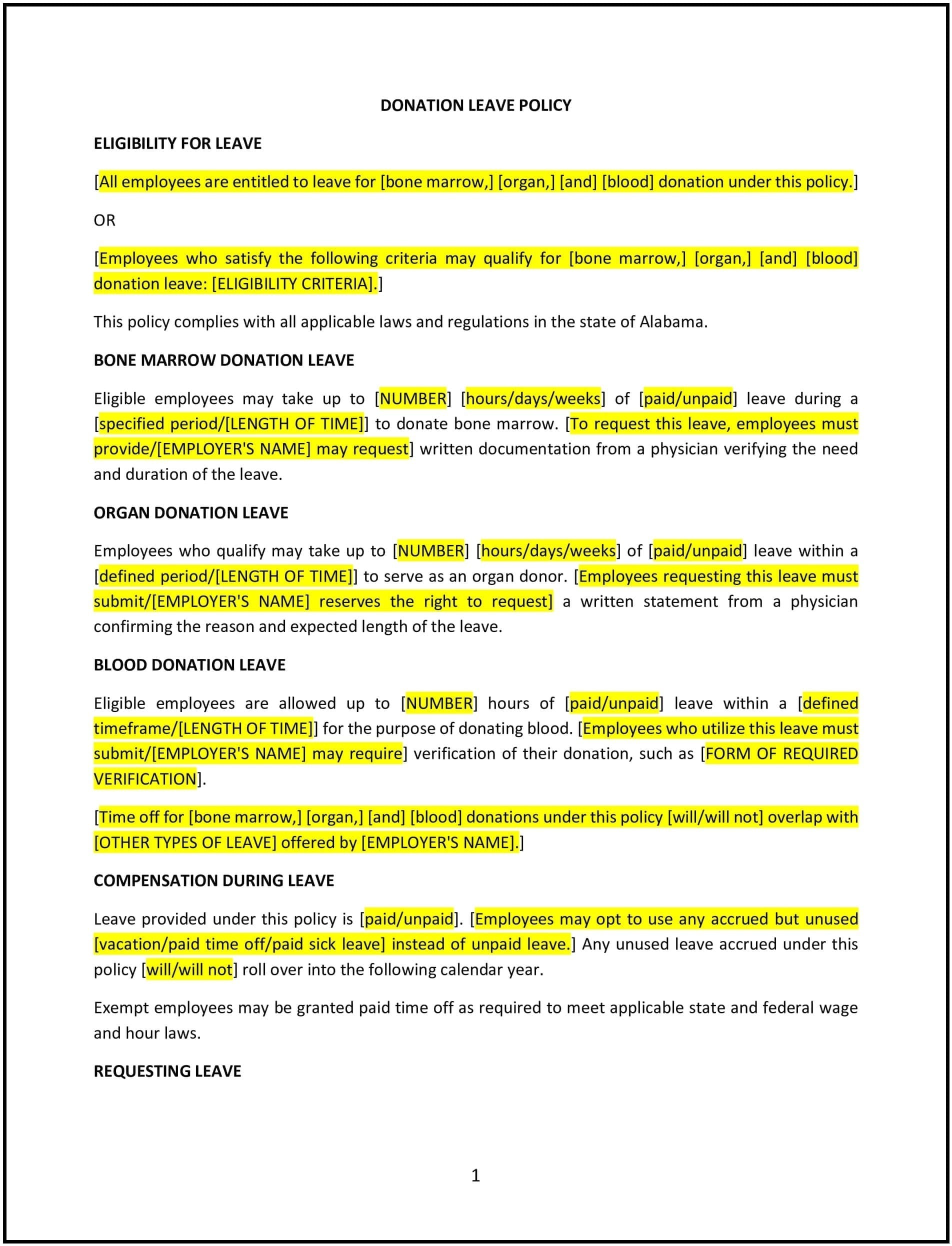
Donation leave policy (Alabama)
A donation leave policy provides employees with time off to participate in charitable activities, such as donating blood, organs, or other vital resources. For SMBs in Alabama, implementing this policy demonstrates a commitment to social responsibility and employee well-being. Tailoring the policy ensures alignment with Alabama laws and accommodates the needs of your workforce.
This policy helps foster a culture of generosity and civic engagement while ensuring that employees can participate in meaningful charitable efforts without jeopardizing their professional responsibilities.
How to use this donation leave policy (Alabama)
- Define eligible activities: Specify the types of donation activities covered, such as blood drives, organ donation, or other charitable contributions requiring time off.
- Set eligibility criteria: Clearly state which employees are eligible for donation leave, such as full-time or part-time workers, and any tenure requirements.
- Outline leave duration: Establish how much time employees can take for donation activities. For example, blood donations may require a few hours, while organ donation may necessitate extended leave.
- Explain the approval process: Detail how employees should request donation leave, including required notice periods and documentation, such as proof of participation.
- Address compensation: Clarify whether donation leave is paid, unpaid, or covered under existing paid leave policies, such as PTO or sick leave.
Benefits of using a donation leave policy (Alabama)
A donation leave policy benefits your employees, your business, and the community. Here’s how it helps:
- Promotes community involvement: Encourages employees to contribute to causes they care about, fostering a sense of purpose and engagement.
- Boosts employee morale: Demonstrates your company’s support for charitable activities, enhancing job satisfaction and loyalty.
- Supports social responsibility: Positions your business as a socially conscious employer, improving your reputation among employees and the wider community.
- Enhances productivity: Allows employees to focus on donation activities without worrying about work obligations, ensuring they return to work refreshed and motivated.
- Ensures legal compliance: Aligns with Alabama regulations and federal guidelines for leave policies, particularly for activities like organ donation that may have legal protections.
Tips for implementing a donation leave policy (Alabama)
- Align with local practices: Consider Alabama-specific factors, such as the frequency of blood donation drives or organ donation events, when tailoring your policy.
- Provide flexibility: Allow employees to combine donation leave with other leave types, such as PTO, for extended activities like recovery from organ donation.
- Partner with organizations: Collaborate with local charities or hospitals to streamline donation opportunities for employees, such as on-site blood drives or organ donor awareness programs.
- Include return-to-work guidelines: For extended leave, outline steps for reintegrating employees back into their roles, such as gradual return schedules or temporary job modifications.
- Track participation: Maintain records of donation leave usage to ensure fairness and to evaluate the program’s impact on your workforce and community.