Dress and appearance policy (Alabama): Free template
Got contracts to review? While you're here for policies, let Cobrief make contract review effortless—start your free review now.
Customize this template for free
Dress and appearance policy (Alabama)
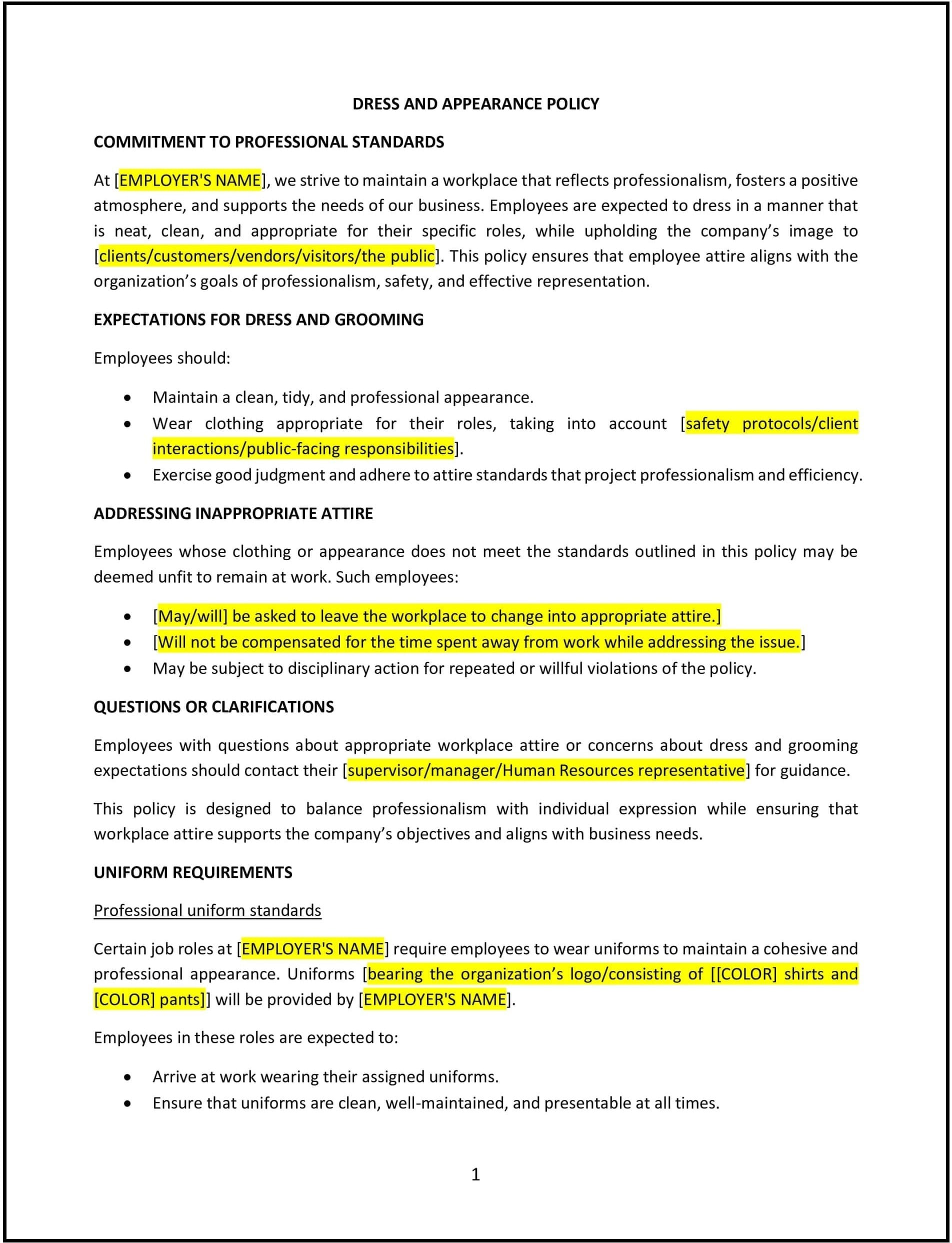
A dress and appearance policy establishes guidelines for appropriate workplace attire and grooming standards to maintain professionalism and safety. For SMBs in Alabama, this policy ensures that employees understand the expectations regarding their appearance while allowing flexibility for personal expression and compliance with anti-discrimination laws.
Tailoring this policy to your business ensures it aligns with industry norms, workplace safety requirements, and Alabama’s legal standards, such as religious and cultural accommodations.
How to use this dress and appearance policy (Alabama)
- Define dress code expectations: Clearly outline the types of attire considered appropriate for your workplace, such as business casual, uniforms, or industry-specific clothing requirements.
- Address safety and hygiene standards: Specify any attire necessary for safety or cleanliness, such as non-slip shoes, protective gear, or tied-back hair in food service or manufacturing settings.
- Provide for accommodations: Include provisions for religious, cultural, or medical accommodations, such as allowing headscarves, turbans, or other attire as required by law.
- Outline prohibited attire: Clearly state any restrictions on clothing or accessories, such as offensive logos, ripped clothing, or overly casual attire in customer-facing roles.
- Detail enforcement procedures: Explain how the policy will be enforced, including steps for addressing violations and opportunities for employees to seek clarification or request accommodations.
Benefits of using a dress and appearance policy (Alabama)
A well-implemented dress and appearance policy enhances workplace professionalism and ensures compliance with safety and legal standards. Here’s how it benefits your business:
- Promotes professionalism: Sets a standard of appearance that reflects positively on your business, particularly in customer-facing roles.
- Enhances safety: Ensures that employees wear appropriate attire to reduce workplace hazards, especially in industries like manufacturing, healthcare, or food service.
- Supports inclusivity: Provides guidelines for accommodating religious, cultural, and medical needs, fostering a more inclusive work environment.
- Reduces misunderstandings: Clarifies expectations, minimizing disputes or confusion about what constitutes appropriate workplace attire.
- Strengthens brand image: Ensures employees present a cohesive and professional appearance that aligns with your company’s values and industry standards.
Tips for implementing a dress and appearance policy (Alabama)
- Tailor the policy to your industry: Adapt the policy to fit your industry’s needs, such as formal attire for corporate settings or uniforms for retail and hospitality.
- Balance professionalism and flexibility: Allow employees to express their individuality within the boundaries of professional and safety standards.
- Provide examples of appropriate attire: Include a list or visual guide of acceptable clothing to help employees better understand the policy.
- Train managers on enforcement: Ensure managers understand how to apply the policy fairly and consistently, including handling requests for accommodations.
- Regularly review the policy: Periodically update the policy to reflect changes in industry standards, legal requirements, or workplace culture.