Dress and appearance policy (Alaska): Free template
Got contracts to review? While you're here for policies, let Cobrief make contract review effortless—start your free review now.
Customize this template for free
Dress and appearance policy (Alaska)
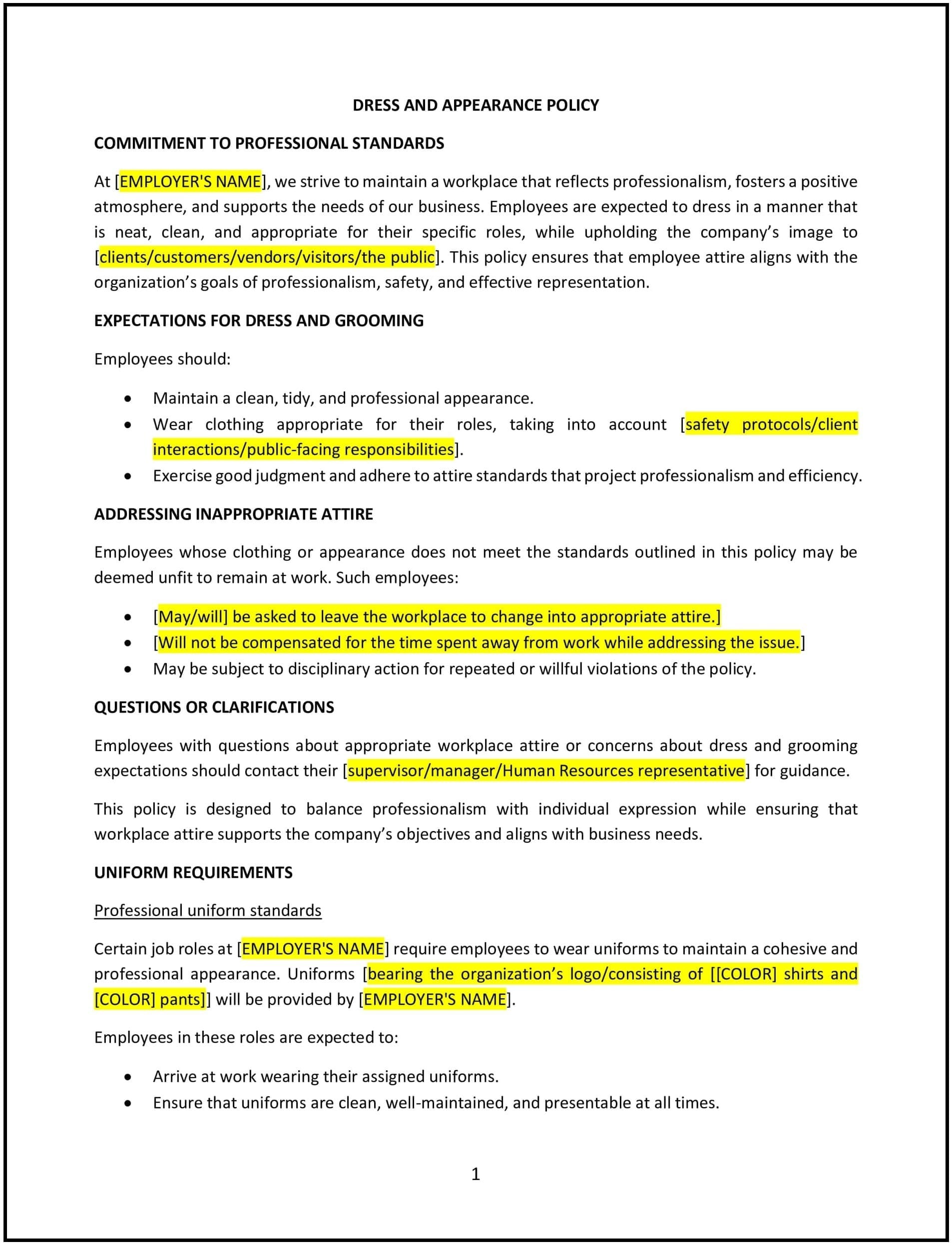
In Alaska, a dress and appearance policy establishes guidelines for employee attire to promote professionalism, safety, and inclusivity while considering the unique environmental and cultural factors in the state. This policy ensures employees understand workplace expectations and provides clarity on acceptable attire for various roles or work conditions. By implementing this policy, businesses can maintain a cohesive image and accommodate diverse work environments, including outdoor, remote, and office settings.
Alaska’s climate and industries, such as oil, gas, and tourism, may require tailoring the policy to address practical needs like weather-appropriate clothing or safety gear.
How to use this dress and appearance policy (Alaska)
- Define standards: Specify acceptable attire for different roles or settings, such as formal office wear, business casual, or industry-specific uniforms.
- Address safety requirements: Include provisions for safety gear or protective clothing required in roles involving hazardous conditions or outdoor work.
- Accommodate local factors: Account for Alaska’s weather conditions and cultural diversity, allowing employees flexibility to wear climate-appropriate or culturally significant attire.
- Outline exceptions: Provide guidance on accommodations for medical, religious, or cultural reasons, ensuring inclusivity and compliance with anti-discrimination laws.
- Communicate expectations: Share the policy during onboarding and reinforce it through regular communication, ensuring employees understand and follow the guidelines.
Benefits of using a dress and appearance policy (Alaska)
A dress and appearance policy offers several advantages for businesses in Alaska. Here’s how it helps:
- Promotes professionalism: Ensures employees represent the company appropriately in front of clients, customers, and stakeholders.
- Enhances safety: Addresses safety concerns by requiring appropriate gear for hazardous or outdoor work environments.
- Supports inclusivity: Accommodates cultural, religious, and personal preferences while maintaining professional standards.
- Improves consistency: Sets clear expectations across the organization, reducing confusion or conflicts about appropriate attire.
- Reflects company values: Aligns employee appearance with the company’s brand and mission, fostering a cohesive and professional image.
Tips for using a dress and appearance policy (Alaska)
- Adapt for remote work: Include guidelines for virtual meetings, such as maintaining a professional appearance when representing the company online.
- Be weather-aware: Address Alaska’s extreme weather conditions by allowing for layering, insulated clothing, or other practical attire.
- Involve employees: Gather feedback from employees on what works best for their roles and work environments to ensure the policy is practical and fair.
- Balance flexibility and consistency: While maintaining a professional standard, allow for some flexibility to accommodate diverse needs and preferences.
- Review regularly: Update the policy as needed to reflect changes in workplace practices, roles, or employee feedback.