Dress and appearance policy (Arizona): Free template
Got contracts to review? While you're here for policies, let Cobrief make contract review effortless—start your free review now.
Customize this template for free
Dress and appearance policy (Arizona)
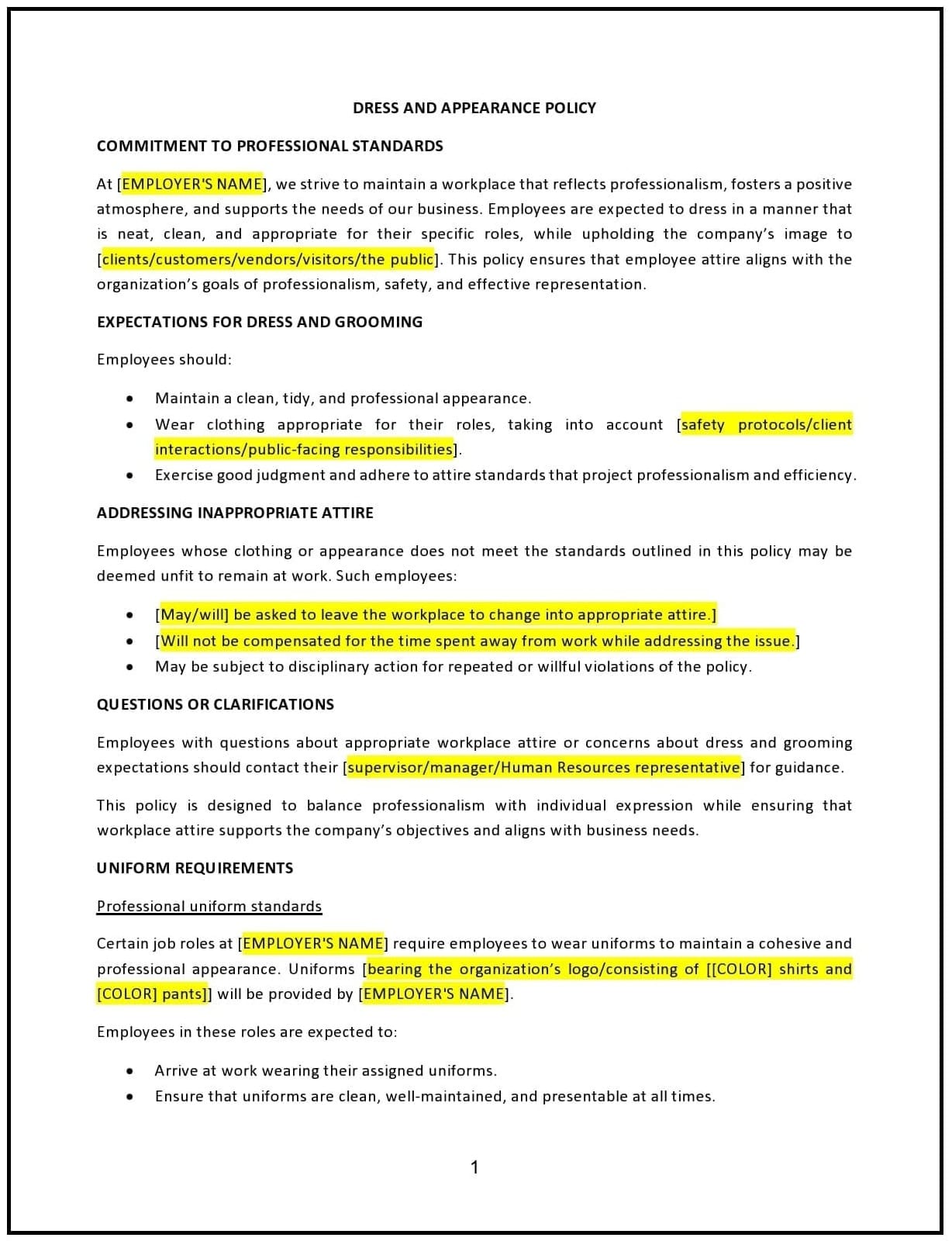
In Arizona, a dress and appearance policy helps businesses set clear expectations for employee attire and grooming standards, ensuring a professional and safe workplace. This policy can accommodate industry-specific needs, workplace culture, and Arizona’s unique climate, while also supporting compliance with anti-discrimination laws.
This policy outlines acceptable dress codes, grooming requirements, and guidelines for personal appearance. By implementing this policy, Arizona businesses can maintain a consistent and inclusive image while respecting employees’ rights.
How to use this dress and appearance policy (Arizona)
- Define acceptable attire: Specify dress codes appropriate for the workplace, such as business formal, business casual, or uniforms, depending on the industry.
- Address safety requirements: Include standards for protective clothing or footwear in roles where safety is a concern, such as construction or healthcare.
- Accommodate diversity: Allow for reasonable accommodations for religious, cultural, or medical needs related to attire or appearance.
- Set grooming expectations: Provide guidelines for grooming and hygiene that align with professional standards while respecting personal preferences.
- Include enforcement procedures: Clearly state how violations of the policy will be addressed, ensuring consistent and fair treatment.
Benefits of using a dress and appearance policy (Arizona)
This policy offers several benefits for Arizona businesses:
- Promotes professionalism: Ensures employees present a consistent and professional image to clients, customers, and stakeholders.
- Enhances safety: Supports compliance with safety regulations by requiring appropriate attire for hazardous work environments.
- Supports inclusivity: Accommodates diverse cultural, religious, and personal needs, fostering a respectful workplace.
- Reduces ambiguity: Provides clear standards for dress and appearance, minimizing misunderstandings or disputes.
- Improves morale: Balances professionalism with flexibility, helping employees feel comfortable and valued.
Tips for using a dress and appearance policy (Arizona)
- Address Arizona-specific needs: Consider the state’s climate and include provisions for appropriate attire during hot weather, such as lightweight fabrics.
- Be industry-specific: Tailor the policy to reflect industry norms, such as formal attire for offices or functional clothing for fieldwork.
- Provide training: Educate employees and managers on the policy to ensure consistent understanding and application.
- Accommodate requests: Allow for adjustments or exemptions to the policy to respect religious, cultural, or medical needs.
- Review regularly: Update the policy as workplace norms, regulations, or organizational needs evolve.