Dress and appearance policy (Arkansas): Free template
Got contracts to review? While you're here for policies, let Cobrief make contract review effortless—start your free review now.
Customize this template for free
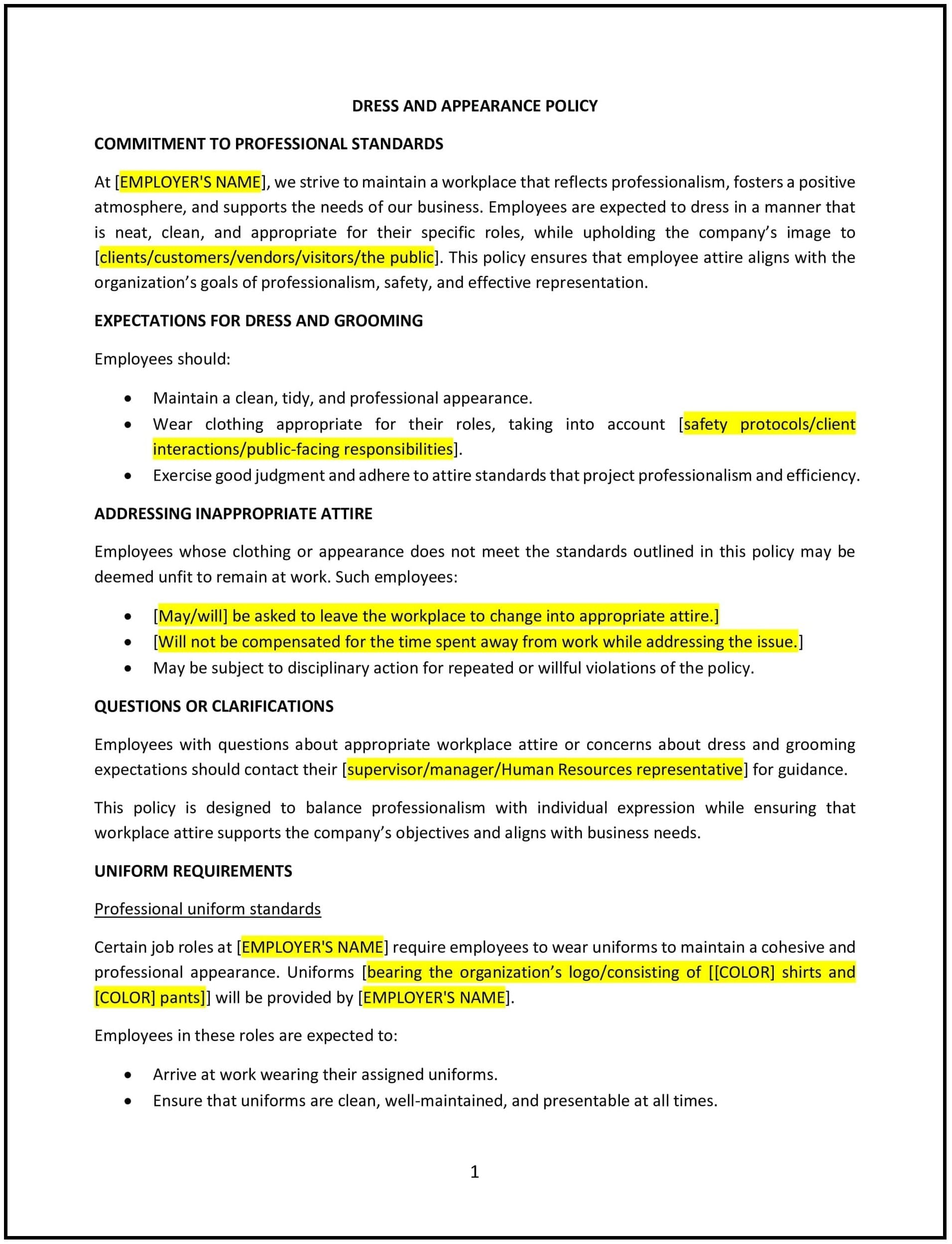
Dress and appearance policy (Arkansas)
In Arkansas, a dress and appearance policy provides businesses with guidelines for appropriate workplace attire to maintain professionalism and align with the company’s brand and operational needs. This policy balances employee expression with workplace expectations, ensuring consistency and compliance with anti-discrimination laws.
This policy outlines acceptable dress standards, accommodations for cultural or religious attire, and the process for addressing dress code concerns. By implementing this policy, Arkansas businesses can promote a positive image, foster inclusivity, and support compliance with labor regulations.
How to use this dress and appearance policy (Arkansas)
- Define expectations: Clearly specify the dress code requirements for different roles, such as business formal, business casual, or uniforms, depending on the work environment.
- Address accommodations: Include provisions for accommodating cultural, religious, or disability-related attire, ensuring fairness and inclusivity.
- Communicate guidelines: Ensure employees understand the dress code expectations, including examples of appropriate and inappropriate attire.
- Enforce consistently: Apply the policy uniformly across all employees to avoid perceptions of favoritism or discrimination.
- Provide flexibility: Allow for adjustments to the dress code in specific situations, such as casual Fridays or outdoor work conditions, while maintaining overall professionalism.
Benefits of using this dress and appearance policy (Arkansas)
This policy offers several advantages for Arkansas businesses:
- Promotes professionalism: Maintains a polished and consistent appearance for employees, aligning with the business’s image and values.
- Supports inclusivity: Accommodates diverse cultural, religious, and personal needs while upholding workplace expectations.
- Enhances customer trust: Creates a positive impression on clients and customers through professional attire and presentation.
- Supports compliance: Aligns with Arkansas labor laws and federal anti-discrimination regulations, reducing legal risks.
- Improves workplace morale: Provides clear guidelines that reduce misunderstandings and foster mutual respect among employees.
Tips for using this dress and appearance policy (Arkansas)
- Address Arkansas-specific considerations: Consider local climate or industry norms when defining dress code requirements for your business.
- Provide examples: Include specific examples of acceptable and unacceptable attire to ensure clarity and consistency.
- Train managers: Educate supervisors on applying the policy fairly and addressing dress code concerns tactfully.
- Solicit feedback: Encourage employees to provide input on dress code guidelines to ensure practicality and acceptance.
- Review periodically: Update the policy to reflect changes in workplace culture, industry trends, or legal requirements.