Dress and appearance policy (California): Free template
Got contracts to review? While you're here for policies, let Cobrief make contract review effortless—start your free review now.
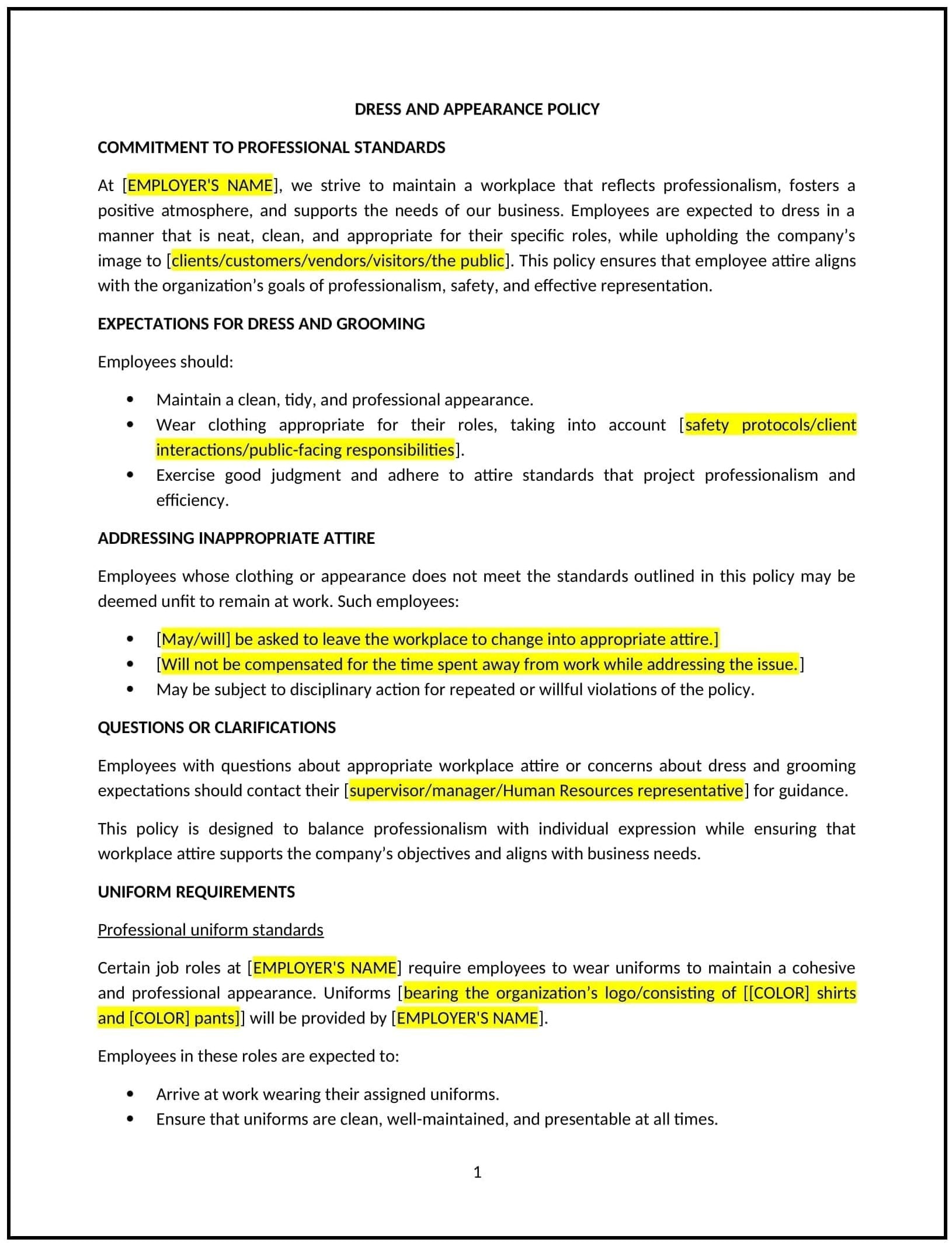
Customize this template for free
Dress and appearance policy (California)
In California, a dress and appearance policy provides businesses with guidelines for employee attire and grooming standards in the workplace. This policy ensures that expectations for professional appearance are clear while supporting compliance with California laws, such as the Fair Employment and Housing Act (FEHA), which prohibits discrimination based on personal characteristics, including hairstyles or religious attire.
This policy outlines acceptable dress codes, accommodations for cultural or religious practices, and procedures for addressing non-compliance. By implementing this policy, California businesses can promote professionalism, inclusivity, and consistency.
How to use this dress and appearance policy (California)
- Define acceptable attire: Clearly outline expectations for workplace attire, such as business casual, uniforms, or role-specific dress requirements.
- Address safety and hygiene: Specify any dress standards related to workplace safety, such as closed-toe shoes or protective gear.
- Respect inclusivity: Accommodate cultural, religious, or personal expression in line with California’s legal requirements, including protections for natural hairstyles and religious attire under FEHA.
- Communicate enforcement procedures: Provide steps for addressing non-compliance, including reminders, coaching, or disciplinary measures if necessary.
- Encourage feedback: Create channels for employees to provide input on the dress code policy to ensure it aligns with workplace culture and needs.
Benefits of using this dress and appearance policy (California)
This policy offers several advantages for California businesses:
- Supports compliance: Reflects California laws protecting employees’ rights to cultural and religious expression while maintaining workplace standards.
- Promotes professionalism: Ensures employees present themselves in a manner that aligns with the business’s values and image.
- Enhances inclusivity: Respects individual differences, fostering a supportive and welcoming workplace.
- Reduces disputes: Provides clear guidelines to address ambiguity and minimize misunderstandings related to appearance expectations.
- Encourages safety: Ensures attire and grooming practices meet workplace safety and hygiene requirements.
Tips for using this dress and appearance policy (California)
- Reflect California-specific laws: Ensure the policy aligns with FEHA and related regulations protecting employees’ rights to natural hairstyles and religious attire.
- Train managers: Provide guidance on enforcing the policy fairly and addressing accommodation requests appropriately.
- Balance professionalism and flexibility: Establish clear standards while respecting employee individuality and expression.
- Regularly review standards: Update the policy to reflect changes in workplace culture, industry norms, or legal requirements.
- Document exceptions: Maintain records of accommodations granted to ensure consistency and compliance.