Dress and appearance policy (Delaware): Free template
Got contracts to review? While you're here for policies, let Cobrief make contract review effortless—start your free review now.
Customize this template for free
Dress and appearance policy (Delaware)
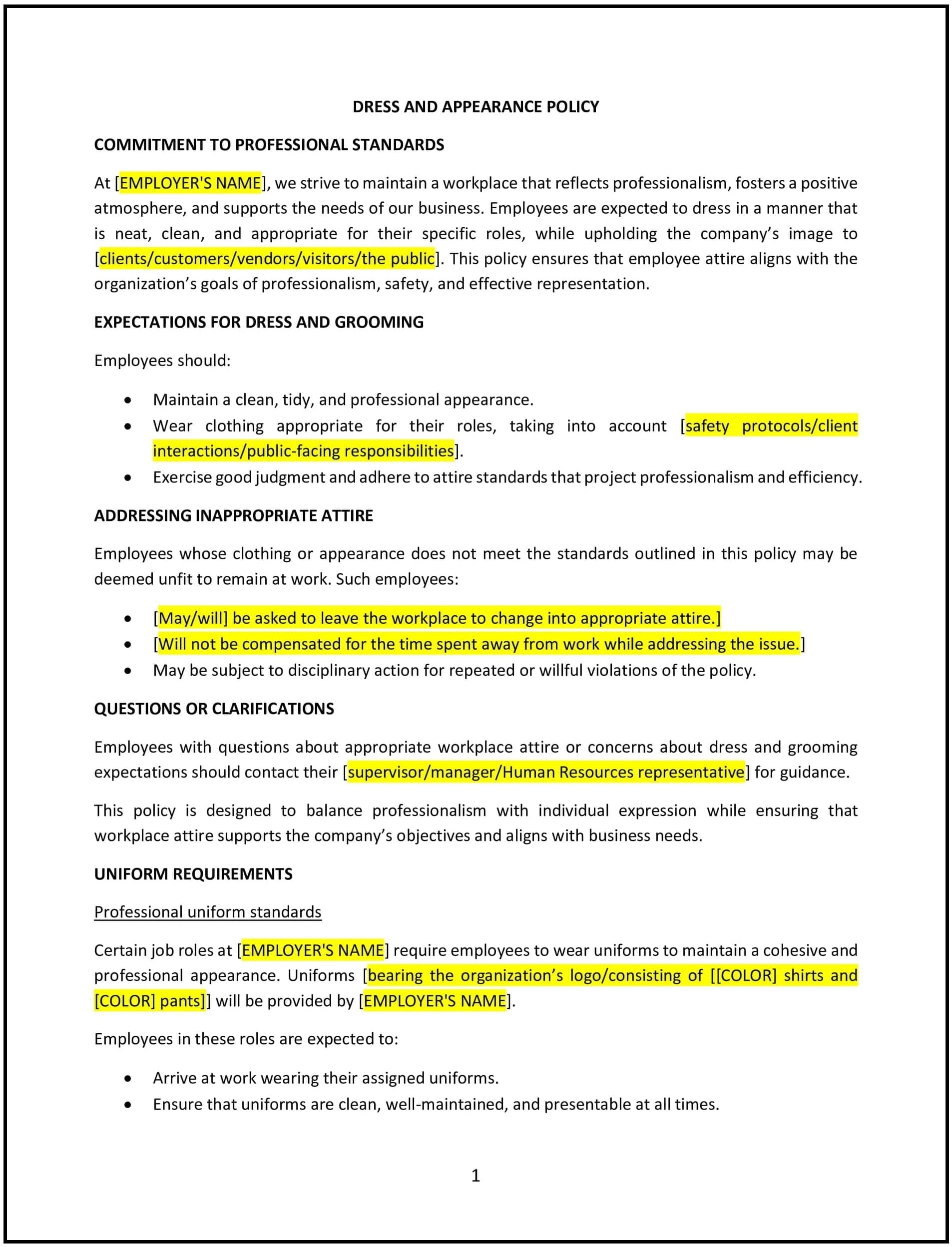
A dress and appearance policy helps Delaware businesses establish guidelines for workplace attire and personal presentation to maintain professionalism and ensure safety. This policy outlines expectations for appropriate attire, grooming, and exceptions based on job roles, cultural considerations, or religious accommodations.
By implementing this policy, businesses can create a professional and inclusive work environment that aligns with their brand image and operational needs.
How to use this dress and appearance policy (Delaware)
- Define dress code standards: Specify the types of attire considered appropriate for different roles or occasions, such as business formal, business casual, or uniforms.
- Address safety requirements: Include guidelines for protective clothing or footwear where necessary, ensuring compliance with Delaware workplace safety regulations.
- Allow for accommodations: Provide flexibility for religious, cultural, or medical accommodations related to dress and appearance.
- Outline grooming expectations: Clarify standards for personal grooming, hygiene, and overall presentation.
- Communicate enforcement procedures: Explain how the policy will be enforced and the steps for addressing non-compliance, including progressive disciplinary actions.
- Review exceptions: Clearly state any exceptions for special events, casual Fridays, or other scenarios requiring deviations from the standard dress code.
Benefits of using this dress and appearance policy (Delaware)
This policy offers several benefits for Delaware businesses:
- Promotes professionalism: Ensures employees present themselves in a way that reflects the company’s values and brand image.
- Enhances workplace safety: Specifies attire requirements to protect employees in roles involving hazardous conditions.
- Supports inclusivity: Accommodates cultural, religious, and medical needs while maintaining professional standards.
- Reduces ambiguity: Provides clear expectations, minimizing misunderstandings or disputes about appropriate dress and appearance.
- Strengthens company image: Reinforces the organization’s reputation by maintaining consistent presentation standards.
Tips for using this dress and appearance policy (Delaware)
- Communicate the policy effectively: Ensure all employees understand the dress code standards and their role in maintaining a professional workplace.
- Encourage feedback: Invite employees to share concerns or suggestions about the policy to foster inclusivity and adaptability.
- Train managers: Provide supervisors with guidance on enforcing the policy consistently and respectfully.
- Review regularly: Update the policy to reflect changes in workplace culture, industry standards, or Delaware regulations.
- Provide clarity on exceptions: Clearly explain scenarios where dress code flexibility may be allowed, such as special events or remote work arrangements.