Dress and appearance policy (Florida): Free template
Got contracts to review? While you're here for policies, let Cobrief make contract review effortless—start your free review now.
Customize this template for free
Dress and appearance policy (Florida)
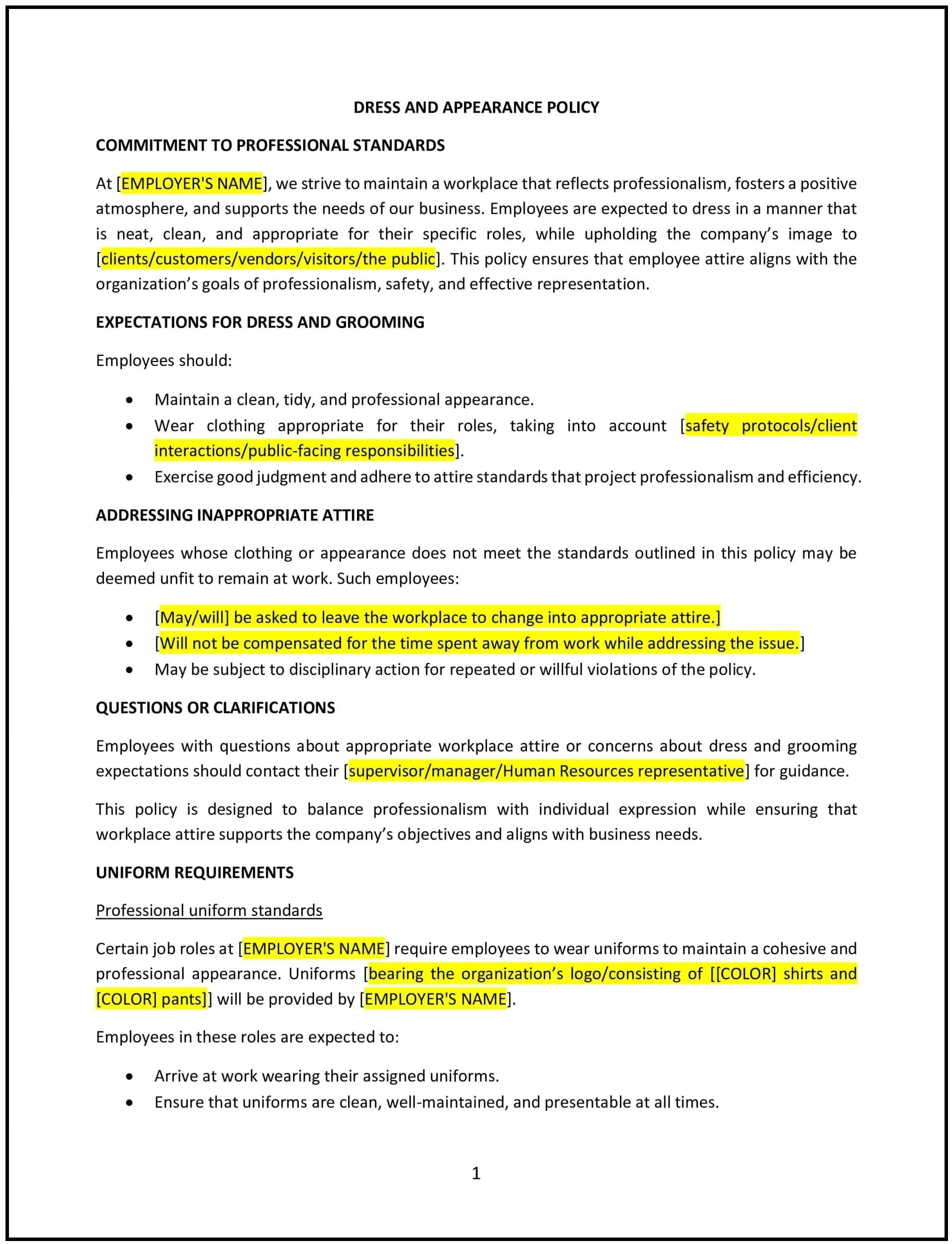
A dress and appearance policy helps Florida businesses maintain a professional, respectful, and inclusive environment by outlining the company’s expectations for employee attire and grooming. This policy provides guidelines for appropriate clothing, personal grooming, and overall appearance, considering the nature of the business and the roles employees hold. It is designed to ensure that employees present themselves in a manner consistent with the company’s image and values while allowing flexibility for individual expression and comfort.
By implementing this policy, businesses can foster a professional atmosphere, promote inclusivity, and avoid potential discrimination or misunderstandings related to appearance and dress codes.
How to use this dress and appearance policy (Florida)
- Define acceptable attire: Clearly outline what constitutes appropriate clothing in the workplace, such as business casual, formal business attire, or uniforms, depending on the company’s industry and work environment. Specify any clothing or accessories that are unacceptable, such as clothing with offensive logos, slogans, or excessively casual attire (e.g., flip-flops, ripped jeans).
- Consider job roles and work settings: Tailor the policy to account for different job roles within the company. For example, employees who interact with clients or customers may be expected to adhere to a more formal dress code, while those in non-customer-facing roles may have more flexibility.
- Set grooming standards: Specify any grooming standards related to hair, facial hair, nails, tattoos, piercings, or personal hygiene. Ensure that the standards are non-discriminatory and inclusive of different cultural, religious, and personal preferences.
- Address inclusivity and cultural considerations: Ensure the policy allows for flexibility to accommodate employees’ cultural, religious, or gender identity-related needs. For example, consider allowing religious attire (e.g., hijabs, turbans) or accommodating medical conditions that may affect grooming or dress.
- Communicate exceptions and flexibility: Clearly explain any exceptions to the dress code, such as for employees with disabilities, religious dress requirements, or in cases of extreme weather conditions. Make it clear that employees are encouraged to seek accommodations if needed.
- Provide enforcement guidelines: Outline the process for addressing violations of the dress and appearance policy. This may include a verbal or written warning, guidance on improving appearance, or further disciplinary actions if the violation persists.
Benefits of using this dress and appearance policy (Florida)
This policy offers several benefits for Florida businesses:
- Promotes professionalism: By setting clear expectations for dress and appearance, businesses ensure that employees present themselves in a professional manner that reflects positively on the company.
- Enhances company image: A consistent dress code helps create a cohesive image for the company, which can improve customer and client perceptions and strengthen the brand’s reputation.
- Encourages inclusivity: A well-structured dress code allows for flexibility to accommodate diverse cultural, religious, and personal preferences, promoting an inclusive and respectful work environment.
- Reduces confusion: Clear guidelines help prevent misunderstandings or confusion about what is appropriate to wear at work, creating a consistent and fair approach to attire across the organization.
- Avoids discrimination: By being mindful of different cultural or personal preferences, the policy can help businesses avoid potential claims of discrimination related to appearance or dress code enforcement.
Tips for using this dress and appearance policy (Florida)
- Communicate the policy clearly: Ensure all employees understand the policy, including the guidelines for appropriate attire, grooming standards, and any flexibility or exceptions available.
- Provide examples: Use specific examples of acceptable and unacceptable attire to help employees better understand the policy’s expectations.
- Review periodically: Regularly review the policy to ensure it aligns with any changes in Florida laws, company culture, or industry trends, and adjust as necessary to maintain inclusivity and relevance.
- Be consistent: Apply the policy consistently across all employees and job roles to avoid any perception of favoritism or discrimination.
- Handle violations discreetly: When addressing policy violations, handle the situation privately and respectfully to maintain employee dignity and avoid embarrassment.