Dress and appearance policy (Indiana): Free template
Got contracts to review? While you're here for policies, let Cobrief make contract review effortless—start your free review now.
Customize this template for free
Dress and appearance policy (Indiana): Free template
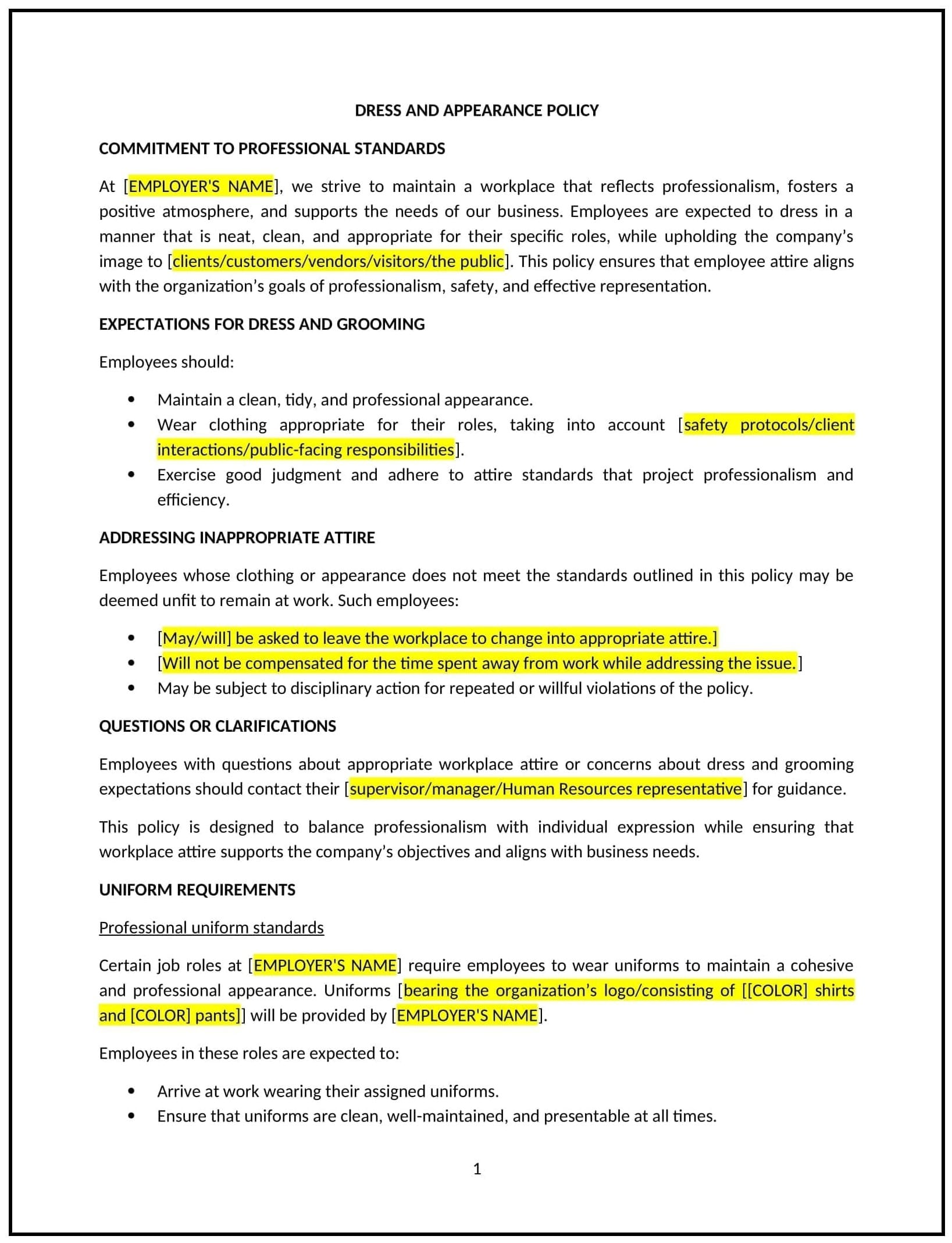
The dress and appearance policy helps Indiana businesses establish guidelines for employee attire and grooming, ensuring that employees present a professional and appropriate image while maintaining comfort and individual expression. This policy outlines expectations for dress codes, grooming standards, and acceptable attire for various business settings, including office environments, client meetings, and casual workdays. By using this template, businesses can promote a consistent and respectful work environment while allowing for flexibility and diversity in personal style.
By implementing this policy, Indiana businesses can ensure a professional image, foster inclusivity, and maintain a safe, respectful, and efficient workplace for all employees.
How to use this dress and appearance policy (Indiana)
- Define the dress code: Clearly explain the company’s expectations for employee attire in different work environments (e.g., business formal, business casual, casual). Specify any guidelines for clothing choices, such as appropriate colors, styles, or types of garments that should be worn in the office or at external events.
- Specify grooming standards: Outline expectations for employee grooming, including hair, nails, facial hair, and hygiene. The policy should balance professionalism with respect for individual preferences while maintaining a neat and clean appearance.
- Identify acceptable attire for various occasions: Clarify what attire is appropriate for different business settings, such as regular office days, client meetings, casual Fridays, and company events. This ensures employees understand when they can dress more casually and when they should adhere to formal dress codes.
- Address exceptions and accommodations: Provide guidelines for any exceptions to the dress code, such as accommodations for religious attire, medical conditions, or disabilities. The policy should ensure that employees’ needs are met without compromising the business's professional standards.
- Set expectations for personal expression: Allow employees to express their personal style within reason by specifying acceptable forms of personal expression, such as jewelry, tattoos, and body piercings. The policy should find a balance between individual style and maintaining professionalism.
- Address health and safety considerations: Ensure that the dress code includes health and safety requirements, such as wearing appropriate footwear in hazardous environments, protective gear in certain roles, and attire suitable for physical tasks or outdoor work.
- Establish enforcement procedures: Clearly outline the process for addressing violations of the dress code, including the steps taken to inform employees of non-compliance and the potential consequences for repeated violations.
- Maintain respect and inclusivity: Ensure that the policy is inclusive and respects cultural, gender, and personal preferences. Avoid policies that disproportionately target specific groups and ensure that the guidelines promote equal treatment for all employees.
Benefits of using this dress and appearance policy (Indiana)
Implementing this policy provides several key benefits for Indiana businesses:
- Promotes a professional image: A clear dress code helps maintain a consistent and professional appearance in the workplace, ensuring that employees present themselves in a manner that reflects well on the company.
- Increases employee comfort and confidence: Clear guidelines allow employees to dress in a way that is comfortable while still adhering to business expectations, which can boost confidence and productivity.
- Reduces distractions and confusion: A well-defined policy minimizes confusion and ensures that employees understand what is expected of them, reducing the potential for conflicts or misunderstandings.
- Enhances workplace safety: The policy ensures that employees wear appropriate clothing for safety and health, particularly in roles that involve physical tasks or work in potentially hazardous environments.
- Fosters inclusivity: A flexible and respectful dress code accommodates a wide range of personal and cultural preferences, ensuring that employees feel valued and respected.
- Promotes a positive work environment: By establishing clear expectations for appearance, businesses help maintain a respectful, organized, and efficient workplace where employees understand the standards and expectations.
Tips for using this dress and appearance policy (Indiana)
- Communicate the policy effectively: Ensure that all employees are aware of the dress and appearance policy and understand the guidelines. Include the policy in the employee handbook, during onboarding, and through internal communications.
- Monitor compliance fairly: Ensure that the policy is enforced consistently and equitably across the organization. Managers and HR should be trained on how to apply the policy fairly and without bias.
- Allow flexibility: While maintaining a professional image, allow employees some flexibility in their attire and grooming to accommodate personal preferences, cultural differences, and individual expression.
- Review the policy regularly: Periodically review the dress and appearance policy to ensure it aligns with changes in business practices, legal regulations, or cultural trends. Regular updates can help the policy remain relevant and effective.
- Address concerns promptly: If employees raise concerns about the dress code, address them promptly and openly, considering potential accommodations or adjustments that maintain both inclusivity and professionalism.
Frequently asked questions (FAQs)
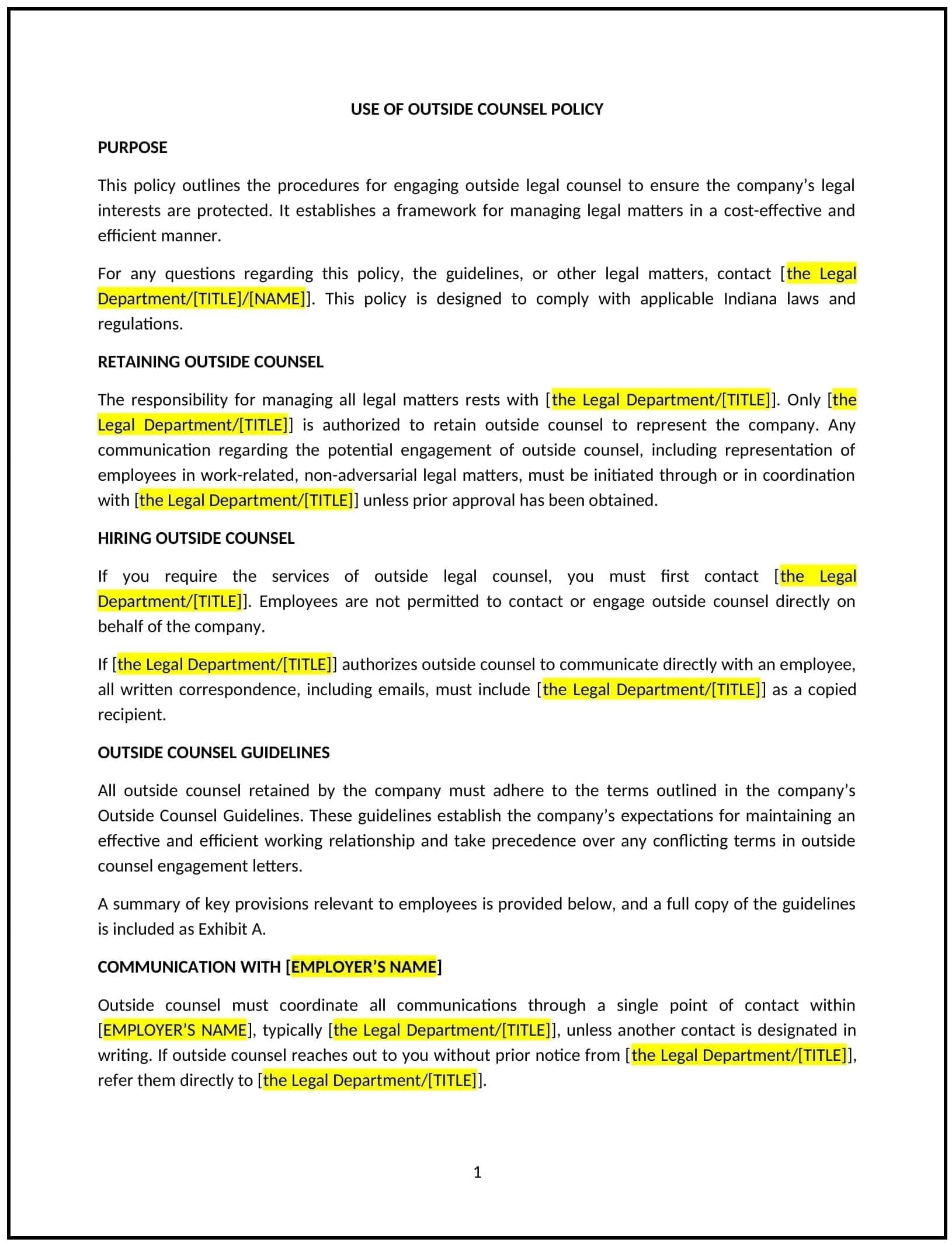
Outlines when Indiana companies should hire external legal support and how to manage approvals, billing, and oversight.
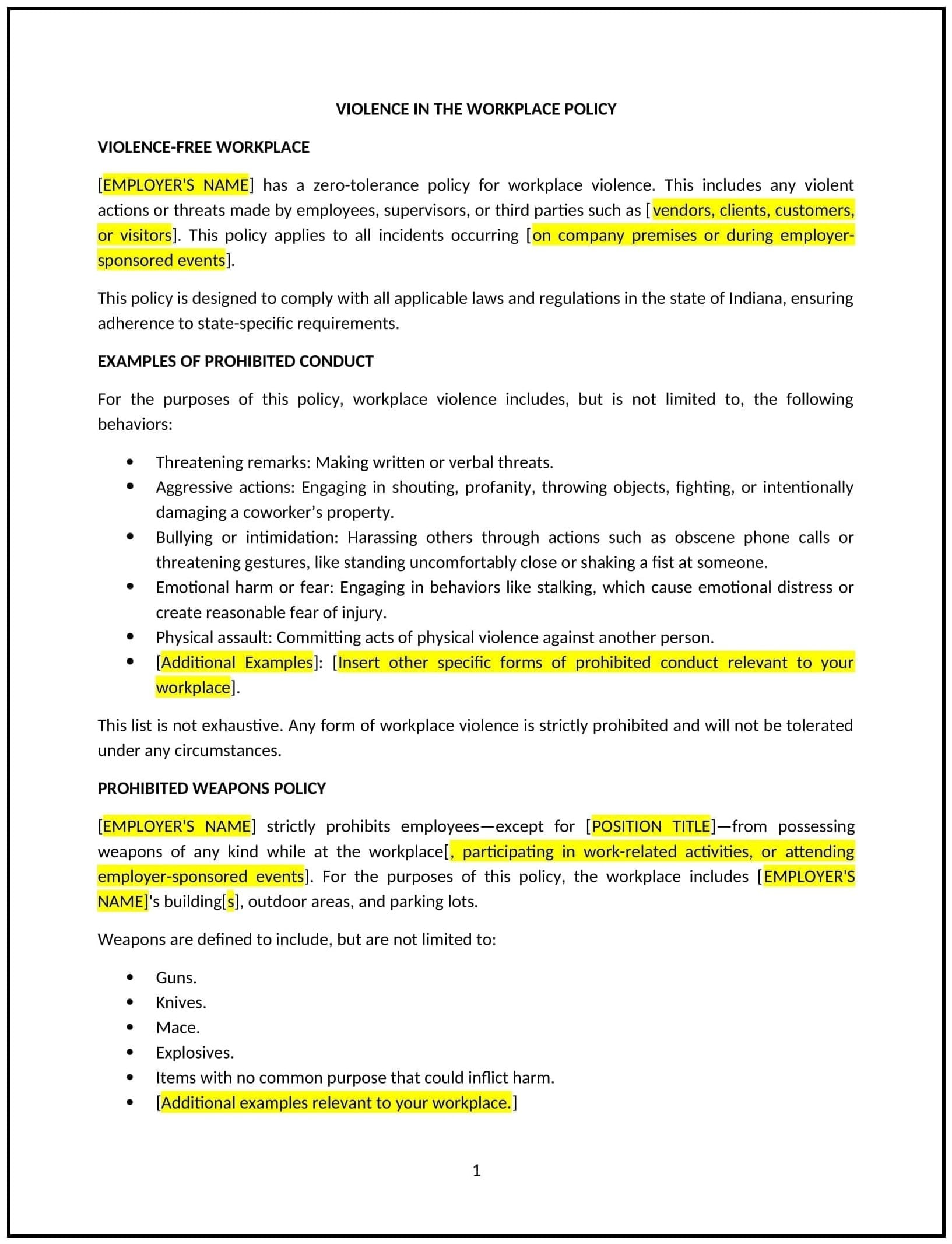
Prohibits threats, harassment, and physical violence in Indiana workplaces, with clear reporting and response procedures.
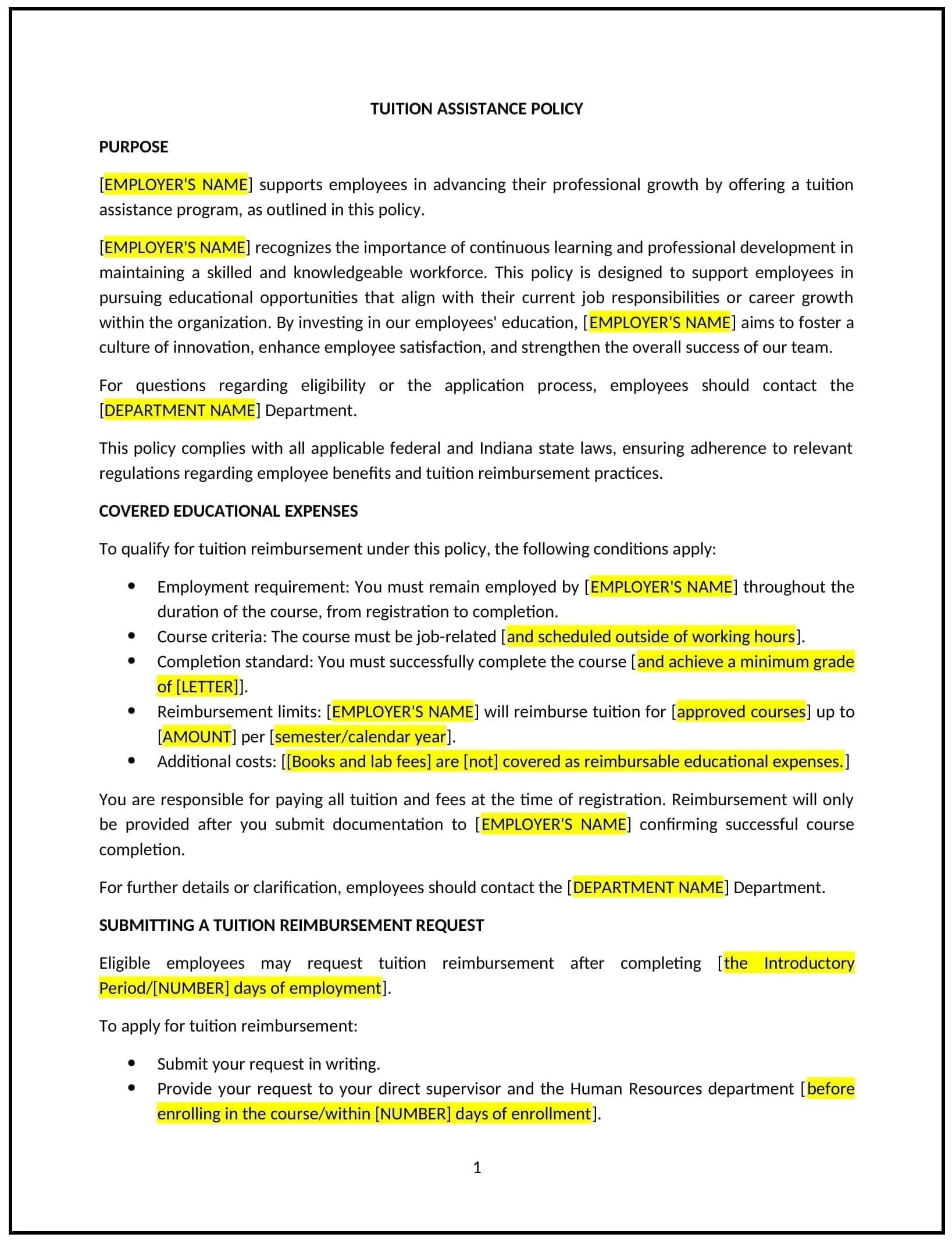
Offers financial support to Indiana employees pursuing education that enhances job skills or career growth, with eligibility and repayment terms.