Dress and appearance policy (Kansas): Free template
Got contracts to review? While you're here for policies, let Cobrief make contract review effortless—start your free review now.
Customize this template for free
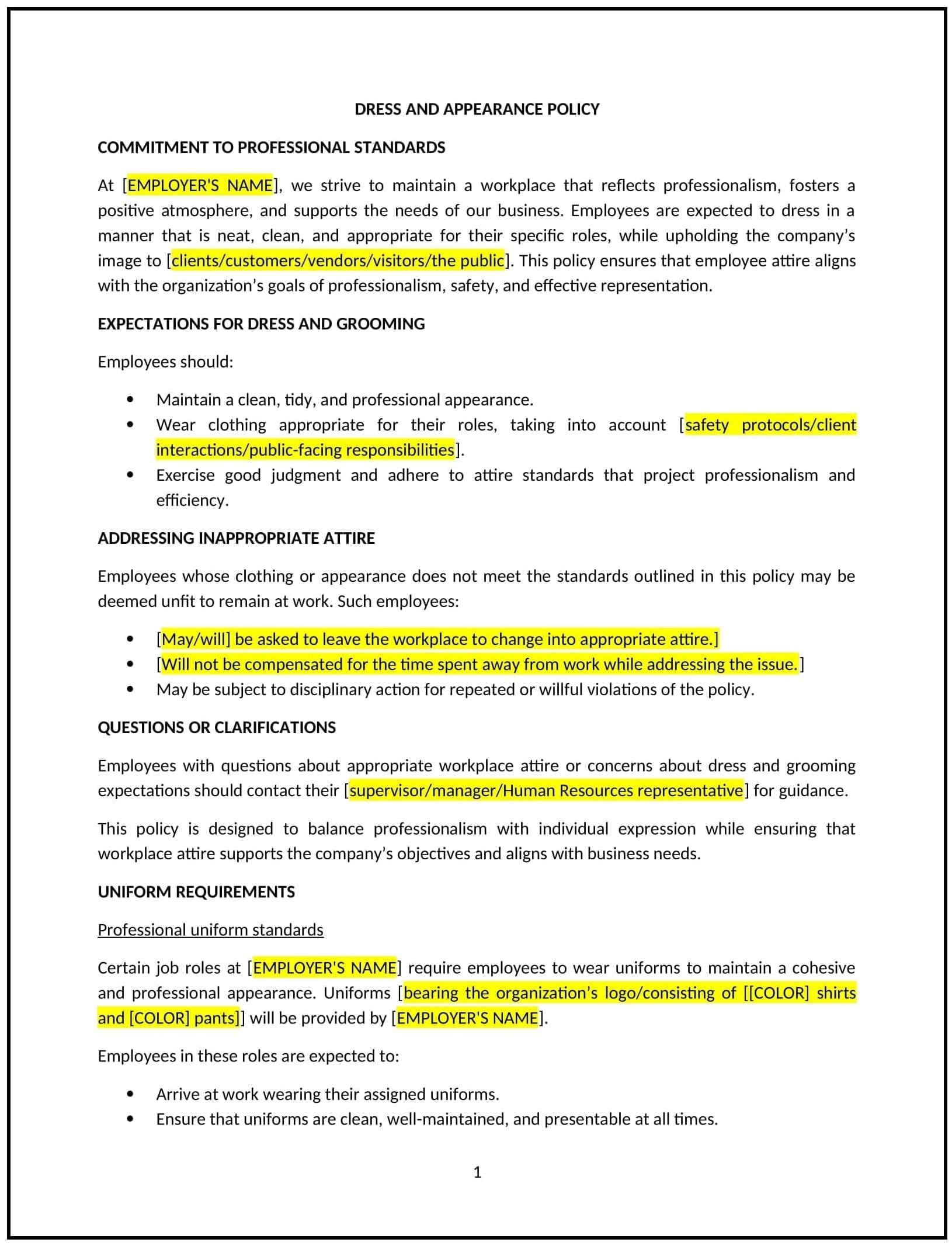
Dress and appearance policy (Kansas)
A dress and appearance policy helps Kansas businesses establish guidelines for employee attire, grooming, and personal appearance in the workplace. This policy outlines expectations for professionalism, safety, and respect while allowing flexibility for individual expression within defined boundaries.
By implementing this policy, businesses can maintain a professional image, ensure a safe and respectful work environment, and foster consistency across the organization.
How to use this dress and appearance policy (Kansas)
- Define appropriate attire: Businesses should specify what types of clothing, accessories, and grooming are considered acceptable for different roles, whether business casual, formal, or uniform requirements.
- Establish grooming standards: Businesses should outline expectations for hygiene, hair, and personal grooming to maintain a professional appearance.
- Set safety-related appearance requirements: Businesses should include guidelines for safety-related attire, such as wearing protective gear, non-slip shoes, or avoiding loose clothing in specific work environments.
- Consider cultural and religious expression: Businesses should make accommodations for cultural or religious attire, such as headscarves or turbans, ensuring inclusivity and respect for diversity.
- Address casual and special occasions: Businesses should clarify when casual dress or themed attire may be appropriate, such as for company events, charity days, or dress-down Fridays.
- Implement disciplinary actions: Businesses should outline the consequences of not adhering to the dress and appearance policy, including verbal or written warnings and other corrective actions.
- Review and update regularly: Businesses should periodically assess the policy to ensure it reflects changing workplace needs, industry trends, and legal requirements.
Benefits of using a dress and appearance policy (Kansas)
- Maintains a professional image: Helps businesses project a consistent and professional image to customers, clients, and other stakeholders.
- Supports workplace safety: Establishes guidelines for attire that ensures employee safety, particularly in environments requiring protective gear.
- Fosters inclusivity: Provides a framework for accommodating cultural and religious differences while maintaining a respectful workplace.
- Reduces misunderstandings: Sets clear expectations, minimizing confusion and ensuring that all employees understand acceptable attire and grooming standards.
- Enhances employee morale: Ensures that employees feel respected and comfortable within the boundaries of the company’s dress code.
- Reinforces company values: Demonstrates the organization’s commitment to professionalism, safety, and respect for diversity.
Tips for using this dress and appearance policy (Kansas)
- Communicate expectations clearly: Businesses should ensure all employees understand the dress and appearance guidelines through employee handbooks, training sessions, or onboarding.
- Be flexible with personal expression: Businesses should offer flexibility for personal style within the guidelines to promote a positive workplace culture.
- Address safety first: Businesses should prioritize safety requirements, ensuring that employees working in hazardous environments are aware of the necessary protective attire.
- Consider seasonal changes: Businesses should adapt the policy to accommodate seasonal changes in attire, such as summer clothing or winter uniforms.
- Be consistent in enforcement: Businesses should apply the dress and appearance policy consistently across all departments to avoid discrimination or favoritism.
- Regularly review the policy: Businesses should assess the effectiveness of the policy and make updates as needed to address new trends, legal requirements, or employee feedback.