Got contracts to review? While you're here for policies, let Cobrief make contract review effortless—start your free review now.
Customize this template for free
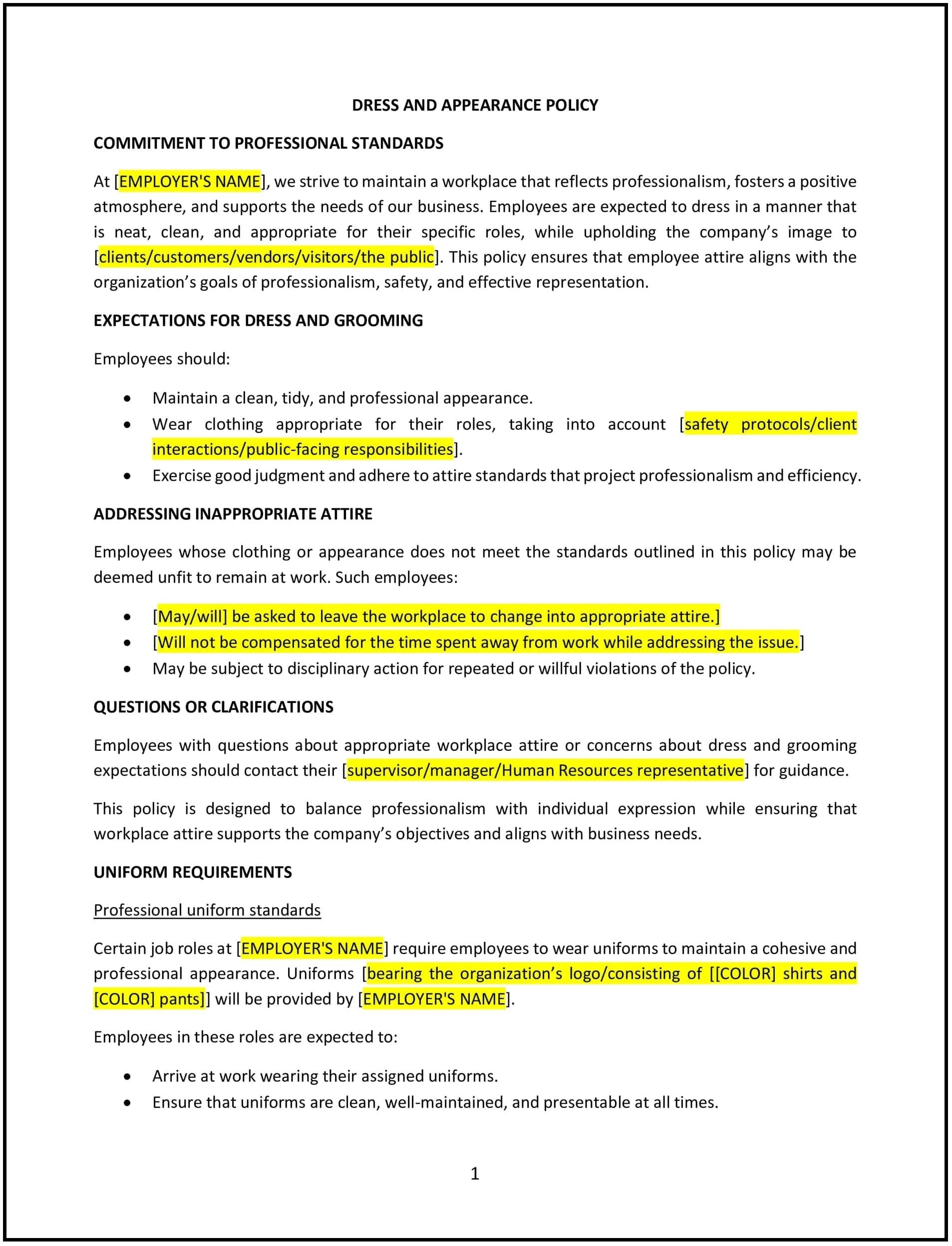
Dress and appearance policy (Maine): Free template
This dress and appearance policy is designed to help Maine businesses establish clear guidelines for workplace attire and grooming standards. It balances professionalism, safety, and inclusivity while allowing flexibility based on the nature of the business and the roles of employees.
By implementing this policy, Maine businesses can promote a professional image, ensure workplace safety, and foster a respectful and inclusive environment.
How to use this dress and appearance policy (Maine)
- Define expectations: Specify the type of attire required for the workplace, such as business formal, business casual, or uniforms, depending on roles and industry.
- Address safety requirements: Include attire or grooming standards needed for safety compliance, such as closed-toe shoes or hair restraints.
- Consider inclusivity: Ensure the policy respects employees’ cultural, religious, and gender expression through flexible and inclusive guidelines.
- Provide examples: Offer specific examples of acceptable and unacceptable attire to clarify expectations.
- Include special occasions: Detail dress codes for events like casual Fridays, client meetings, or company-sponsored events.
- Outline enforcement: Specify how managers will handle dress code violations, emphasizing respectful communication and fairness.
- Review regularly: Update the policy as necessary to reflect changing workplace norms or Maine labor laws.
Benefits of using this dress and appearance policy (Maine)
Implementing this policy provides several benefits for Maine businesses:
- Promotes professionalism: Enhances the business’s image by maintaining consistent dress and grooming standards.
- Ensures safety: Reduces risks by specifying attire and grooming requirements for hazardous work environments.
- Encourages inclusivity: Supports diverse cultural, religious, and personal expressions while balancing workplace needs.
- Reduces ambiguity: Clarifies expectations, minimizing misunderstandings or disputes about dress codes.
- Improves consistency: Establishes a standard approach for addressing dress and appearance concerns.
Tips for using this dress and appearance policy (Maine)
- Communicate the policy: Share the policy during onboarding and ensure it is readily available to all employees.
- Train managers: Equip supervisors with guidance on enforcing the policy fairly and respectfully.
- Be flexible: Allow reasonable accommodations for cultural, religious, and personal expression needs.
- Monitor compliance: Regularly review adherence to the policy and address violations promptly but tactfully.
- Adapt to roles: Tailor dress code expectations based on specific roles, such as client-facing positions or operational roles.
- Stay updated: Review Maine labor laws to ensure the policy complies with anti-discrimination and inclusivity requirements.