Dress and appearance policy (Mississippi): Free template
Got contracts to review? While you're here for policies, let Cobrief make contract review effortless—start your free review now.
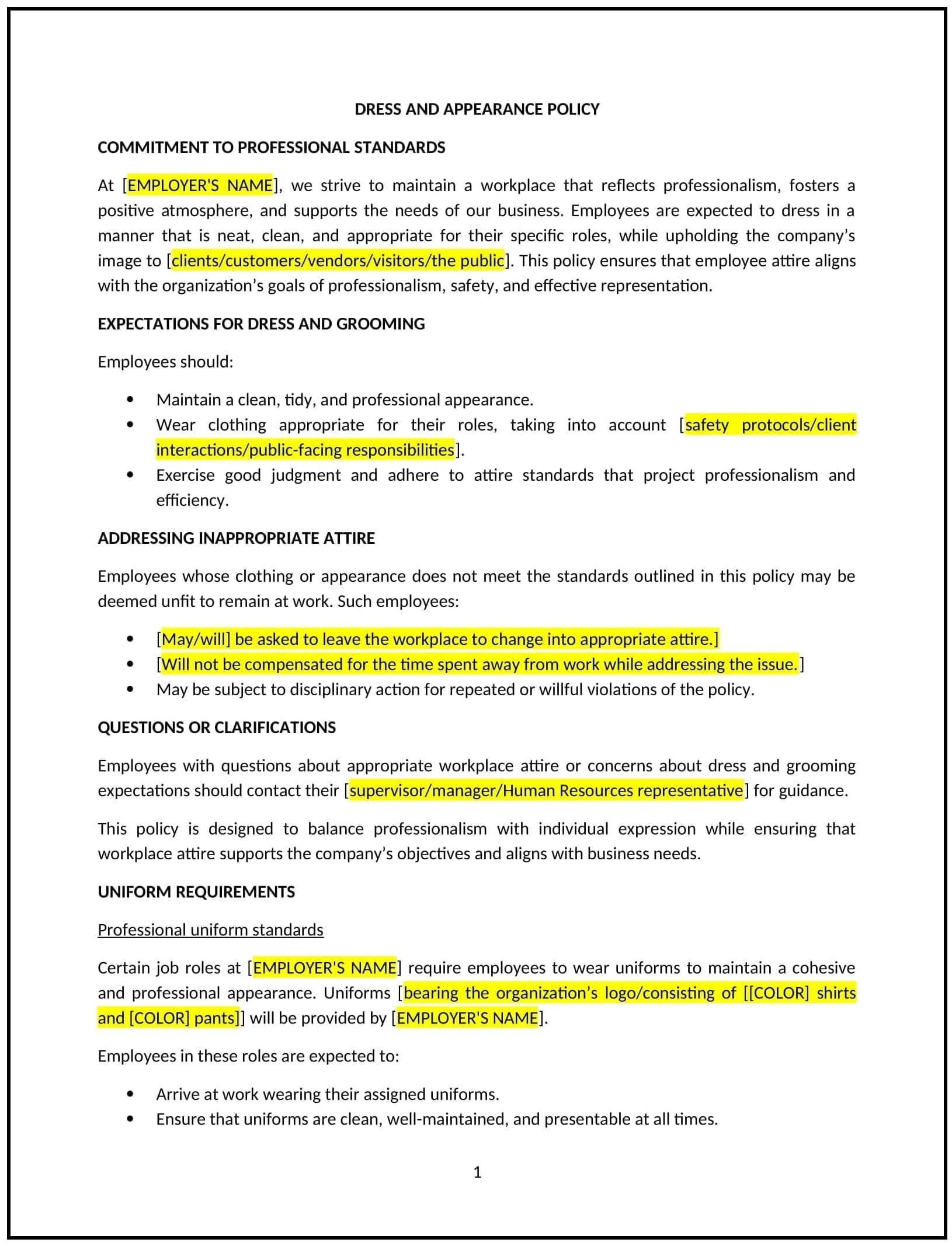
Customize this template for free
Dress and appearance policy (Mississippi)
A dress and appearance policy helps Mississippi businesses establish clear expectations for employees' attire in the workplace. The policy is designed to maintain professionalism, support the company’s culture, and ensure that employees’ attire is appropriate for the work environment. This policy also addresses issues like grooming, cleanliness, and the need to comply with industry standards or safety regulations.
By implementing this policy, businesses can create a consistent and professional image while promoting respect for both employees and customers.
How to use this dress and appearance policy (Mississippi)
- Define appropriate attire: Specify the types of clothing considered acceptable for the workplace, including whether business casual, formal attire, or uniforms are required.
- Address grooming standards: Outline expectations for grooming, such as hair length, facial hair, and personal hygiene, ensuring that all employees maintain a clean and professional appearance.
- Consider safety requirements: For certain jobs, such as those in manufacturing or construction, include specific safety-related attire, like uniforms, protective gear, or non-slip shoes.
- Accommodate cultural and religious differences: Ensure the policy is inclusive by allowing employees to express their cultural or religious beliefs through attire or grooming, within the context of maintaining professionalism.
- Clarify restrictions: List any attire or accessories that are prohibited, such as offensive clothing, overly casual clothing (like ripped jeans), or items that could be considered distracting.
- Set expectations for casual dress days: If the company allows for casual dress on certain days, define what is considered acceptable, such as jeans or T-shirts, while ensuring employees understand the limits of such flexibility.
- Address exceptions: Make provisions for employees who may need exceptions for medical reasons, disabilities, or other special circumstances.
- Outline enforcement: Specify how the policy will be enforced, including any disciplinary actions that may be taken if employees do not comply with the policy.
Benefits of using this dress and appearance policy (Mississippi)
This policy provides several benefits for Mississippi businesses:
- Promotes professionalism: By setting clear expectations for attire and grooming, the business maintains a professional and consistent image that is important for customer interactions and internal collaboration.
- Enhances workplace culture: A well-defined dress and appearance policy supports a workplace culture where employees know how to dress appropriately for the environment, fostering mutual respect and understanding.
- Improves employee productivity: When employees are clear about what is expected in terms of appearance, they can focus on their work without confusion or concerns about dress code violations.
- Ensures safety: For businesses in industries like construction, manufacturing, or healthcare, ensuring employees wear appropriate safety gear is crucial to preventing accidents and protecting workers.
- Promotes inclusivity: A flexible policy that accommodates cultural and religious differences helps employees feel respected and valued, contributing to a more inclusive workplace.
Tips for using this dress and appearance policy (Mississippi)
- Communicate the policy effectively: Make sure all employees understand the dress and appearance expectations through onboarding, training sessions, and regular reminders.
- Offer flexibility where possible: Consider incorporating casual dress days or providing employees with guidelines for acceptable attire based on the nature of their role.
- Lead by example: Management and leadership should model the dress code expectations by adhering to the policy themselves, setting a positive example for the rest of the organization.
- Address exceptions promptly: Ensure that employees who need exceptions for medical reasons, disabilities, or cultural practices are treated with sensitivity and provided with appropriate accommodations.
- Review the policy regularly: Revisit the policy annually or as needed to ensure it remains relevant to the business’s needs, employee expectations, and any changes in industry standards or legal requirements.