Dress and appearance policy (Missouri): Free template
Got contracts to review? While you're here for policies, let Cobrief make contract review effortless—start your free review now.
Customize this template for free
Dress and appearance policy (Missouri)
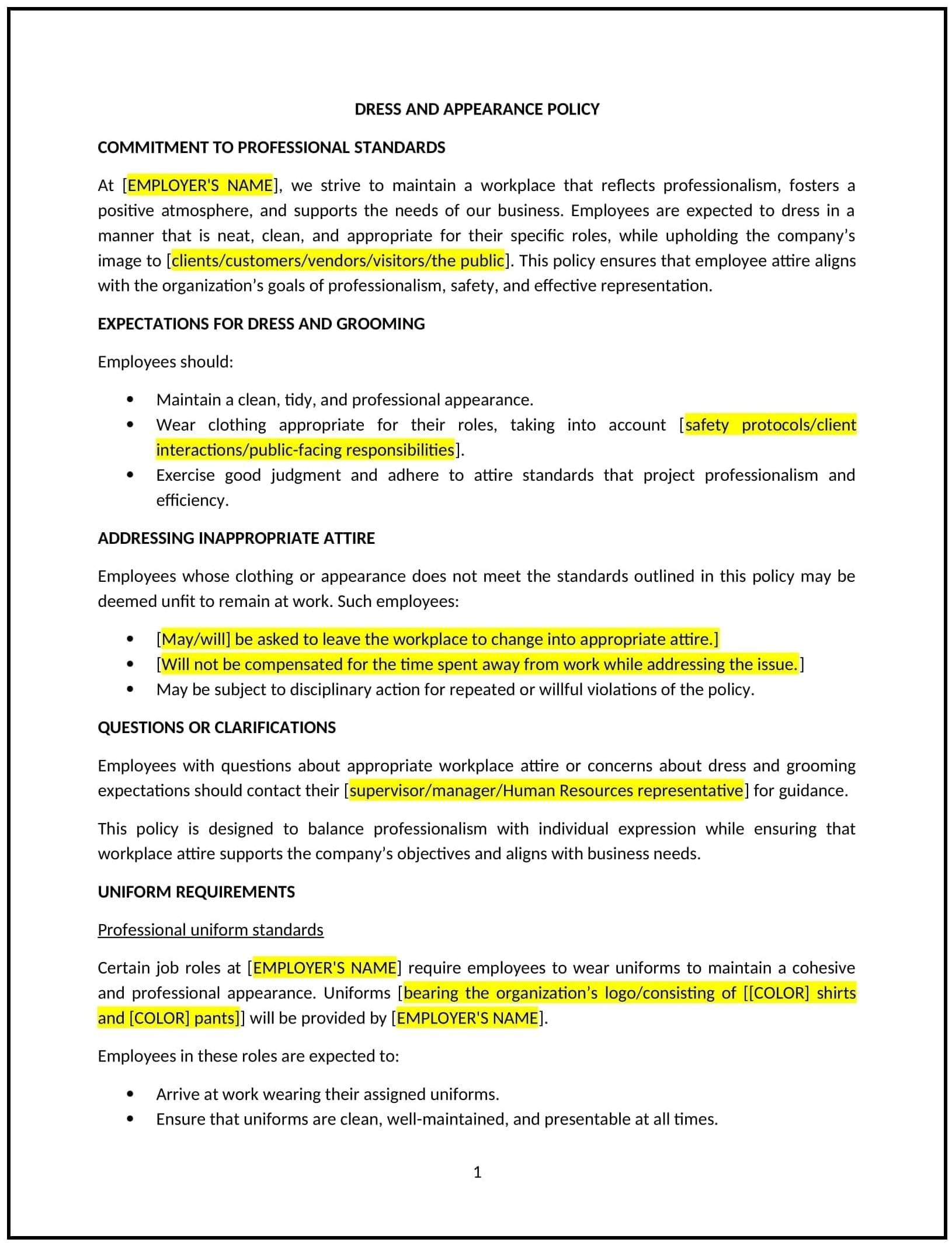
A dress and appearance policy helps businesses in Missouri establish clear expectations regarding professional attire, grooming, and overall appearance in the workplace. This policy outlines guidelines for what is considered appropriate attire based on the business environment, role, and any customer-facing interactions. It is designed to promote a professional and respectful work atmosphere while allowing for flexibility and personal expression.
By adopting this policy, businesses in Missouri can maintain a positive company image, foster professionalism, and support a respectful and inclusive work environment.
How to use this dress and appearance policy (Missouri)
- Define acceptable attire: Clearly specify the types of clothing and grooming that are considered appropriate for various work environments, including office attire, casual workdays, or client meetings.
- Set expectations for grooming: Include guidelines on personal grooming, such as hair, facial hair, and overall cleanliness, to maintain a professional appearance.
- Address special circumstances: Outline any accommodations or considerations for employees who may need exceptions, such as for religious or cultural reasons, or health-related needs.
- Clarify customer-facing requirements: Specify any additional appearance standards for employees who interact directly with customers, clients, or the public.
- Determine flexible options: If applicable, establish guidelines for more casual or flexible dress codes on certain days (e.g., casual Fridays), while maintaining professionalism.
- Include uniform requirements: If uniforms are required, detail the expectations for proper wear, maintenance, and any company-provided apparel.
- Set enforcement procedures: Specify how the policy will be enforced, including consequences for violations and how employees will be addressed if they do not meet the appearance standards.
- Review regularly: Periodically review and update the policy to ensure it reflects changing business needs, societal norms, and legal requirements.
Benefits of using this dress and appearance policy (Missouri)
This policy provides several benefits for businesses in Missouri:
- Promotes professionalism: A clear dress and appearance policy helps maintain a professional and polished image for both employees and the company.
- Reduces confusion: By setting clear expectations, businesses can prevent misunderstandings about what is considered acceptable attire and appearance in the workplace.
- Enhances workplace culture: A uniform or consistent appearance can create a sense of unity and belonging among employees, fostering a positive work environment.
- Supports inclusivity: A well-defined policy allows for flexibility and accommodations to respect personal, cultural, and religious expressions, ensuring all employees feel valued.
- Reflects company values: The policy helps align employee appearance with the company’s image and values, especially in customer-facing roles.
- Protects the company’s reputation: Ensuring employees maintain a professional appearance helps the business create a positive impression with clients, customers, and partners.
Tips for using this dress and appearance policy (Missouri)
- Communicate the policy clearly: Make sure all employees are aware of the policy through employee handbooks, onboarding, and regular reminders.
- Lead by example: Encourage leadership and management to model the expected dress and grooming standards to set a positive example for the team.
- Be consistent: Apply the policy consistently across all employees, ensuring fairness and avoiding confusion or favoritism.
- Offer flexibility: Consider providing flexibility for cultural, religious, or medical reasons, ensuring employees feel comfortable and respected while adhering to the policy.
- Monitor adherence: Regularly check that employees are following the dress code and address any issues promptly and respectfully.
- Review regularly: Regularly evaluate the policy to ensure it is still relevant, inclusive, and aligns with company values and changing workplace dynamics.