Got contracts to review? While you're here for policies, let Cobrief make contract review effortless—start your free review now.
Customize this template for free
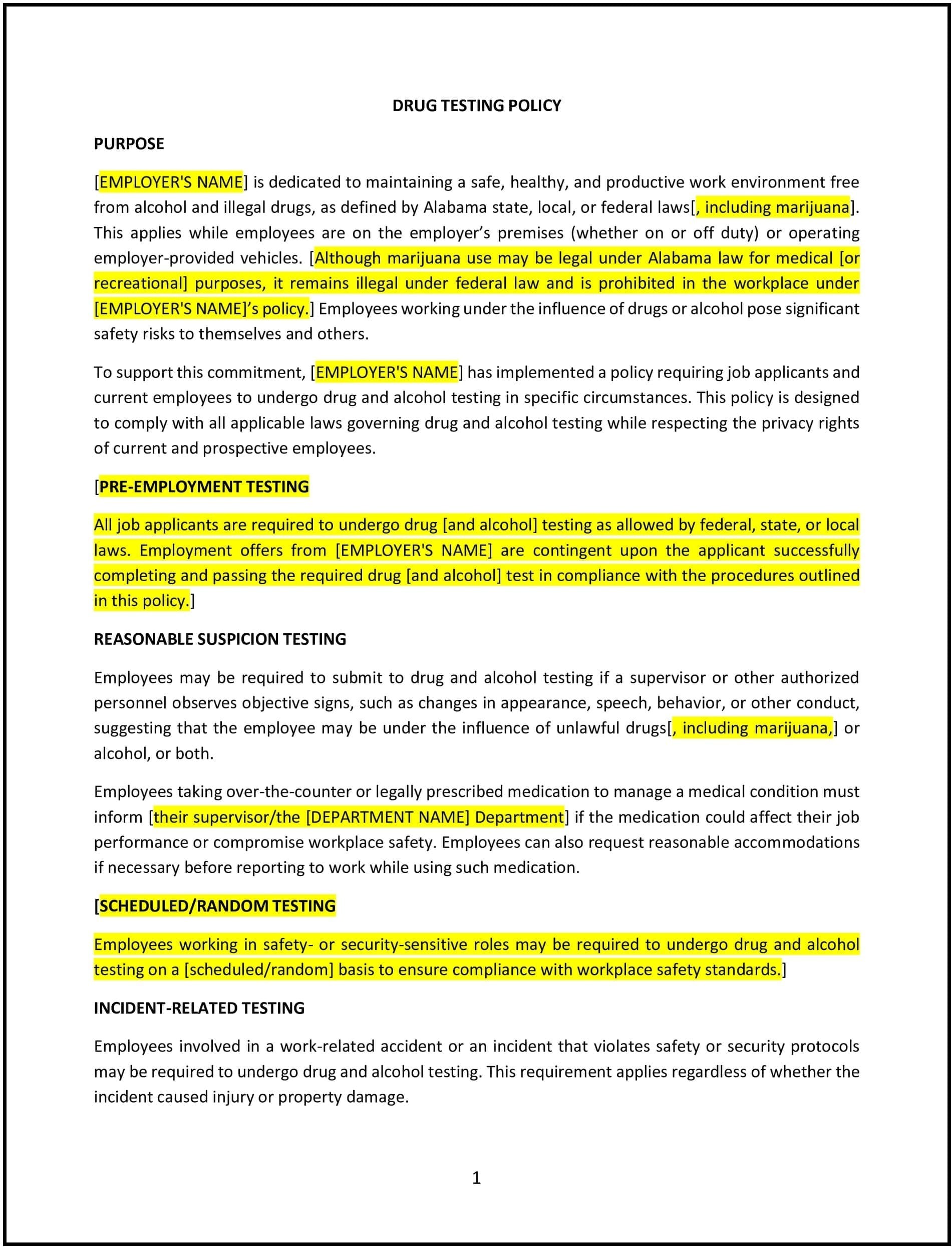
Drug testing policy (Alabama)
A drug testing policy establishes clear guidelines for conducting workplace drug tests, ensuring compliance with federal and Alabama-specific laws. For SMBs in Alabama, this policy helps maintain a safe, productive work environment while balancing employees’ rights and legal protections. Tailoring this policy ensures adherence to industry standards, legal requirements, and the specific needs of your workforce.
This policy outlines when and how drug tests are conducted, what substances are tested for, and the consequences of policy violations, helping your business address safety concerns and legal obligations effectively.
How to use this drug testing policy (Alabama)
- Define the scope of testing: Specify who is subject to drug testing, such as job applicants, employees in safety-sensitive roles, or all employees, depending on the business’s needs.
- Identify testing scenarios: Outline when testing will occur, such as pre-employment, post-accident, reasonable suspicion, random testing, or return-to-duty testing.
- Ensure compliance with Alabama laws: Align the policy with Alabama’s drug testing regulations, such as adhering to drug-free workplace requirements for certain industries.
- Establish testing procedures: Detail how tests will be conducted, including the type of test (e.g., urine, saliva, hair) and the laboratory or third-party vendor used for testing.
- Protect employee privacy: Include measures to ensure the confidentiality of test results and compliance with privacy laws, while specifying how results will be communicated and stored.
Benefits of using a drug testing policy (Alabama)
A comprehensive drug testing policy supports workplace safety and compliance. Here’s how it benefits your business:
- Promotes safety: Reduces the risk of workplace accidents and injuries caused by impairment, particularly in safety-sensitive industries.
- Enhances productivity: Helps identify and address substance abuse issues that may affect employee performance and team dynamics.
- Supports compliance: Ensures adherence to Alabama-specific regulations and federal guidelines for workplace drug testing, such as the Drug-Free Workplace Act.
- Protects employer interests: Provides legal protections in cases of disputes or claims related to drug testing practices.
- Fosters a drug-free culture: Demonstrates your commitment to maintaining a professional and responsible workplace environment.
Tips for implementing a drug testing policy (Alabama)
- Be transparent about testing: Clearly communicate the purpose, scope, and procedures of drug testing to all employees during onboarding and through regular reminders.
- Train supervisors: Provide training to managers and supervisors on recognizing signs of substance abuse, conducting reasonable suspicion testing, and handling sensitive situations respectfully.
- Use certified testing vendors: Partner with licensed laboratories or testing providers that adhere to Alabama and federal standards to ensure accurate and legally defensible results.
- Include rehabilitation options: Consider offering resources or support for employees who test positive, such as employee assistance programs (EAPs) or substance abuse counseling.
- Regularly review the policy: Update the policy as needed to reflect changes in Alabama drug testing laws, industry standards, or workplace needs.