Electronic signature policy (Alabama): Free template
Got contracts to review? While you're here for policies, let Cobrief make contract review effortless—start your free review now.
Customize this template for free
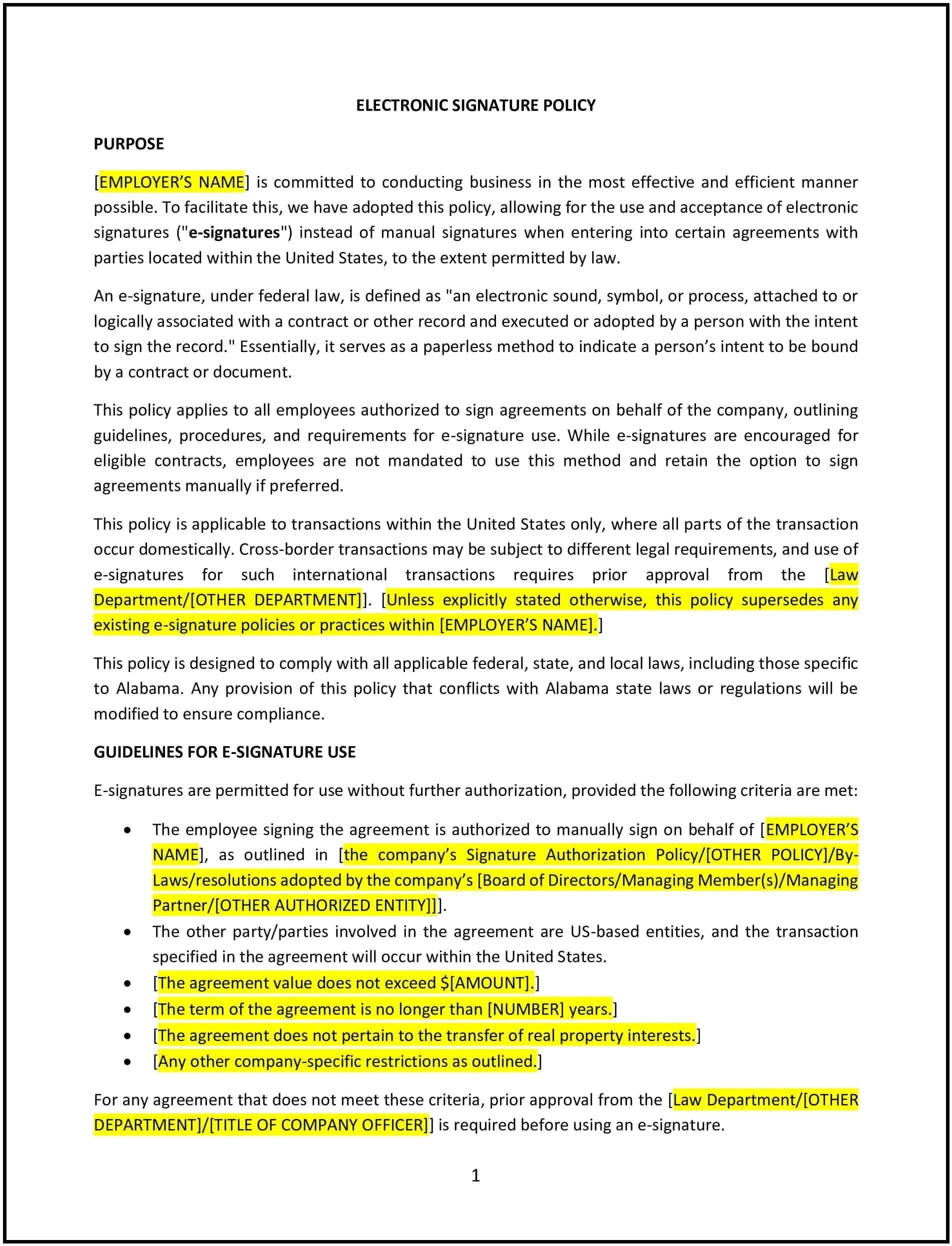
Electronic signature policy (Alabama)
An electronic signature policy outlines the rules and procedures for using e-signatures in your business operations. For SMBs in Alabama, this policy ensures that electronic signatures are used effectively and securely. By tailoring this policy to your business, you can streamline workflows, reduce paper use, and enhance operational efficiency.
How to use this electronic signature policy (Alabama)
- Define electronic signatures: Specify what constitutes an electronic signature under Alabama law, such as typed names, scanned signatures, or digital signatures created with specialized software.
- Identify approved platforms: List the platforms or tools authorized for creating and managing electronic signatures, such as DocuSign, Adobe Sign, or other secure providers.
- Ensure legal compliance: Align the policy with Alabama’s UETA and federal ESIGN Act to ensure the enforceability of electronically signed agreements.
- Establish verification procedures: Detail the steps for verifying the identity of signers, such as requiring secure logins, email authentication, or multi-factor verification.
- Outline record-keeping practices: Specify how electronic documents and signatures will be stored, ensuring security, accessibility, and compliance with record retention requirements.
Benefits of using an electronic signature policy (Alabama)
A comprehensive electronic signature policy benefits your business by improving efficiency and ensuring legal compliance. Here’s how it helps:
- Saves time: Speeds up the signing process, reducing delays and improving workflow efficiency.
- Enhances security: Establishes clear guidelines for secure e-signature use, protecting sensitive business information.
- Ensures legal validity: Aligns with Alabama and federal laws, ensuring electronically signed documents are enforceable in court.
- Reduces costs: Minimizes the need for paper, printing, and physical document storage, saving resources and reducing environmental impact.
- Improves convenience: Enables remote signing and digital workflows, allowing flexibility for employees, clients, and partners.
Tips for implementing an electronic signature policy (Alabama)
- Choose secure platforms: Use trusted e-signature providers that comply with Alabama’s legal requirements and offer robust security features.
- Train employees: Educate staff on the correct use of e-signature tools, including how to verify identities, manage documents, and address common challenges.
- Specify limitations: Clearly outline scenarios where electronic signatures are not acceptable, such as highly sensitive agreements or documents requiring notarization.
- Monitor compliance: Regularly review e-signature use to ensure adherence to the policy and address any deviations promptly.
- Integrate with existing workflows: Align e-signature processes with your current systems to simplify adoption and improve efficiency across departments.