Electronic signature policy (Alaska): Free template
Got contracts to review? While you're here for policies, let Cobrief make contract review effortless—start your free review now.
Customize this template for free
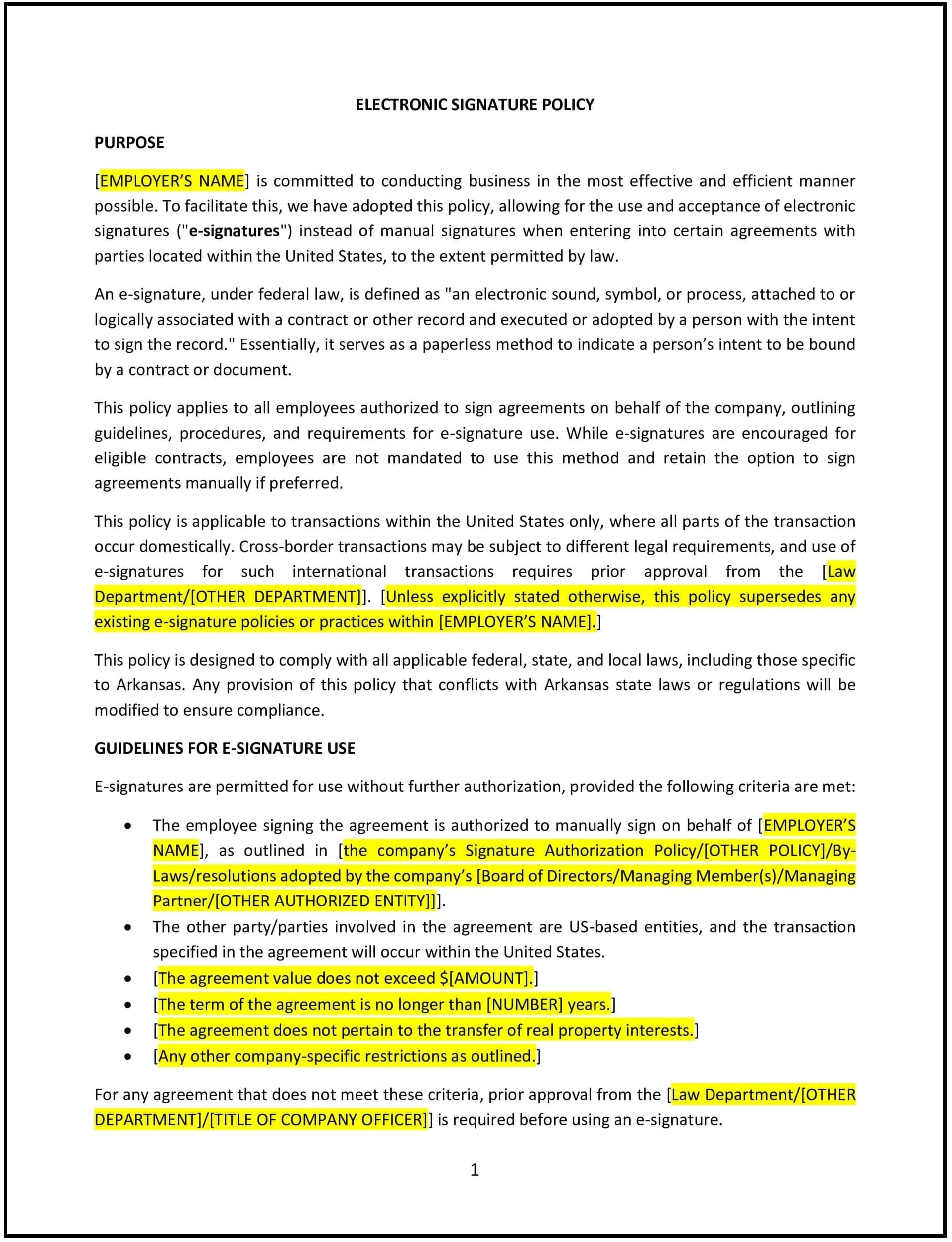
Electronic signature policy (Arkansas)
In Arkansas, an electronic signature policy provides businesses with guidelines for using electronic signatures (e-signatures) to execute documents securely and efficiently. This policy ensures that e-signatures are legally valid, properly managed, and compliant with Arkansas and federal laws, such as the Electronic Signatures in Global and National Commerce Act (E-SIGN Act).
This policy outlines acceptable e-signature tools, authentication processes, and record-keeping requirements. By implementing this policy, Arkansas businesses can streamline workflows, reduce paperwork, and enhance operational efficiency.
How to use this electronic signature policy (Arkansas)
- Define acceptable tools: Specify which e-signature platforms or technologies are approved for use by the business, ensuring they meet legal and security standards.
- Establish authentication procedures: Outline the steps to verify the identity of signatories, such as email verification, multi-factor authentication, or secure login credentials.
- Address legal validity: Ensure the policy aligns with Arkansas and federal laws, specifying when and how e-signatures are valid and enforceable.
- Set record-keeping standards: Provide guidelines for securely storing signed electronic documents, including retention periods and access controls.
- Communicate expectations: Ensure employees understand how and when to use e-signatures and the importance of adhering to the policy.
Benefits of using this electronic signature policy (Arkansas)
This policy offers several advantages for Arkansas businesses:
- Enhances efficiency: Speeds up document execution processes, reducing delays and improving workflows.
- Supports compliance: Aligns with Arkansas laws and federal regulations, ensuring the enforceability of e-signed documents.
- Reduces costs: Eliminates the need for printing, scanning, and storing paper documents, saving on operational expenses.
- Improves security: Ensures the authenticity and integrity of electronic documents through robust authentication and encryption measures.
- Promotes sustainability: Reduces paper usage, contributing to the business’s environmental goals.
Tips for using this electronic signature policy (Arkansas)
- Address Arkansas-specific considerations: Include state-specific requirements, such as laws governing specific types of contracts or records.
- Train employees: Provide training on the approved e-signature platforms and the importance of following authentication and security protocols.
- Monitor usage: Regularly review e-signature activities to ensure compliance with the policy and address any potential issues.
- Update as needed: Revise the policy periodically to reflect changes in legal requirements, technology, or business practices.
- Document processes: Maintain detailed records of all e-signature transactions, including authentication logs and signed documents, to ensure traceability.