Electronic signature policy (Arizona): Free template
Got contracts to review? While you're here for policies, let Cobrief make contract review effortless—start your free review now.
Customize this template for free
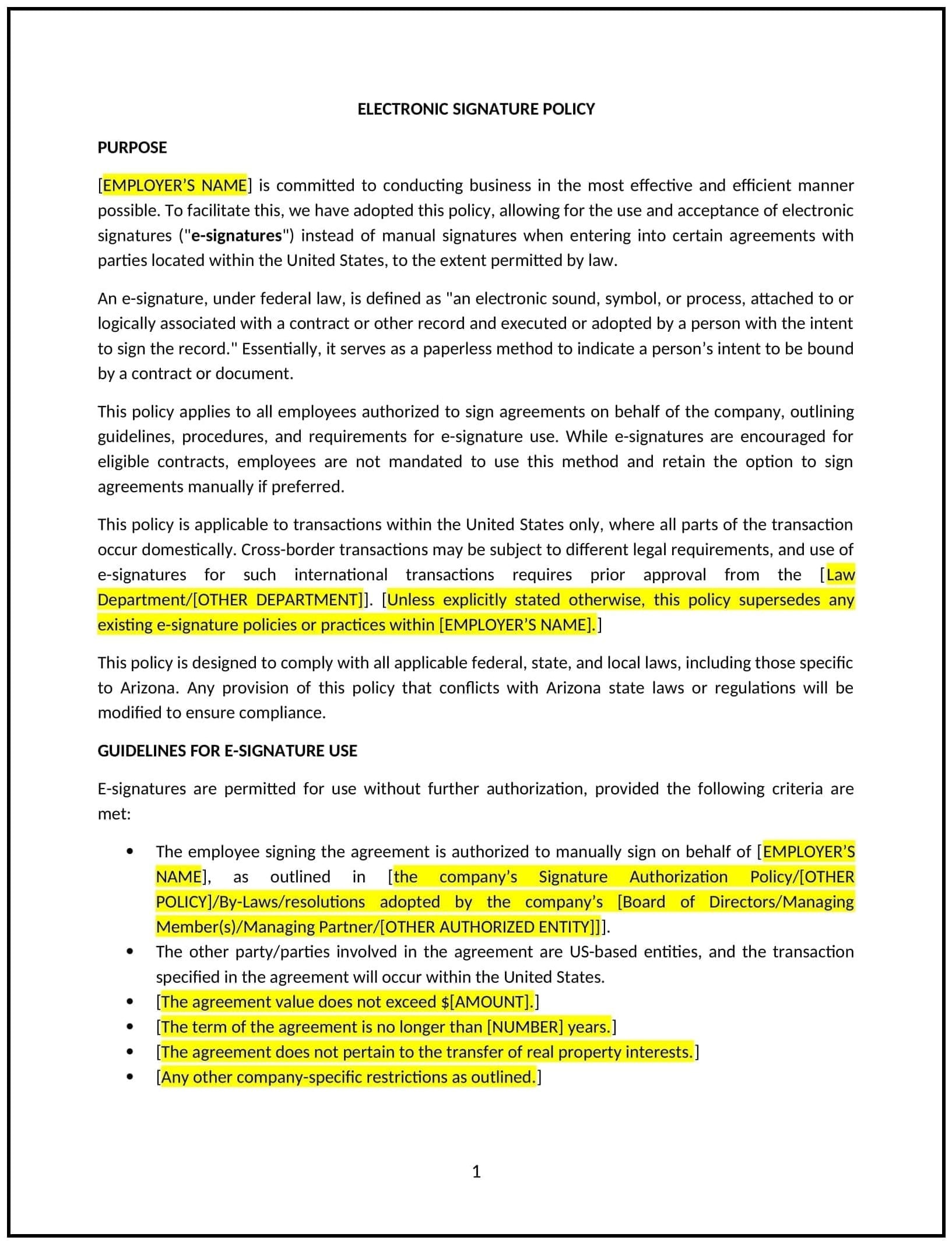
Electronic signature policy (Arizona)
In Arizona, an electronic signature policy provides businesses with a framework for using electronic signatures (e-signatures) in agreements and transactions. This policy ensures that e-signatures are used securely, legally, and consistently, aligning with state and federal regulations such as the Arizona Electronic Transactions Act (AETA) and the federal E-SIGN Act.
This policy outlines the acceptable use of e-signatures, requirements for authentication, and procedures for storing signed documents. By implementing this policy, Arizona businesses can streamline processes, enhance security, and support compliance.
How to use this electronic signature policy (Arizona)
- Define acceptable uses: Specify the types of documents and transactions for which e-signatures can be used, such as contracts, agreements, or internal approvals.
- Ensure authentication: Require secure methods to verify the identity of the signer, such as unique login credentials, multi-factor authentication, or digital certificates.
- Establish document integrity: Use technologies that prevent tampering with signed documents, ensuring their validity and enforceability.
- Address recordkeeping: Include guidelines for securely storing e-signed documents and retaining them for the legally required duration.
- Provide exceptions: Identify documents or transactions that must be signed with a physical signature, as required by law.
Benefits of using an electronic signature policy (Arizona)
This policy offers several advantages for Arizona businesses:
- Enhances efficiency: Speeds up transaction processes by eliminating the need for physical signatures and paper documents.
- Supports compliance: Aligns with AETA and E-SIGN Act requirements, ensuring the legality of e-signatures in Arizona.
- Protects security: Implements authentication and tamper-proofing measures to safeguard the validity of electronic transactions.
- Reduces costs: Minimizes expenses associated with printing, mailing, and storing paper documents.
- Improves accessibility: Enables remote signing, accommodating employees, clients, and partners who cannot sign in person.
Tips for using an electronic signature policy (Arizona)
- Address Arizona-specific regulations: Include provisions for transactions governed by state-specific laws, such as real estate or government filings.
- Choose reliable software: Use reputable e-signature platforms that comply with legal standards and offer robust security features.
- Train employees: Provide guidance on how to use e-signature tools correctly and securely to prevent errors or misuse.
- Monitor usage: Regularly review e-signature processes to ensure compliance with the policy and identify areas for improvement.
- Update as needed: Adapt the policy to reflect changes in technology, laws, or organizational requirements.