Electronic signature policy (California): Free template
Got contracts to review? While you're here for policies, let Cobrief make contract review effortless—start your free review now.
Customize this template for free
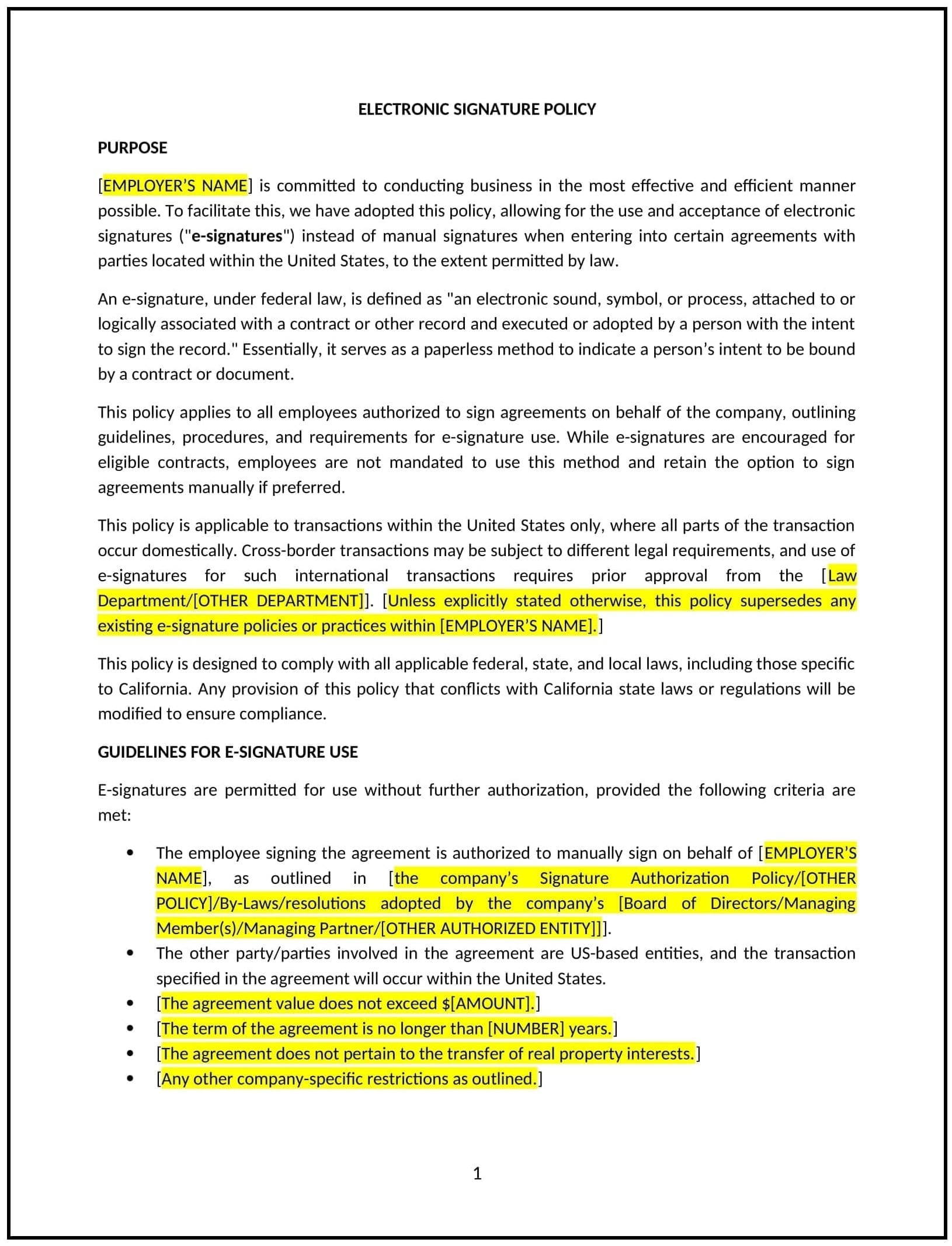
Electronic signature policy (California)
In California, an electronic signature policy provides businesses with guidelines for using and accepting electronic signatures in business transactions. This policy ensures that electronic signatures are used legally and securely while supporting compliance with California laws, such as the Uniform Electronic Transactions Act (UETA) and the California Civil Code.
This policy outlines the types of documents eligible for electronic signatures, procedures for obtaining and verifying signatures, and the responsibilities of employees and signatories. By implementing this policy, California businesses can streamline operations and ensure the validity of electronic agreements.
How to use this electronic signature policy (California)
- Define scope: Specify the types of documents and transactions where electronic signatures are acceptable, such as contracts, agreements, or approvals.
- Establish security requirements: Require the use of secure electronic signature platforms that provide authentication and tamper-proof records.
- Outline signature procedures: Detail how electronic signatures will be collected, stored, and verified to ensure validity and enforceability.
- Communicate employee responsibilities: Ensure employees understand their roles in using electronic signature tools properly and maintaining compliance.
- Retain records: Require the secure storage of signed documents in compliance with California record retention laws.
Benefits of using this electronic signature policy (California)
This policy offers several advantages for California businesses:
- Supports compliance: Reflects California laws governing the use and enforceability of electronic signatures in transactions.
- Enhances efficiency: Speeds up business processes by allowing for quicker approvals and sign-offs.
- Promotes security: Ensures signatures are authenticated and documents are protected from tampering.
- Reduces costs: Eliminates the need for printing, mailing, or storing physical documents.
- Increases accountability: Provides clear guidelines for employees and signatories regarding the use of electronic signatures.
Tips for using this electronic signature policy (California)
- Reflect California-specific laws: Ensure the policy aligns with UETA and California Civil Code requirements for electronic transactions.
- Use secure platforms: Implement trusted electronic signature tools that provide authentication, encryption, and audit trails.
- Train employees: Educate staff on using electronic signature tools and understanding their responsibilities under the policy.
- Monitor compliance: Regularly review electronic signature practices to ensure they align with legal and policy requirements.
- Review regularly: Update the policy to reflect changes in California laws, technology, or business practices.