Electronic signature policy (Colorado): Free template
Got contracts to review? While you're here for policies, let Cobrief make contract review effortless—start your free review now.
Customize this template for free
Electronic signature policy (Colorado)
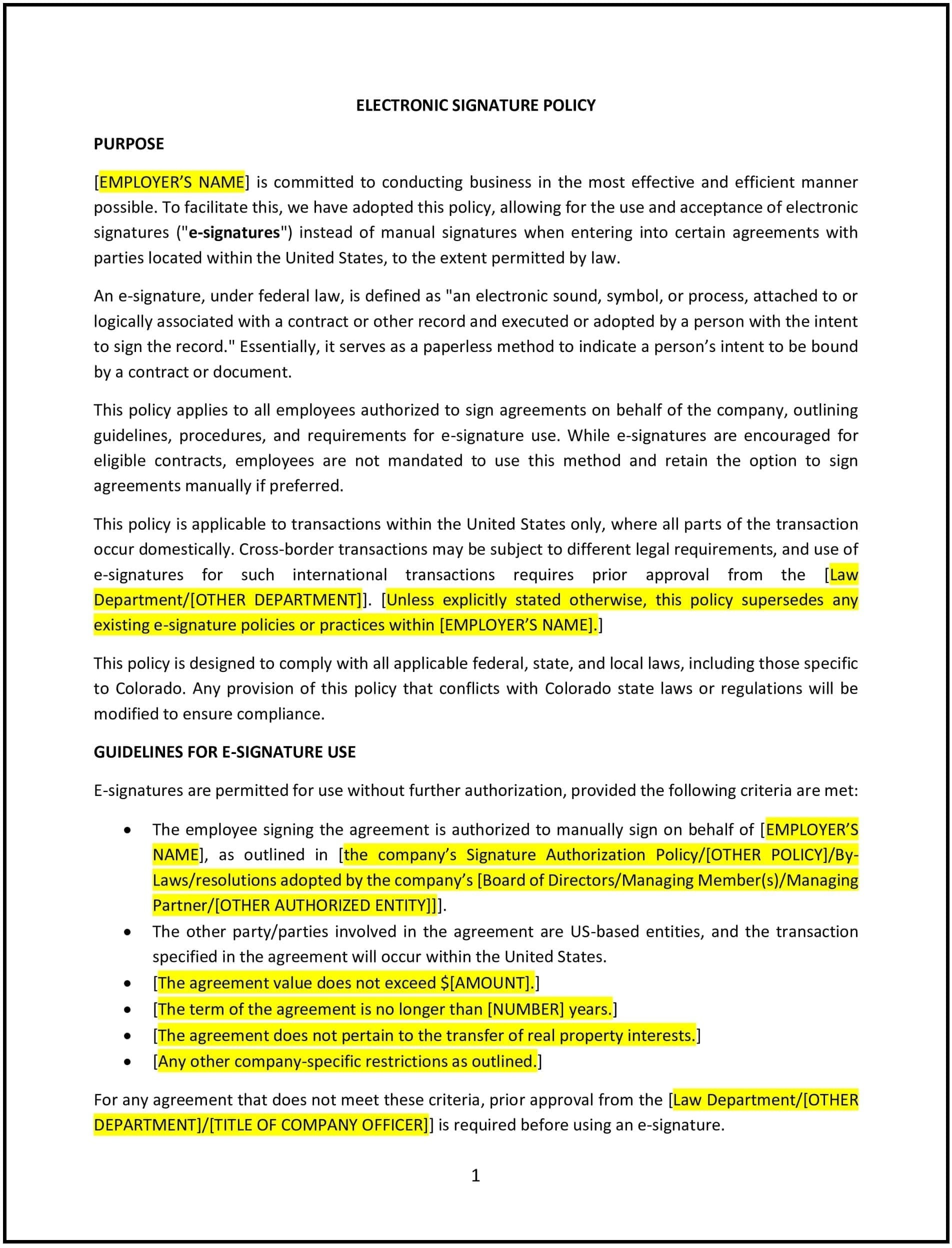
In Colorado, an electronic signature policy provides businesses with guidelines for using electronic signatures in place of traditional handwritten signatures. This policy ensures that electronic signatures are legally valid, secure, and compliant with Colorado’s Electronic Transactions Act and federal laws such as the ESIGN Act. The goal is to streamline document signing processes while maintaining the integrity, authenticity, and legal enforceability of agreements.
By implementing this policy, Colorado businesses can enhance operational efficiency, reduce paperwork, and improve the speed of business transactions, all while complying with relevant legal requirements.
How to use this electronic signature policy (Colorado)
- Define electronic signature: Clearly define what constitutes an electronic signature under the policy, including signatures made through digital platforms, email, or secure web-based tools.
- Establish approved methods: Specify the methods or platforms employees should use for electronic signatures, ensuring that they comply with legal and security standards.
- Outline security measures: Include guidelines for ensuring the security and integrity of electronically signed documents, such as encryption and authentication protocols.
- Address consent and records: Ensure that the policy specifies that employees or external parties provide consent for electronic signatures and that records of electronic signatures are securely stored.
- Set procedures for use: Define when electronic signatures are acceptable and outline any situations where a handwritten signature may still be required.
- Ensure compliance: Ensure that all electronic signatures comply with applicable Colorado and federal laws, including the ESIGN Act and the Uniform Electronic Transactions Act (UETA), to maintain legal validity.
Benefits of using this electronic signature policy (Colorado)
This policy offers several advantages for Colorado businesses:
- Supports compliance: Ensures that the use of electronic signatures complies with Colorado’s Electronic Transactions Act, as well as federal regulations, making them legally valid and enforceable.
- Increases efficiency: Streamlines the process of signing contracts, agreements, and other business documents, reducing the time and resources spent on physical signatures and document handling.
- Reduces costs: By eliminating the need for paper, ink, and physical storage, businesses can save money on administrative costs and materials.
- Enhances security: Implementing secure platforms and encryption methods reduces the risk of fraud or tampering with signed documents, protecting the business and its stakeholders.
- Improves convenience: Provides employees and clients with a faster and more convenient way to sign documents, especially in remote or distributed work environments.
Tips for using this electronic signature policy (Colorado)
- Reflect Colorado-specific laws: Ensure the policy is aligned with Colorado’s Electronic Transactions Act and other state-specific laws that govern the use of electronic signatures in business transactions.
- Provide training: Train employees and stakeholders on the use of electronic signature platforms and the importance of security measures, ensuring that signatures are obtained correctly and legally.
- Use approved platforms: Work with trusted and compliant e-signature providers that meet industry security standards to ensure the integrity of electronic signatures and documents.
- Keep accurate records: Maintain secure digital records of electronically signed documents, including the signature date, the method used, and any supporting information to ensure auditability and compliance.
- Review regularly: Periodically assess the policy to ensure it reflects the latest technology, legal requirements, and business needs.