Electronic signature policy (Connecticut): Free template
Got contracts to review? While you're here for policies, let Cobrief make contract review effortless—start your free review now.
Customize this template for free
Electronic signature policy (Connecticut)
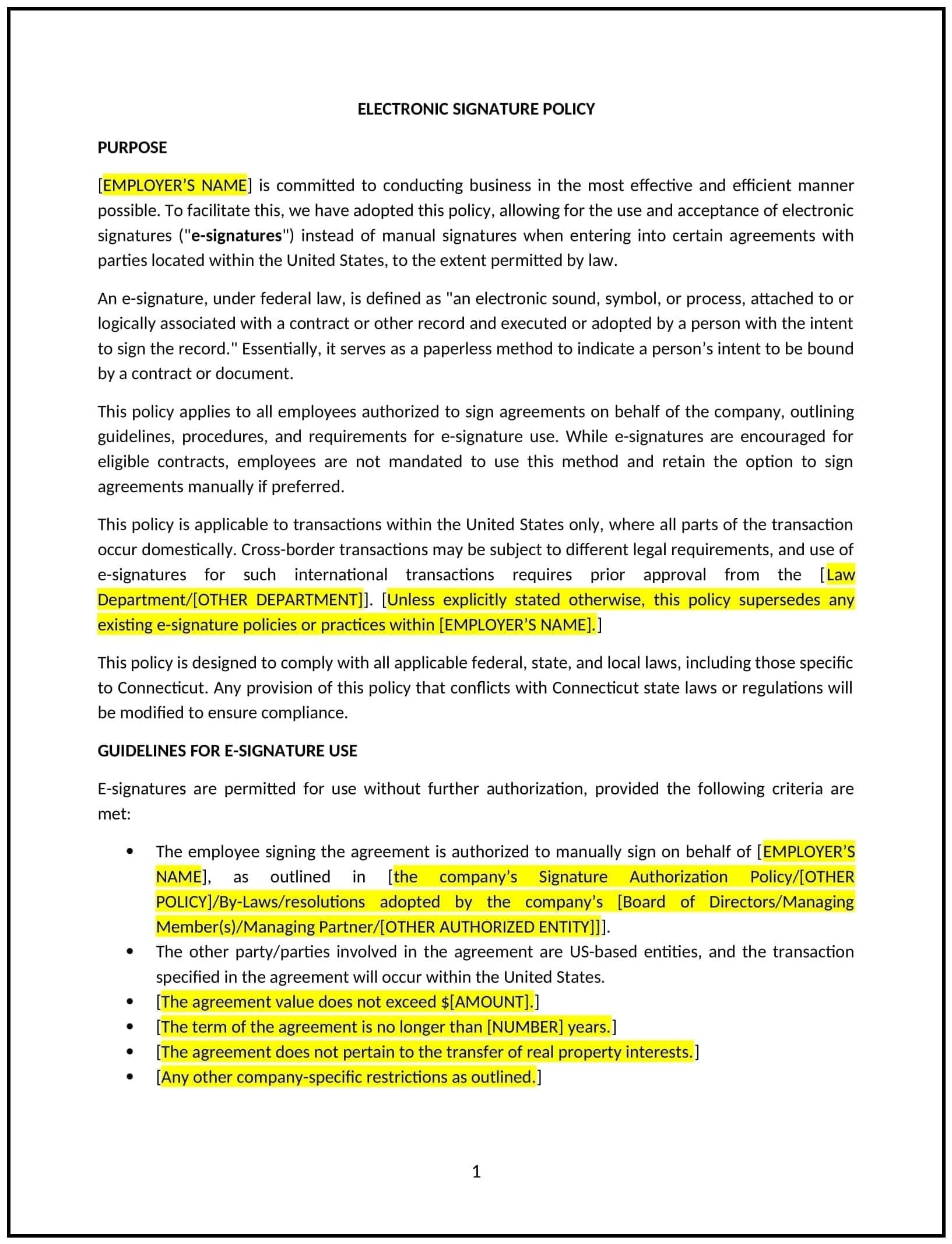
An electronic signature policy helps Connecticut businesses establish guidelines for the use of electronic signatures in place of traditional handwritten signatures. This policy outlines when and how electronic signatures can be used, the legal validity of electronic signatures, and the procedures for securely capturing, storing, and managing electronic signatures in accordance with both state and federal laws.
By implementing this policy, businesses can streamline processes, improve efficiency, and ensure that electronic signatures are used securely and legally.
How to use this electronic signature policy (Connecticut)
- Define electronic signatures: Clearly explain what constitutes an electronic signature, including typed names, scanned signatures, or signature capture using digital tools, and their legal equivalence to handwritten signatures.
- Set usage guidelines: Specify when electronic signatures are appropriate, such as for contracts, agreements, and consent forms, and establish the conditions under which they can be used.
- Ensure security: Outline the security measures required for capturing and storing electronic signatures, such as encryption, password protection, and secure digital platforms to prevent unauthorized access.
- Address legal compliance: Ensure that the policy aligns with the Electronic Signatures in Global and National Commerce (ESIGN) Act, the Uniform Electronic Transactions Act (UETA), and Connecticut’s state-specific regulations on electronic signatures.
- Establish recordkeeping practices: Define how electronically signed documents should be stored and retained, ensuring that they are easily accessible and legally binding if needed in the future.
Benefits of using this electronic signature policy (Connecticut)
This policy offers several benefits for Connecticut businesses:
- Streamlines processes: Speeds up contract execution and approval workflows by replacing paper-based signatures with faster, more efficient electronic alternatives.
- Increases security: Enhances the security of signature collection and document management by using encrypted digital tools, reducing the risk of fraud or tampering.
- Supports legal compliance: Ensures that electronic signatures are legally valid, reducing the risk of disputes over the validity of signed documents.
- Reduces costs: Eliminates the need for paper, printing, and physical storage, resulting in cost savings for the business.
- Improves environmental impact: Reduces paper usage, supporting the company’s sustainability efforts and reducing waste.
Tips for using this electronic signature policy (Connecticut)
- Communicate clearly: Ensure that all employees understand when and how to use electronic signatures, and the legal significance of electronically signed documents.
- Use trusted platforms: Implement secure, reputable electronic signature platforms that comply with the ESIGN Act and Connecticut state laws, ensuring the authenticity and security of signatures.
- Maintain confidentiality: Ensure that all electronically signed documents are stored securely and that only authorized individuals have access to them.
- Monitor usage: Regularly audit the use of electronic signatures to ensure compliance with the policy and identify any potential issues.
- Review periodically: Update the policy as needed to reflect changes in Connecticut laws, industry practices, or the company’s document management procedures.