Electronic signature policy (Florida): Free template
Got contracts to review? While you're here for policies, let Cobrief make contract review effortless—start your free review now.
Customize this template for free
Electronic signature policy (Florida)
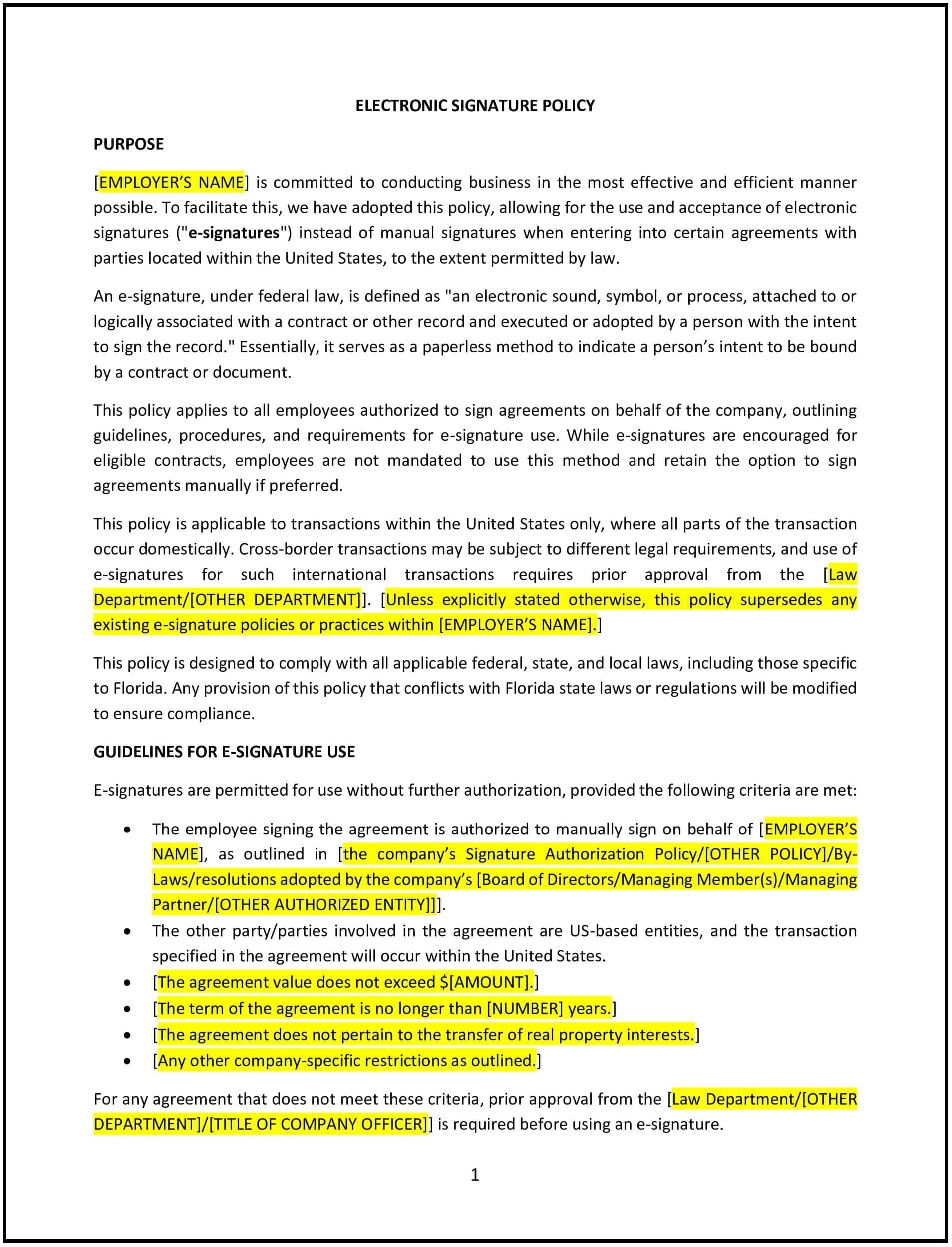
An electronic signature policy helps Florida businesses regulate the use of electronic signatures in place of traditional handwritten signatures on company documents. This policy outlines the circumstances under which electronic signatures are accepted, the types of documents that can be signed electronically, and the security measures required to ensure the authenticity and legality of electronic signatures.
By implementing this policy, businesses can streamline document workflows, reduce reliance on paper, and ensure compliance with Florida state laws and federal regulations regarding electronic signatures, such as the ESIGN Act.
How to use this electronic signature policy (Florida)
- Define acceptable electronic signatures: Clearly specify what constitutes an acceptable electronic signature, such as typed names, scanned signatures, or digital signatures, depending on the nature of the document and legal requirements.
- Identify eligible documents: Outline the types of documents that can be signed electronically, including contracts, agreements, HR documents, invoices, and other business-related paperwork. Exclude any documents that require a handwritten signature by law (e.g., wills, powers of attorney).
- Set security standards: Establish security measures to ensure the integrity of electronic signatures, such as encryption, authentication methods, and secure storage of signed documents. Specify any software or platforms that employees must use for signing documents electronically to ensure compliance with legal standards.
- Ensure authenticity and non-repudiation: Implement procedures to verify the identity of the individual signing the document and ensure that signatures cannot be repudiated. This may include requiring a two-factor authentication process or using verified digital signature tools.
- Provide guidelines for document storage: Specify how electronically signed documents will be stored, including how they should be archived, accessed, and protected to maintain their validity. Ensure that signed documents are retained for the required retention period under applicable laws.
- Address legal compliance: Ensure that the electronic signature policy complies with the Florida Uniform Electronic Transactions Act (UETA) and the federal ESIGN Act, which provide the legal foundation for electronic signatures in commercial transactions.
- Handle disputes or challenges: Outline the process for handling disputes or challenges to the validity of electronic signatures, including how the company will investigate the issue and resolve it while maintaining compliance with legal requirements.
Benefits of using this electronic signature policy (Florida)
This policy offers several benefits for Florida businesses:
- Streamlines document management: Electronic signatures enable faster processing and approval of documents, reducing the need for physical paperwork, mailing, and delays associated with traditional signatures.
- Enhances security: By implementing encryption and authentication protocols, electronic signatures provide a secure way to verify the authenticity of documents and prevent fraud or tampering.
- Reduces costs: Moving to electronic signatures reduces costs associated with printing, scanning, and storing paper documents, as well as the time spent on manual signature collection.
- Ensures legal compliance: The policy ensures that electronic signatures comply with applicable Florida state laws and federal regulations, protecting the business from legal challenges and ensuring the validity of signed documents.
- Increases efficiency: Electronic signatures improve workflow efficiency by speeding up the signing process, enabling faster transactions, approvals, and agreements.
Tips for using this electronic signature policy (Florida)
- Communicate the policy clearly: Ensure all employees understand when and how to use electronic signatures, including the types of documents that can be signed electronically and the security measures in place.
- Provide training: Offer training for employees on how to use electronic signature tools effectively, including how to verify signatures, ensure document integrity, and follow proper procedures for signing and storing electronic documents.
- Use trusted platforms: Ensure that the company uses a reliable, secure electronic signature platform that meets legal and security requirements. Consider using well-established software that provides audit trails and guarantees the authenticity of signatures.
- Monitor compliance: Regularly audit the use of electronic signatures to ensure that employees are following the policy and that documents are being signed and stored according to the established guidelines.
- Review periodically: Periodically review the policy to ensure that it remains in compliance with Florida laws, federal regulations, and industry best practices, and update it as needed to incorporate technological advancements.