Electronic signature policy (Georgia): Free template
Got contracts to review? While you're here for policies, let Cobrief make contract review effortless—start your free review now.
Customize this template for free
Electronic signature policy (Georgia)
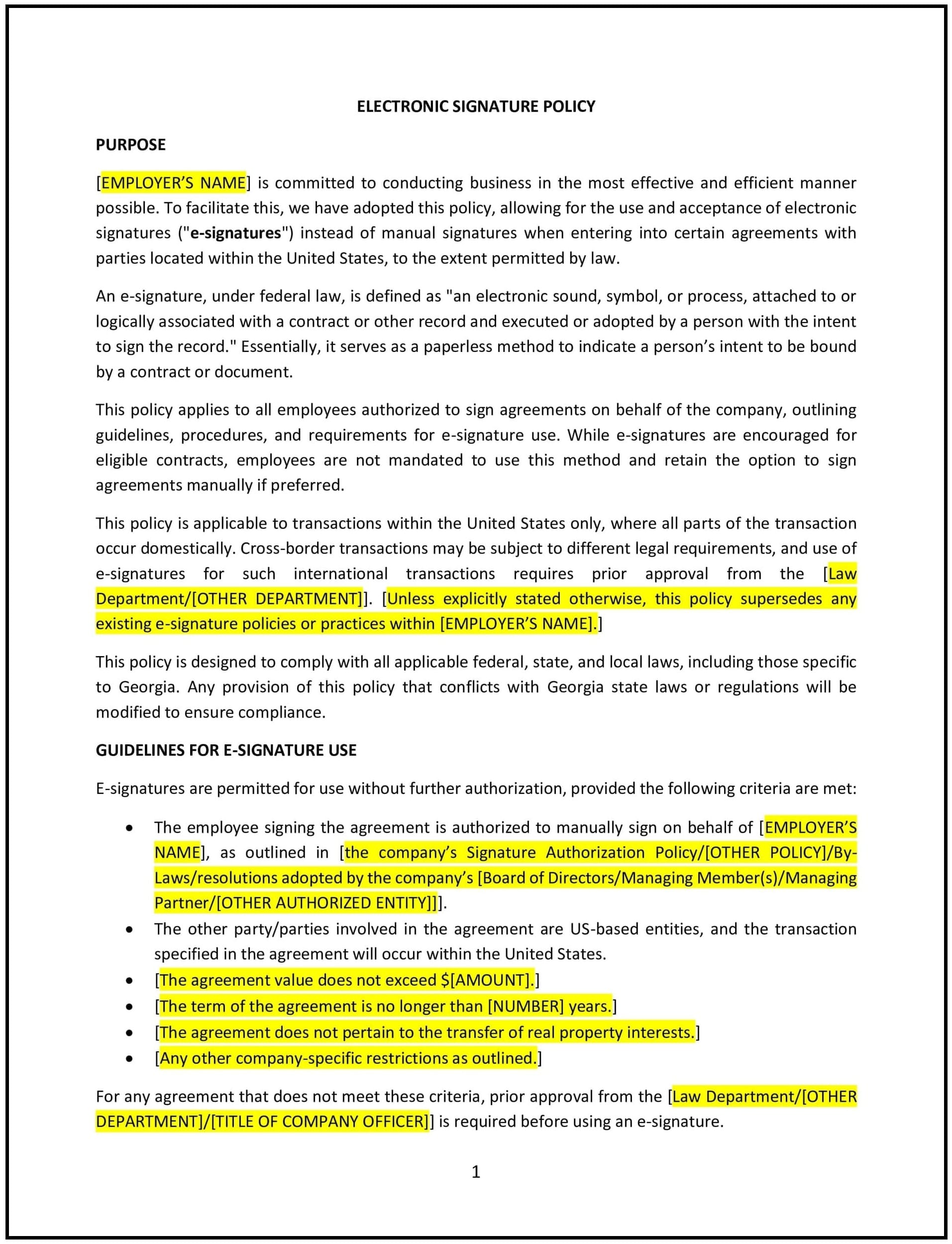
This electronic signature policy is designed to help Georgia businesses establish clear guidelines for using electronic signatures in their operations. The policy outlines acceptable use, security measures, and record-keeping practices to promote efficiency and trust in digital transactions.
By implementing this policy, businesses can streamline workflows, reduce reliance on paper, and enhance transaction security.
How to use this electronic signature policy (Georgia)
- Define electronic signatures: Specify what qualifies as an electronic signature, such as typed names, scanned images of handwritten signatures, or signatures created using digital tools.
- Identify approved platforms: List the electronic signature platforms or tools that employees and partners should use to ensure consistency and security.
- Establish usage guidelines: Provide instructions for when electronic signatures are acceptable, such as for contracts, agreements, or internal approvals.
- Address security requirements: Outline measures for protecting electronic signatures, such as encryption, authentication, and access controls.
- Include record-keeping practices: Specify how signed electronic documents should be stored, organized, and retained to ensure accessibility and reliability.
- Set limitations: Identify scenarios where electronic signatures may not be suitable, such as for specific legal or regulatory requirements in Georgia.
- Provide training: Offer training to employees on how to use electronic signature tools effectively and securely.
- Review and update regularly: Periodically review the policy to reflect changes in Georgia laws, technology, or business practices.
Benefits of using this electronic signature policy (Georgia)
Implementing this policy provides several advantages for Georgia businesses:
- Streamlines operations: Electronic signatures reduce the time and effort required for document processing and approvals.
- Enhances security: Clear guidelines for secure use protect against unauthorized access and fraudulent signatures.
- Reduces costs: Shifting to digital processes lowers expenses associated with printing, mailing, and storing paper documents.
- Improves accessibility: Electronic signatures make it easier to complete transactions remotely, supporting flexible and hybrid work models.
- Reflects Georgia-specific considerations: Tailoring the policy to local practices and legal requirements ensures its relevance and practicality.
Tips for using this electronic signature policy (Georgia)
- Use reliable platforms: Select electronic signature tools that meet industry standards for security and compliance.
- Communicate expectations: Ensure employees and partners understand when and how electronic signatures should be used.
- Monitor usage: Regularly review electronic signature transactions to identify and address any potential issues.
- Back up records: Store electronic signature documents securely with regular backups to prevent data loss.
- Adapt as needed: Update the policy to incorporate feedback, address emerging technologies, or align with changes in Georgia laws.