Electronic signature policy (Indiana): Free template
Got contracts to review? While you're here for policies, let Cobrief make contract review effortless—start your free review now.
Customize this template for free
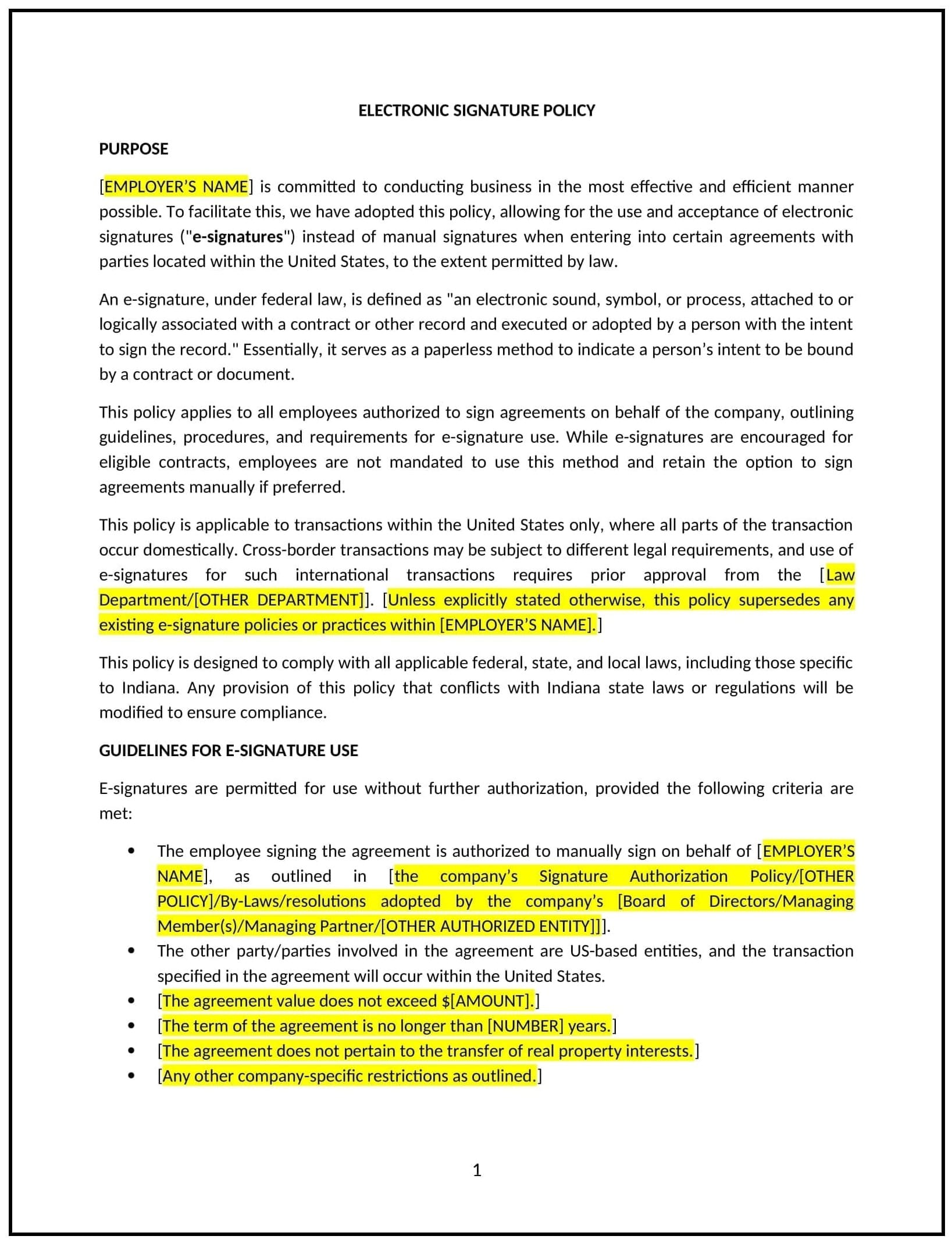
Electronic signature policy (Indiana): Free template
This electronic signature policy helps Indiana businesses establish guidelines for the use of electronic signatures in place of traditional handwritten signatures. This policy outlines when electronic signatures may be used, the legal validity of electronic signatures, the types of documents eligible for e-signing, and the security measures in place to ensure the integrity of electronically signed documents. By using this template, businesses can ensure that their use of electronic signatures is compliant with applicable laws and industry standards, reducing paper-based workflows while maintaining document authenticity and security.
By implementing this policy, Indiana businesses can streamline processes, reduce operational costs, and enhance efficiency while ensuring compliance with legal requirements related to electronic transactions.
How to use this electronic signature policy (Indiana)
- Define electronic signatures: Clearly define what constitutes an electronic signature in the context of the business. An electronic signature may include a typed name, scanned image of a handwritten signature, or any digital mark that indicates the intent to sign. The policy should specify that these signatures have the same legal standing as traditional handwritten signatures.
- Outline acceptable use: Specify the types of documents that may be signed electronically, such as contracts, agreements, consent forms, and internal documents. The policy should address which documents can be legally signed using an electronic signature and which may require a handwritten signature.
- Ensure compliance with legal requirements: Clarify that electronic signatures are valid and legally binding in Indiana under the Indiana Uniform Electronic Transactions Act (UETA) and the federal Electronic Signatures in Global and National Commerce (ESIGN) Act. Ensure the policy is aligned with both state and federal regulations regarding the use of e-signatures.
- Describe security and authentication measures: Specify the security measures in place to verify the identity of the signers and ensure the integrity of the signed document. This may include using encrypted platforms, multi-factor authentication, audit trails, and secure storage for e-signed documents.
- Establish guidelines for document storage: Outline the procedure for securely storing electronically signed documents. The policy should address how electronic documents will be retained, ensuring they are stored in a way that preserves their integrity and is accessible for future reference.
- Address signatures on paper vs. electronic forms: Clarify the difference between paper-based and electronic forms and when each is required. The policy should specify scenarios in which paper signatures are still needed, such as for documents requiring notarization or in specific legal contexts.
- Provide guidelines for revocation or correction: Detail the process for correcting or revoking an electronic signature if necessary. This ensures that signers have an option to dispute or amend their signature if an error occurs.
Benefits of using this electronic signature policy (Indiana)
Implementing this policy provides several key benefits for Indiana businesses:
- Streamlines workflows: The policy enables faster document processing by eliminating the need for paper-based signatures, leading to quicker approvals and decision-making.
- Reduces operational costs: By transitioning to electronic signatures, businesses can save on paper, printing, and mailing costs, while also reducing administrative overhead.
- Enhances security: E-signatures are typically more secure than traditional signatures, with built-in verification and authentication measures to ensure the integrity of signed documents.
- Ensures compliance: The policy ensures that the business adheres to legal standards and best practices for electronic signatures, minimizing the risk of disputes or invalid contracts.
- Increases convenience and accessibility: Electronic signatures allow documents to be signed remotely, which is particularly beneficial for businesses that deal with clients or employees in different locations or need to facilitate quick approvals.
- Improves environmental sustainability: By reducing reliance on paper, electronic signatures contribute to more sustainable business practices.
Tips for using this electronic signature policy (Indiana)
Communicate the policy effectively: Ensure that all employees, contractors, and clients are informed about the electronic signature policy and understand how to use electronic signatures for applicable documents. Include the policy in the employee handbook, on the company website, and in client-facing communications.
Choose a secure e-signature platform: Select a reputable e-signature platform that offers encryption, authentication, and audit trails to meet legal requirements and ensure the security of signed documents. Ensure that all parties involved in signing documents are using the platform correctly.
Train employees on e-signature use: Provide training to employees on the process for using electronic signatures and the legal implications of signing documents electronically. Make sure they understand how to authenticate documents, verify the signers, and store documents securely.
Regularly review the policy: Periodically review the electronic signature policy to ensure it remains up-to-date with changes in laws or industry standards. Update the policy as needed to reflect any technological advancements or business needs.
Ensure data privacy: Ensure that any data collected during the e-signing process, such as personal information or signatures, is handled in compliance with applicable privacy laws, such as the General Data Protection Regulation (GDPR) or state-level privacy regulations.
Frequently asked questions (FAQs)
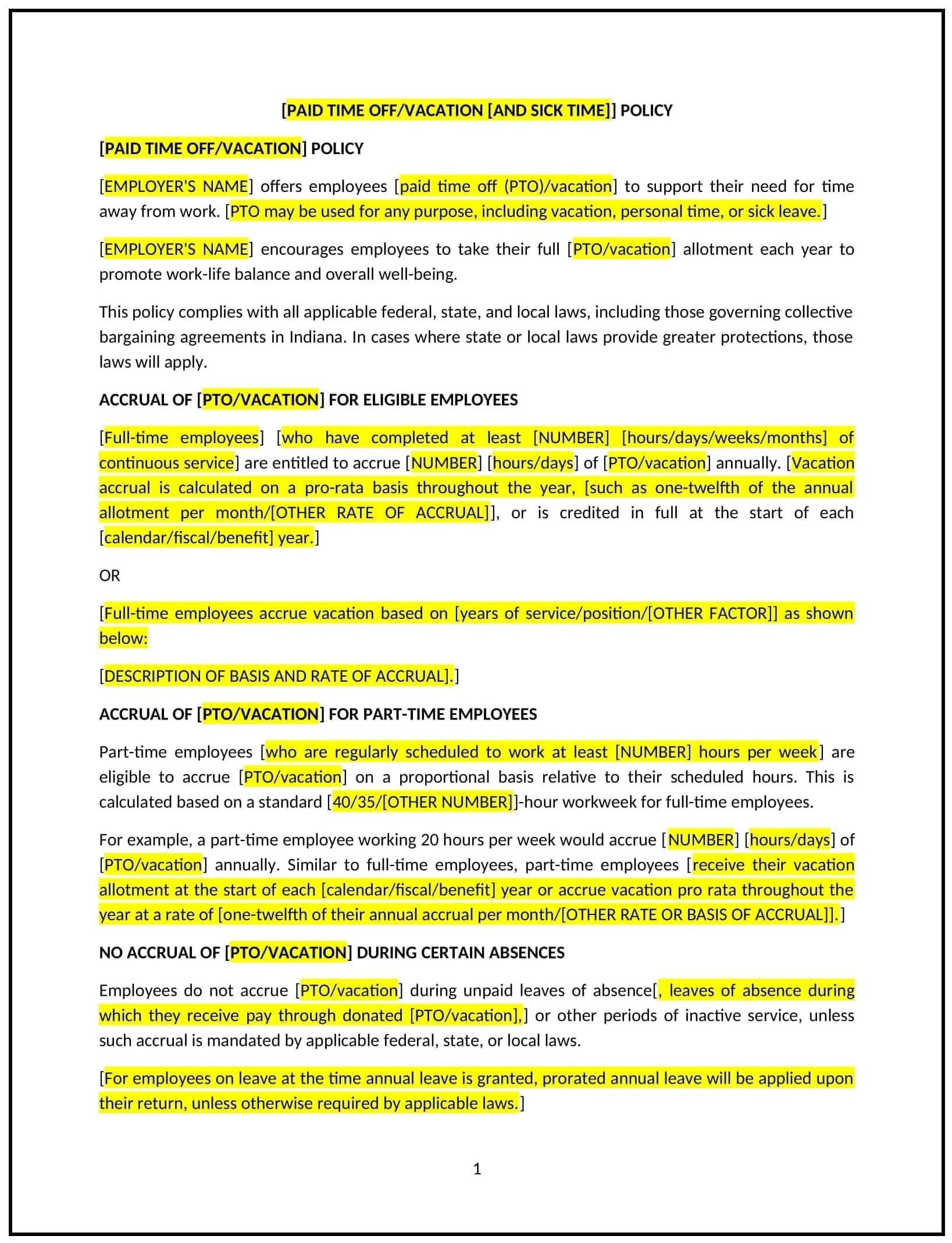
Defines how paid vacation is accrued, requested, and carried over for employees in Indiana, in compliance with company policy.
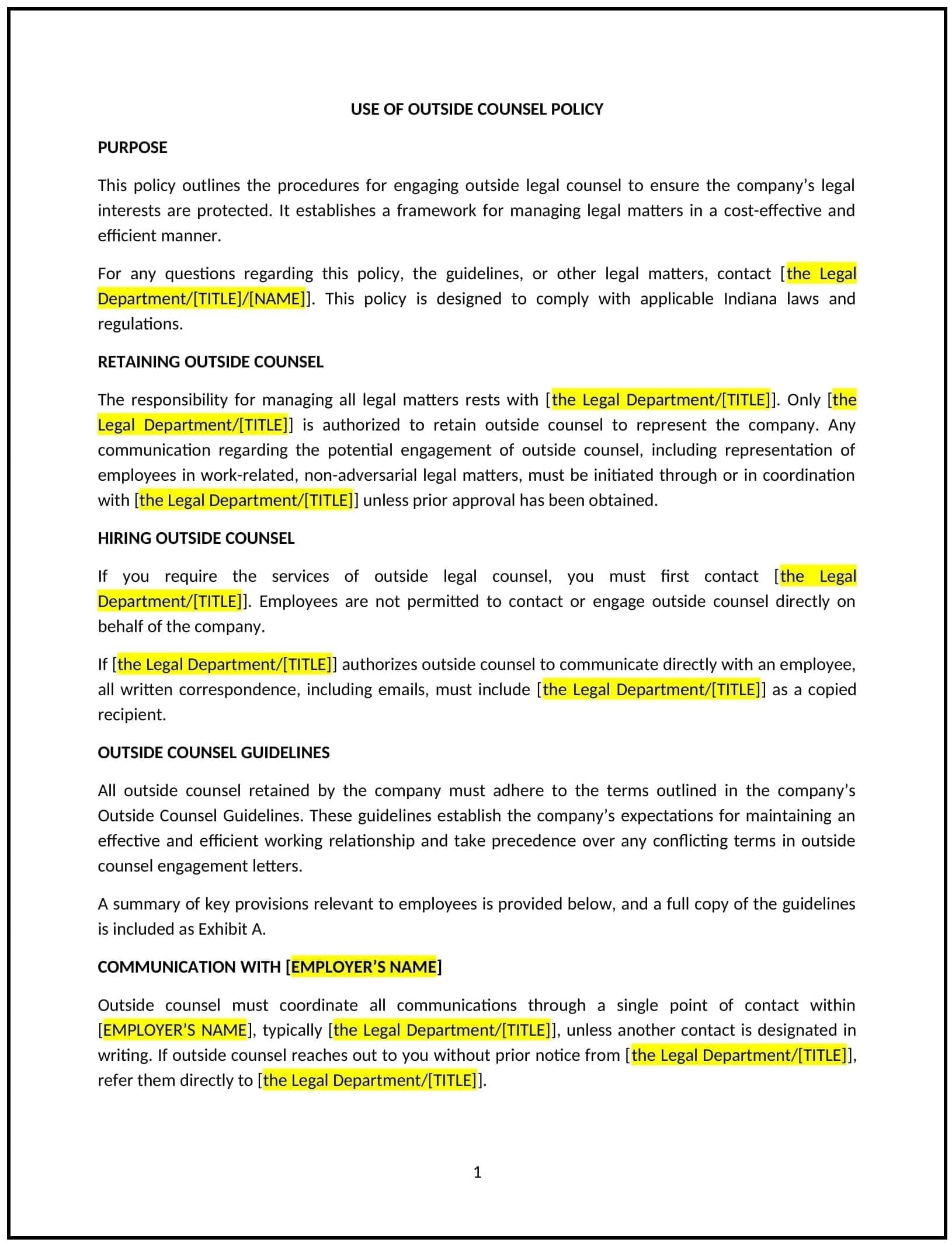
Outlines when Indiana companies should hire external legal support and how to manage approvals, billing, and oversight.
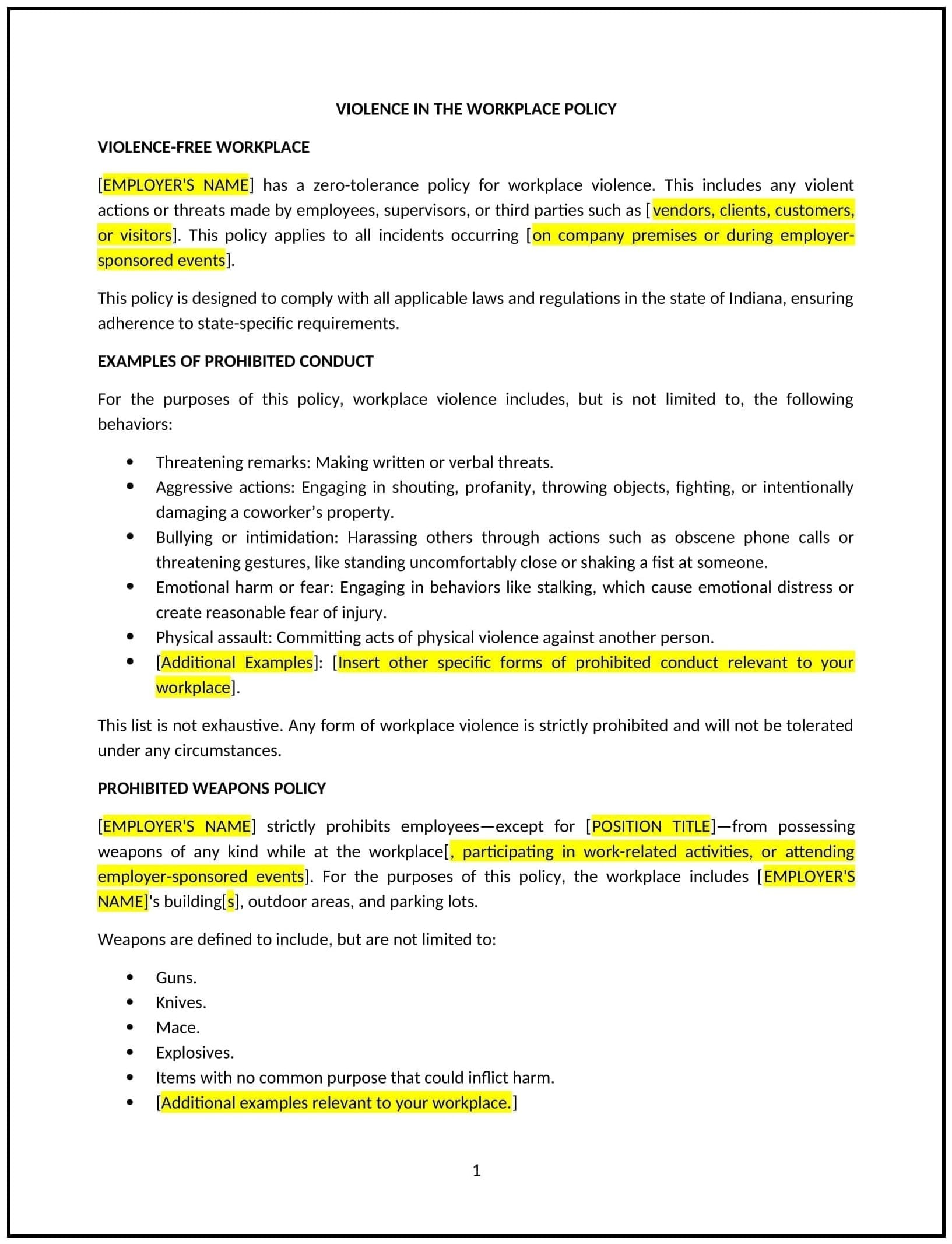
Prohibits threats, harassment, and physical violence in Indiana workplaces, with clear reporting and response procedures.