Electronic signature policy (Kansas): Free template
Got contracts to review? While you're here for policies, let Cobrief make contract review effortless—start your free review now.
Customize this template for free
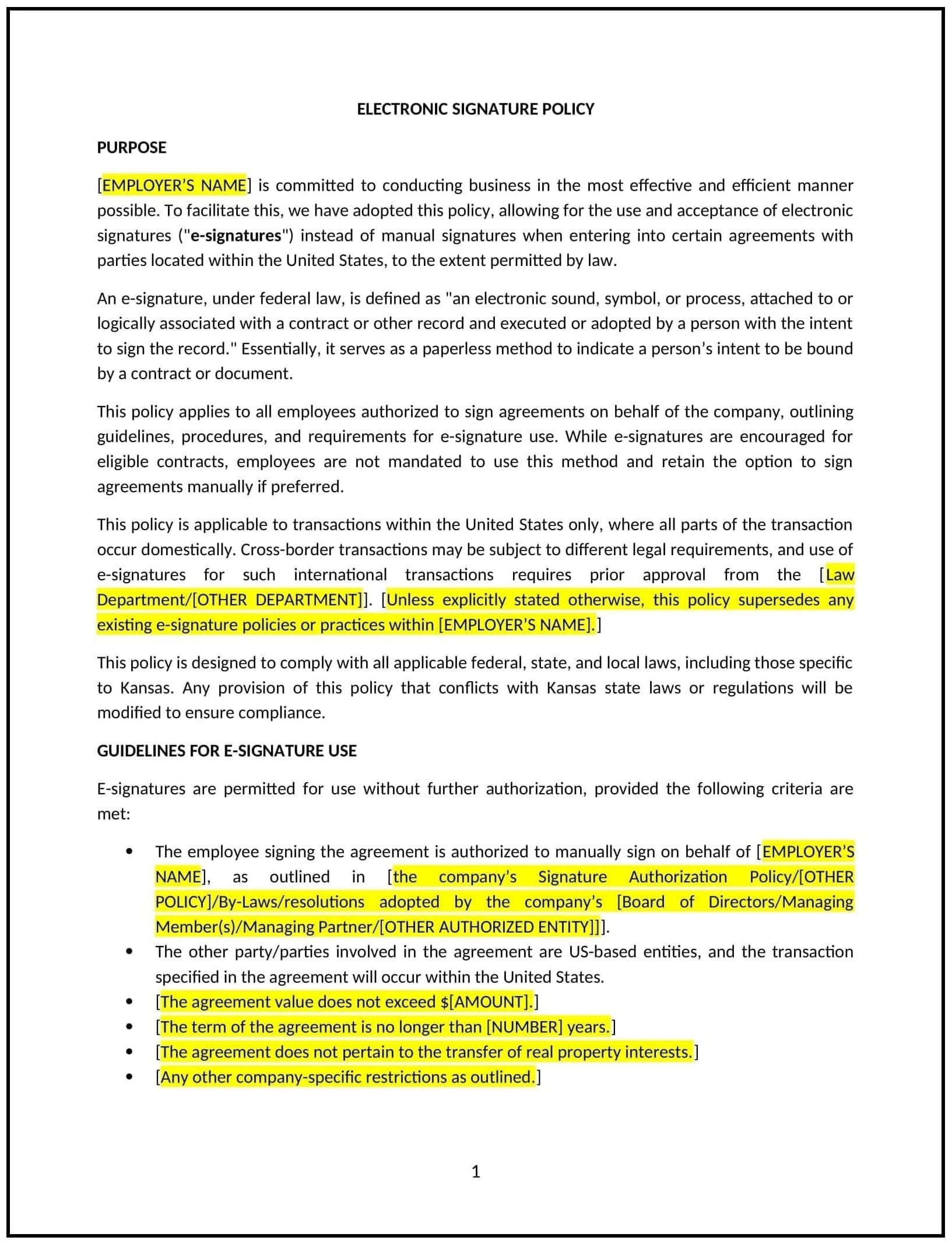
Electronic signature policy (Kansas)
An electronic signature policy helps Kansas businesses establish clear guidelines for the use of electronic signatures in place of traditional handwritten signatures. This policy outlines when and how electronic signatures can be used, the security measures required, and how electronic documents should be handled and stored.
By implementing this policy, businesses can streamline document signing processes, improve efficiency, and ensure the integrity and security of electronic transactions.
How to use this electronic signature policy (Kansas)
- Define acceptable uses: Businesses should specify when electronic signatures can be used, including contracts, agreements, consent forms, and other legal or business documents.
- Establish signature methods: Businesses should outline which electronic signature platforms or technologies are approved, ensuring that they are secure and legally valid.
- Implement security measures: Businesses should require the use of secure, encrypted platforms to prevent unauthorized access or tampering with signed documents.
- Address authenticity and consent: Businesses should clarify that all parties involved in an electronic signature process must give their explicit consent to sign electronically.
- Specify record-keeping practices: Businesses should define how signed electronic documents will be stored, including the use of digital archives or secure cloud storage systems.
- Provide guidelines for handling disputes: Businesses should outline the steps to take in the event of a dispute regarding the validity of an electronic signature.
- Review and update regularly: Businesses should periodically assess the policy to ensure it remains in line with technological advancements and legal requirements.
Benefits of using an electronic signature policy (Kansas)
- Improves efficiency: Speeds up the document signing process by eliminating the need for physical signatures and paperwork.
- Reduces costs: Eliminates the need for printing, scanning, and mailing physical documents, cutting administrative costs.
- Enhances security: Ensures that electronic signatures are verified and documents are securely stored, reducing the risk of fraud or unauthorized access.
- Promotes environmental sustainability: Reduces paper waste by shifting to digital documents.
- Supports remote transactions: Makes it easier for employees, clients, and partners to sign documents from any location, facilitating remote work.
- Increases convenience: Employees and clients can sign documents quickly and easily, enhancing the overall customer experience.
Tips for using this electronic signature policy (Kansas)
- Communicate policy guidelines clearly: Businesses should ensure that employees, clients, and partners understand when and how electronic signatures will be used.
- Ensure platform compatibility: Businesses should ensure that the electronic signature platform is compatible with other systems used for document management and storage.
- Train employees on electronic signature use: Businesses should educate employees on the legal validity and security features of electronic signatures.
- Monitor for unauthorized use: Businesses should monitor the use of electronic signatures to prevent unauthorized access or misuse of the system.
- Keep records of signed documents: Businesses should maintain secure records of electronically signed documents, ensuring they are easily accessible for future reference.
- Regularly review security protocols: Businesses should assess the security features of their electronic signature platform and make adjustments as needed to prevent unauthorized access or data breaches.