Electronic signature policy (Minnesota): Free template
Got contracts to review? While you're here for policies, let Cobrief make contract review effortless—start your free review now.
Customize this template for free
Electronic signature policy (Minnesota)
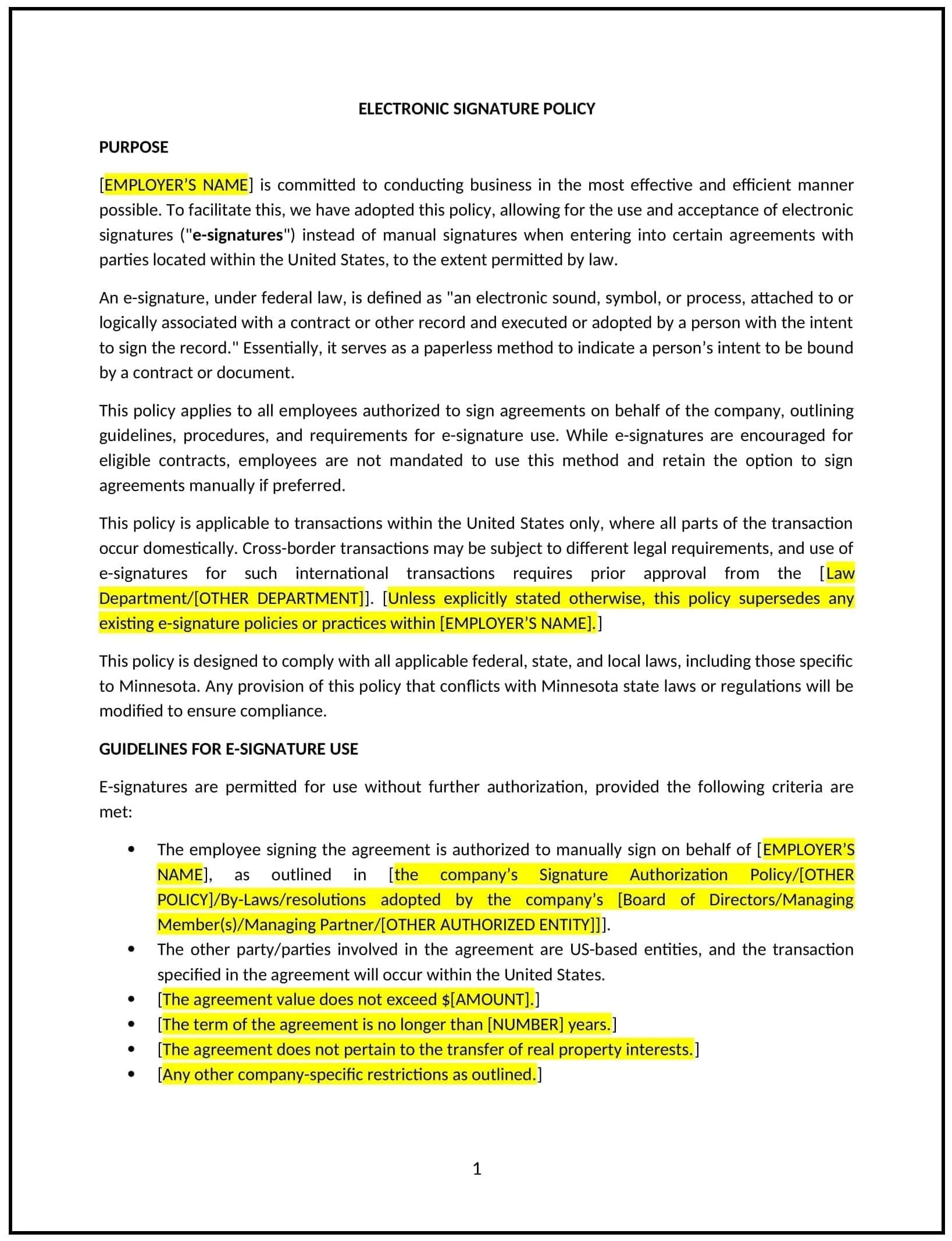
This electronic signature policy is designed to help Minnesota businesses implement guidelines for the use of electronic signatures in place of traditional handwritten signatures on business documents. It outlines the legal acceptance of electronic signatures, the types of documents eligible for electronic signing, and the security measures necessary to ensure the authenticity and integrity of electronically signed documents.
By implementing this policy, businesses can streamline document signing processes, reduce paperwork, and enhance efficiency, all while maintaining legal validity and protecting against fraud.
How to use this electronic signature policy (Minnesota)
- Define acceptable electronic signatures: Clearly describe what constitutes an acceptable electronic signature within the business, such as a scanned image of a handwritten signature, a typed name, or a digital signature generated by an e-signature platform.
- Identify eligible documents: Specify which types of documents can be signed electronically, such as contracts, agreements, forms, and other legal documents.
- Set security and authentication standards: Outline the security measures required to validate electronic signatures, including encryption, secure authentication methods, and the use of e-signature platforms that comply with Minnesota and federal law.
- Establish signing procedures: Detail the steps employees, clients, and partners should follow to electronically sign documents, including how to verify the signature's authenticity and ensure proper record-keeping.
- Document retention: Clarify how electronically signed documents will be stored and managed, ensuring they are securely kept and easily retrievable for future reference.
- Provide a dispute resolution process: Include procedures for handling disputes or questions regarding the validity of an electronic signature, such as providing access to audit trails or verification logs.
Benefits of using an electronic signature policy (Minnesota)
Implementing this policy provides several advantages for Minnesota businesses:
- Increases efficiency: Reduces the time and resources spent on physical signatures, making the document signing process faster and more streamlined.
- Reduces paper usage: Minimizes the need for printing and storing paper documents, contributing to a more sustainable and environmentally friendly business model.
- Enhances legal validity: Ensures that electronic signatures are legally recognized and binding under Minnesota law, reducing the risk of disputes.
- Improves security: Digital signatures are often more secure than traditional handwritten signatures, with features such as encryption and authentication that help prevent fraud.
- Reflects Minnesota-specific considerations: Adapts the policy to comply with local laws regarding electronic signatures, including those outlined in the Minnesota Uniform Electronic Transactions Act (MUETA).
Tips for using this electronic signature policy (Minnesota)
- Communicate clearly: Ensure that all employees, clients, and partners understand how electronic signatures will be used, the process for signing documents, and the security measures in place.
- Implement secure systems: Use a trusted e-signature platform that provides strong security features, such as encryption, multi-factor authentication, and audit trails to verify the authenticity of signatures.
- Maintain transparency: Document and store electronic signatures and related transaction details, such as time stamps and IP addresses, to ensure transparency and accountability.
- Regularly review the policy: Periodically review and update the policy to ensure that it remains in line with legal changes, technological advancements, and evolving business needs.
- Offer training: Provide training to employees on the use of electronic signature tools and ensure they understand the legal and security aspects of the policy.