Electronic signature policy (New Hampshire): Free template
Got contracts to review? While you're here for policies, let Cobrief make contract review effortless—start your free review now.
Customize this template for free
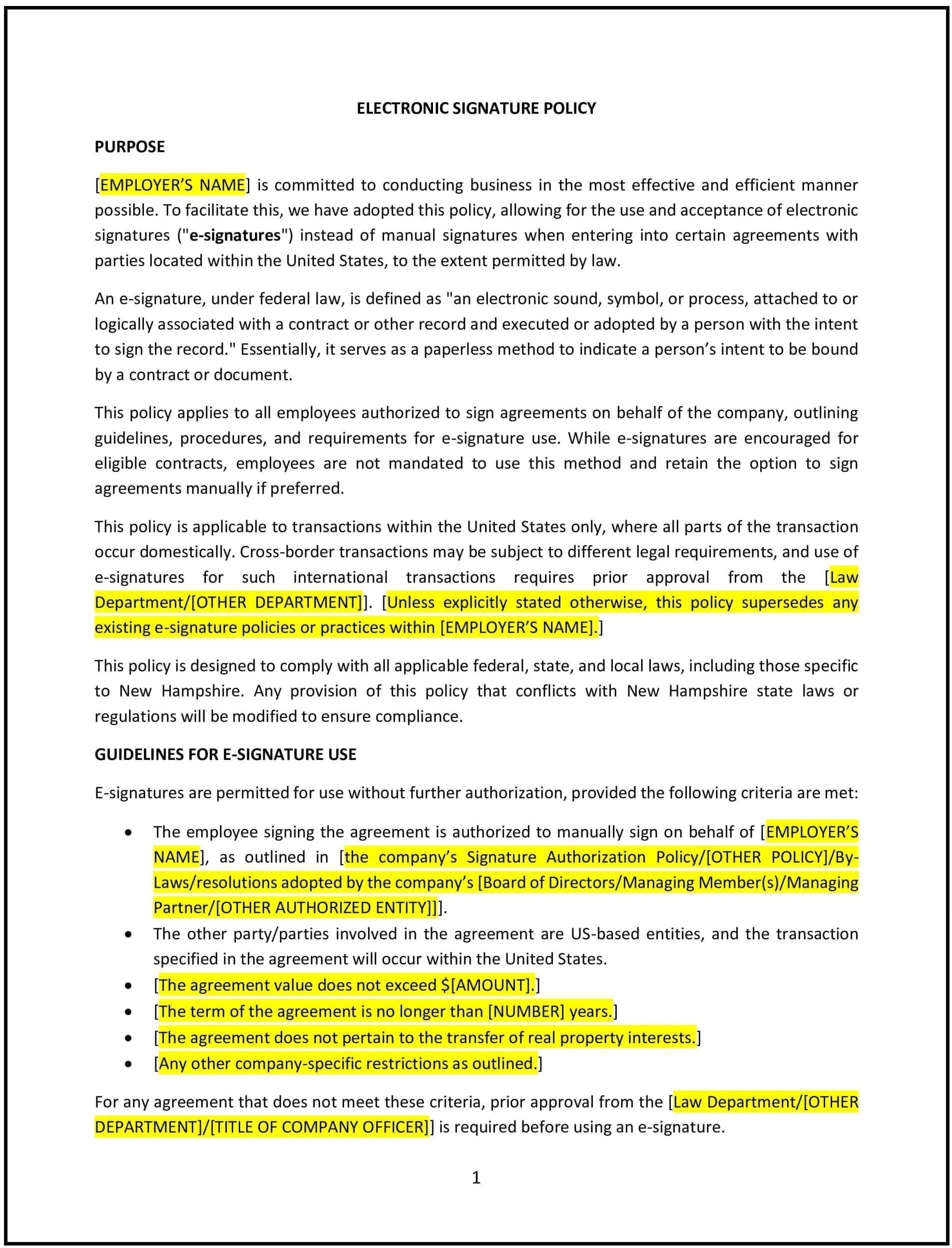
Electronic signature policy (New Hampshire)
An electronic signature policy helps New Hampshire businesses implement and manage the use of electronic signatures for contracts, agreements, and other official documents. This policy outlines the procedures for utilizing electronic signatures securely, ensuring that businesses maintain legal validity and security while streamlining document signing processes.
By adopting this policy, businesses in New Hampshire can improve efficiency, reduce paper usage, and ensure that electronic signatures are recognized and enforceable under state and federal law.
How to use this electronic signature policy (New Hampshire)
- Define electronic signature: Clearly explain what constitutes an electronic signature under New Hampshire law and the federal Electronic Signatures in Global and National Commerce Act (ESIGN Act), including typed signatures, scanned images, and digital signatures.
- Specify acceptable methods for electronic signatures: Detail the methods that can be used to sign documents electronically, such as through email, digital signature platforms, or specialized e-signature software.
- Outline when electronic signatures can be used: Specify the types of documents that can be signed electronically, including contracts, agreements, and other official records, and clarify any exceptions for documents that require wet signatures.
- Ensure security and authenticity: Outline the steps businesses will take to ensure the security of electronic signatures, including encryption, authentication methods, and measures to verify the identity of the person signing.
- Establish record-keeping procedures: Define how electronic signatures and the associated documents will be stored, ensuring that records are easily accessible, secure, and compliant with retention requirements.
- Address legal validity: Clearly state that electronic signatures will be treated as legally valid and binding, in accordance with New Hampshire state law and federal law, as long as the proper procedures are followed.
- Monitor and review: Regularly review the policy to ensure it aligns with any changes to New Hampshire state laws or federal regulations and best practices for the use of electronic signatures.
Benefits of using this electronic signature policy (New Hampshire)
This policy provides several benefits for New Hampshire businesses:
- Increases efficiency: By allowing electronic signatures, businesses can speed up the process of signing contracts and agreements, reducing the time spent on administrative tasks and accelerating decision-making.
- Reduces costs: Electronic signatures eliminate the need for paper, printing, and mailing, helping businesses save money on operational expenses.
- Enhances security: Electronic signature software often includes security features such as encryption and audit trails, which help protect sensitive information and verify the authenticity of signed documents.
- Promotes legal compliance: The policy ensures that electronic signatures are legally valid and binding, in accordance with New Hampshire and federal laws, which can help businesses avoid legal challenges.
- Improves environmental sustainability: By reducing the use of paper and physical storage, electronic signatures contribute to more sustainable business practices.
Tips for using this electronic signature policy (New Hampshire)
- Communicate the policy clearly: Ensure all employees are aware of the policy, understand when electronic signatures can be used, and know the procedures for securely signing documents.
- Use secure platforms: Implement trusted and secure electronic signature platforms that offer encryption, authentication, and compliance with legal requirements.
- Ensure proper training: Provide employees with training on how to use electronic signatures and how to verify the authenticity of signed documents.
- Maintain proper records: Store signed documents securely and ensure they are accessible for future reference or audits.
- Regularly review the policy: Review the policy annually or when there are updates to New Hampshire state laws, federal regulations, or technological advancements in electronic signature tools.