Emergency preparedness plan (Alabama): Free template
Got contracts to review? While you're here for policies, let Cobrief make contract review effortless—start your free review now.
Customize this template for free
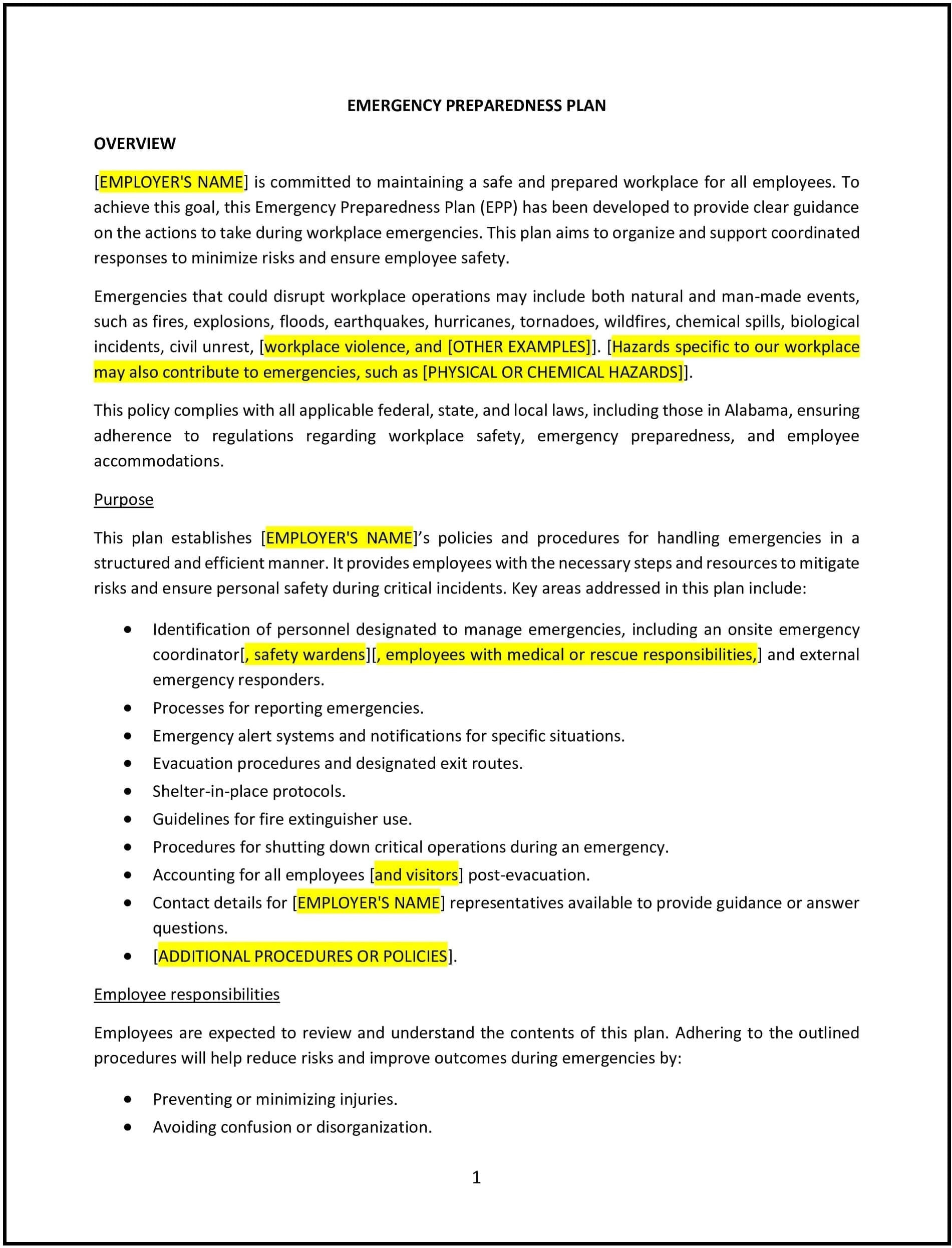
Emergency preparedness plan (Alabama)
An emergency preparedness plan outlines procedures to ensure the safety of employees, customers, and property during emergencies. For SMBs in Alabama, this policy is critical for addressing the risks posed by natural disasters, such as tornadoes, hurricanes, or floods, as well as other potential emergencies like fires, power outages, or security threats. Tailoring your plan to local risks and legal requirements ensures your business can respond effectively to emergencies.
This plan helps minimize disruptions, protect lives, and reduce financial and operational impacts during unexpected events.
How to use this emergency preparedness plan (Alabama)
- Identify potential risks: Assess risks specific to Alabama, such as severe weather events, and other threats like workplace accidents or cyberattacks.
- Assign roles and responsibilities: Designate a response team to coordinate actions during emergencies, with clear roles for tasks like communication, evacuation, and first aid.
- Develop evacuation procedures: Create detailed evacuation routes and procedures, ensuring accessibility for individuals with disabilities and compliance with local safety codes.
- Establish communication protocols: Outline how employees, customers, and emergency services will be informed during emergencies, using tools like mass notifications or intercom systems.
- Prepare recovery strategies: Include steps for resuming operations after an emergency, such as data backup procedures, insurance claims, and facility repairs.
Benefits of using an emergency preparedness plan (Alabama)
A comprehensive emergency preparedness plan protects your business and employees. Here’s how it helps:
- Ensures safety: Provides clear procedures to protect employees and customers during emergencies.
- Reduces downtime: Minimizes disruptions by preparing your business for quick recovery after an event.
- Complies with regulations: Meets Alabama-specific legal requirements and OSHA standards for workplace safety.
- Builds employee confidence: Reassures employees that their safety is a priority, fostering trust and morale.
- Protects assets: Safeguards physical property, digital data, and financial investments through proactive planning.
Tips for implementing an emergency preparedness plan (Alabama)
- Conduct regular training: Train employees on emergency procedures, including evacuation routes, first aid, and use of fire extinguishers.
- Partner with local agencies: Collaborate with Alabama emergency services, such as fire departments or FEMA, to align your plan with local resources and recommendations.
- Test the plan: Conduct regular drills to evaluate the effectiveness of your preparedness plan and identify areas for improvement.
- Include remote employees: If your business has remote or hybrid workers, ensure the plan addresses their safety and operational continuity during emergencies.
- Review and update regularly: Reassess the plan periodically to reflect changes in risks, regulations, or business operations.