Emergency preparedness plan (Alaska): Free template
Got contracts to review? While you're here for policies, let Cobrief make contract review effortless—start your free review now.
Customize this template for free
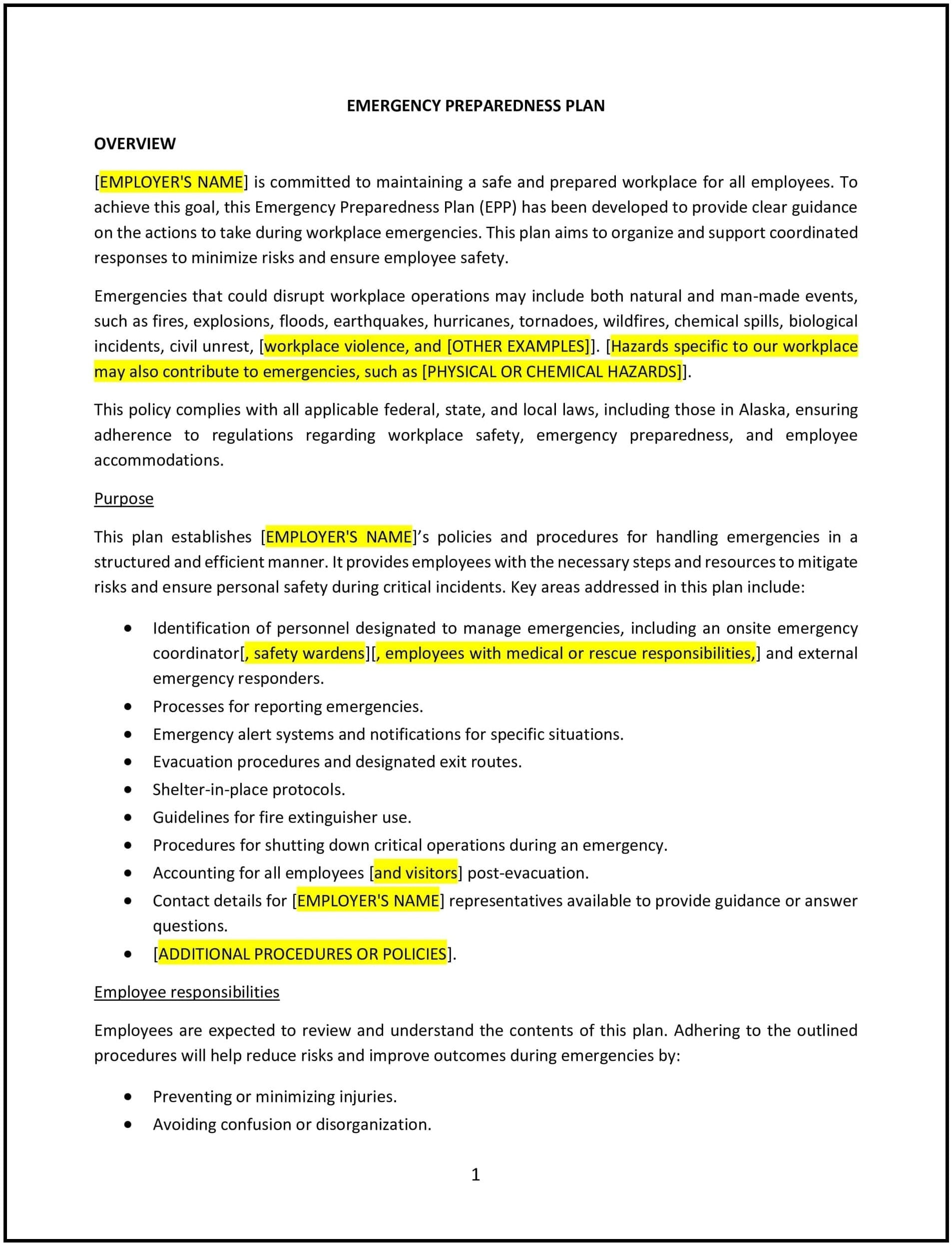
Emergency preparedness plan (Alaska)
In Alaska, an emergency preparedness plan outlines procedures for responding to emergencies, such as natural disasters, workplace accidents, or health crises. This plan ensures that businesses are equipped to protect employees, minimize operational disruptions, and safeguard assets during unforeseen events. By implementing a clear emergency preparedness plan, businesses can enhance resilience and ensure a faster recovery.
Alaska’s unique conditions, including harsh winters, earthquakes, and remote locations, require tailoring emergency plans to address specific risks and logistical challenges.
How to use this emergency preparedness plan (Alaska)
- Identify potential risks: Assess the specific risks your business may face, such as earthquakes, extreme weather, or infrastructure disruptions, and include these in the plan.
- Develop response procedures: Create step-by-step procedures for different types of emergencies, including evacuation, shelter-in-place, and communication protocols.
- Assign roles and responsibilities: Designate employees or teams to handle specific tasks during emergencies, such as first aid, communication, or coordinating with local authorities.
- Provide training: Educate employees on the emergency plan through regular drills and training sessions to ensure they understand their roles and responsibilities.
- Include resource management: Outline how the business will manage resources, such as emergency supplies, backup systems, and transportation, during a crisis.
Benefits of using an emergency preparedness plan (Alaska)
An emergency preparedness plan provides several advantages for businesses in Alaska. Here’s how it helps:
- Protects employee safety: Ensures employees are prepared to respond effectively to emergencies, minimizing risks to their health and well-being.
- Reduces operational downtime: Enables businesses to recover quickly from disruptions, maintaining continuity and minimizing financial losses.
- Supports compliance: Helps businesses meet safety and regulatory requirements related to emergency planning and workplace safety.
- Builds confidence: Demonstrates to employees, clients, and stakeholders that the company is committed to safety and preparedness.
- Enhances resilience: Provides a structured approach to handling crises, reducing uncertainty and improving outcomes during emergencies.
Tips for using an emergency preparedness plan (Alaska)
- Tailor to local risks: Include provisions for Alaska-specific hazards, such as earthquakes, extreme cold, or transportation disruptions in remote areas.
- Maintain emergency kits: Ensure workplaces are stocked with essential supplies, such as first aid kits, flashlights, blankets, and non-perishable food.
- Establish communication protocols: Include a system for notifying employees, clients, and authorities during emergencies, especially in areas with limited connectivity.
- Test regularly: Conduct drills and simulations to assess the plan’s effectiveness and make improvements based on employee feedback or identified gaps.
- Collaborate with local resources: Coordinate with local emergency services, disaster response teams, and community organizations to enhance preparedness and response efforts.