Emergency preparedness plan (Arkansas): Free template
Got contracts to review? While you're here for policies, let Cobrief make contract review effortless—start your free review now.
Customize this template for free
Emergency preparedness plan (Arkansas)
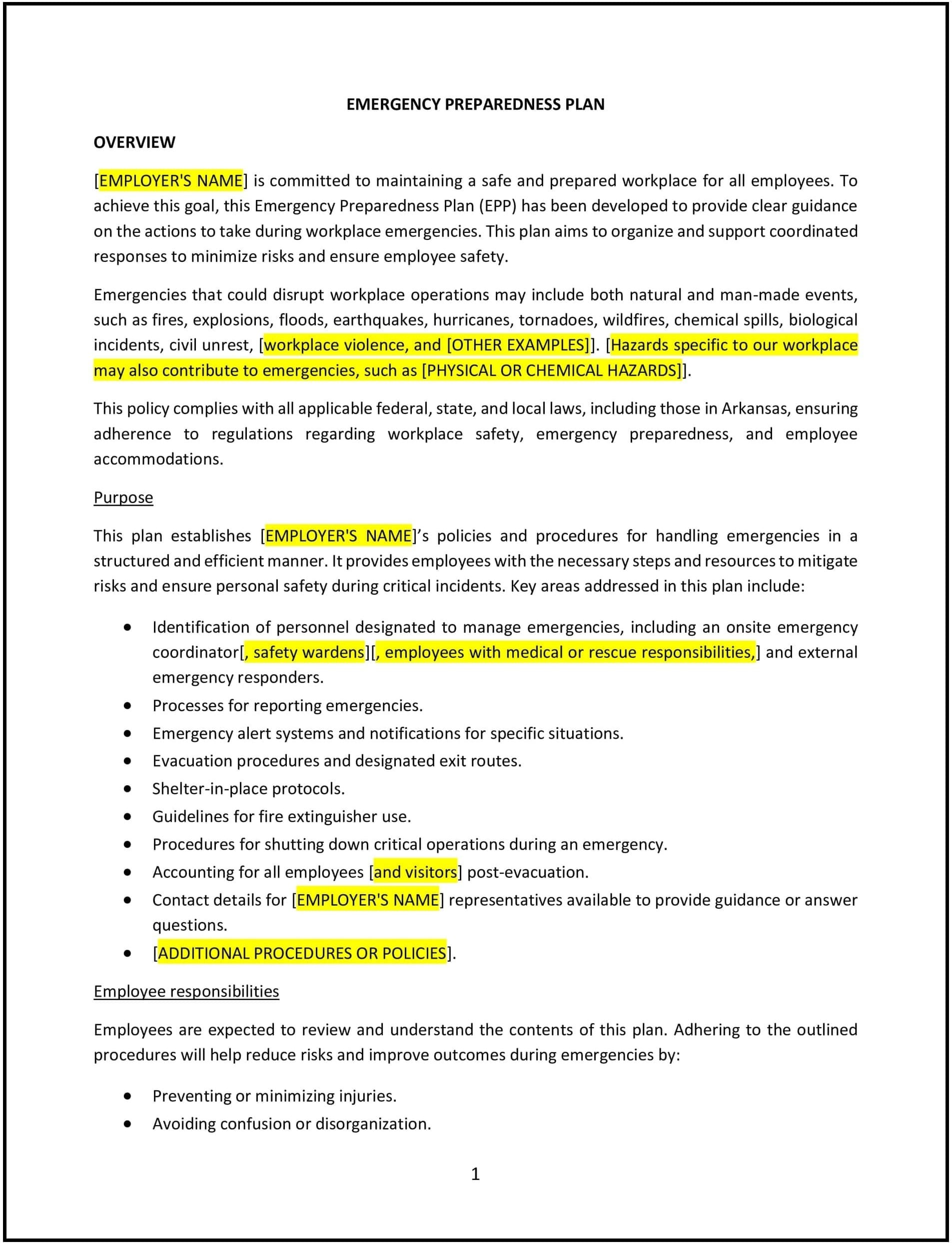
In Arkansas, an emergency preparedness plan provides businesses with guidelines to manage and respond effectively to emergencies, such as natural disasters, workplace accidents, or other unforeseen events. This policy ensures the safety of employees, minimizes operational disruptions, and supports compliance with relevant safety regulations.
This policy outlines the procedures for emergency response, employee responsibilities, and communication protocols. By implementing this plan, Arkansas businesses can enhance workplace safety, reduce risks, and foster a culture of preparedness.
How to use this emergency preparedness plan (Arkansas)
- Identify potential emergencies: Clearly define the types of emergencies the plan covers, such as severe weather, fire, chemical spills, or medical crises.
- Establish roles and responsibilities: Assign specific roles to employees, such as emergency coordinators or evacuation leaders, to ensure an organized response.
- Create evacuation procedures: Develop detailed evacuation routes, assembly points, and processes for accounting for all employees during an emergency.
- Implement communication protocols: Specify how employees and external parties, such as emergency services, will be notified and updated during an incident.
- Conduct training and drills: Regularly train employees on the emergency plan and hold drills to ensure readiness and familiarity with procedures.
Benefits of using this emergency preparedness plan (Arkansas)
This plan offers several advantages for Arkansas businesses:
- Enhances workplace safety: Reduces risks to employees by ensuring preparedness and effective response to emergencies.
- Minimizes operational disruptions: Helps the business recover quickly by establishing clear protocols for managing emergencies and resuming operations.
- Supports compliance: Aligns with Arkansas safety regulations and federal Occupational Safety and Health Administration (OSHA) requirements.
- Promotes employee confidence: Builds trust by demonstrating the business’s commitment to employee safety and well-being.
- Protects assets: Reduces potential damage to property, equipment, and business operations through proactive planning.
Tips for using this emergency preparedness plan (Arkansas)
- Address Arkansas-specific risks: Consider local hazards, such as tornadoes or flooding, and include relevant response strategies in the plan.
- Partner with local services: Collaborate with Arkansas emergency services, such as fire departments or disaster relief organizations, to align response efforts.
- Update contact lists: Regularly review and update emergency contact information for employees and external stakeholders.
- Provide accessibility: Ensure the plan is accessible to all employees, including those with disabilities, by providing accommodations such as accessible routes or communication methods.
- Review periodically: Update the plan as needed to reflect changes in the workplace, regulations, or potential risks.