Emergency preparedness plan (California): Free template
Got contracts to review? While you're here for policies, let Cobrief make contract review effortless—start your free review now.
Customize this template for free
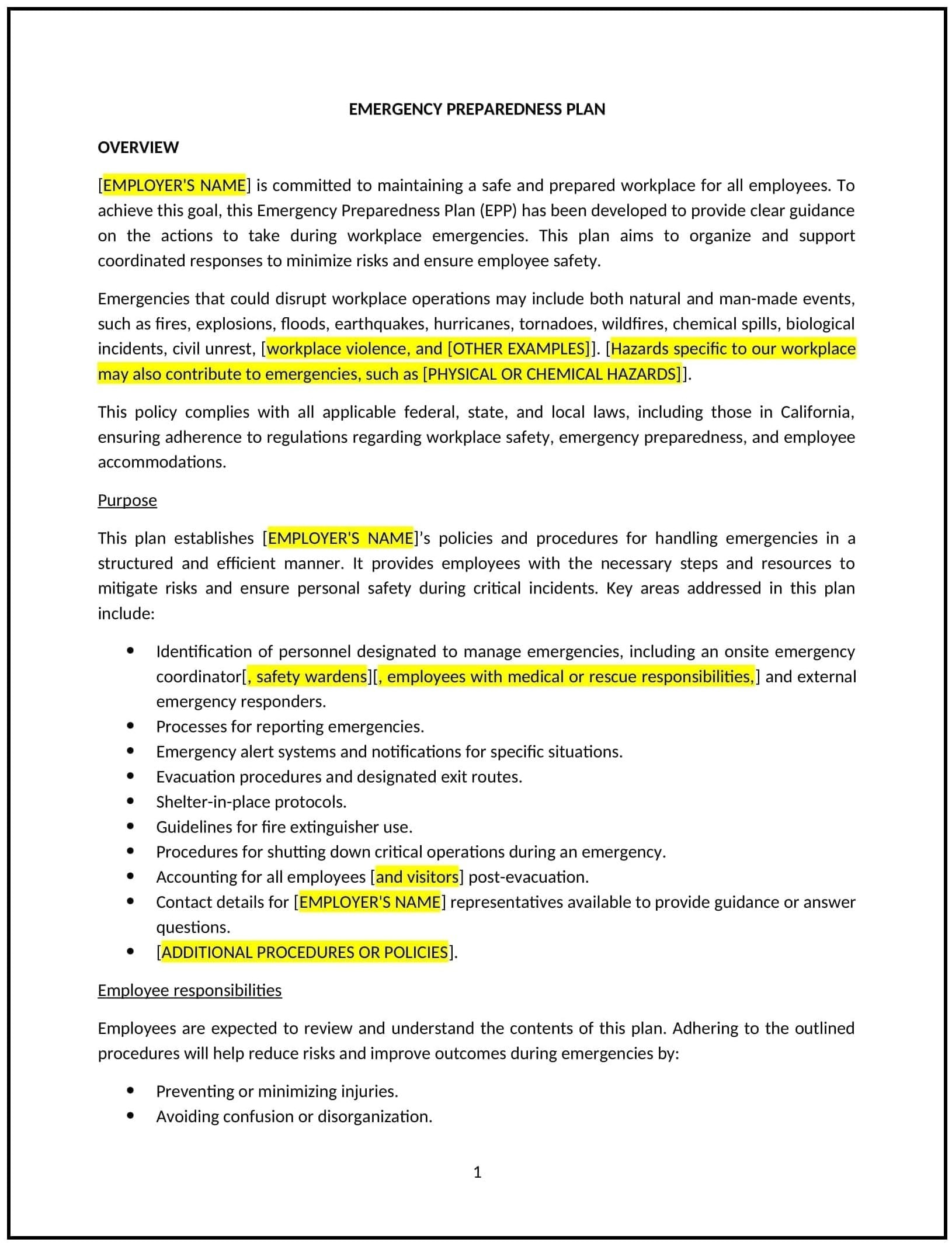
Emergency preparedness plan (California)
In California, an emergency preparedness plan provides businesses with guidelines to manage and respond to emergencies such as natural disasters, workplace accidents, or other unforeseen events. This policy ensures the safety of employees, customers, and assets while supporting compliance with California regulations, such as Cal/OSHA standards for workplace safety.
This policy outlines emergency procedures, roles and responsibilities, and communication protocols. By implementing this policy, California businesses can minimize disruptions and protect their workforce during emergencies.
How to use this emergency preparedness plan (California)
- Define potential emergencies: Identify the types of emergencies most relevant to California, such as earthquakes, wildfires, and power outages.
- Assign responsibilities: Designate key personnel responsible for implementing the emergency plan, such as safety coordinators or response teams.
- Outline evacuation procedures: Provide clear instructions for safe evacuation, including designated exits, assembly points, and protocols for assisting individuals with disabilities.
- Establish communication protocols: Detail how the business will communicate during an emergency, including alerts, updates, and post-event debriefs.
- Conduct regular drills: Schedule and document emergency drills to ensure employees are familiar with procedures and can respond effectively.
Benefits of using this emergency preparedness plan (California)
This policy offers several advantages for California businesses:
- Supports compliance: Reflects Cal/OSHA requirements for workplace safety and emergency preparedness.
- Enhances safety: Protects employees, customers, and assets during emergencies.
- Promotes accountability: Assigns clear roles and responsibilities to ensure an organized response.
- Reduces risks: Minimizes disruptions and helps the business recover quickly from emergencies.
- Builds trust: Demonstrates the business’s commitment to employee safety and well-being.
Tips for using this emergency preparedness plan (California)
- Address California-specific risks: Include procedures for emergencies common in California, such as earthquakes, wildfires, and heatwaves.
- Train employees: Provide regular training on emergency procedures, including evacuation routes and communication protocols.
- Use technology: Implement tools for emergency alerts, real-time updates, and tracking employee safety during incidents.
- Review and update: Regularly assess the plan to ensure it aligns with current risks, regulations, and best practices.
- Coordinate with local agencies: Collaborate with local emergency services to align response efforts and access resources.