Emergency preparedness plan (Colorado): Free template
Got contracts to review? While you're here for policies, let Cobrief make contract review effortless—start your free review now.
Customize this template for free
Emergency preparedness plan (Colorado)
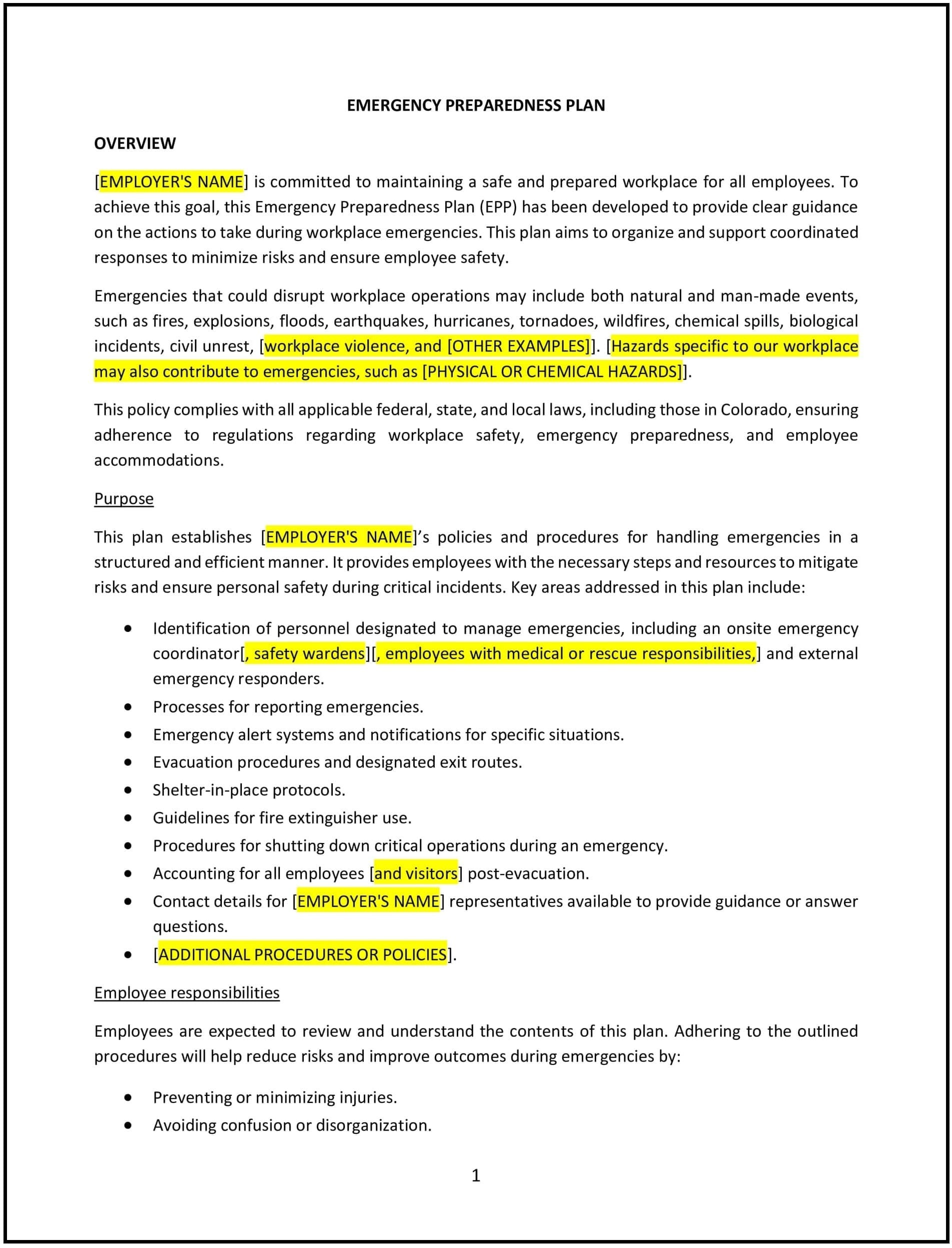
In Colorado, an emergency preparedness plan provides businesses with guidelines for effectively responding to emergencies such as natural disasters, accidents, or other critical situations that could disrupt business operations or pose risks to employees' safety. This policy outlines the steps the business will take to support employees in being prepared, knowing their roles in an emergency, and having the resources necessary to manage a crisis.
By implementing this policy, Colorado businesses can support a swift, coordinated response to emergencies, minimize damage, and maintain operational continuity while protecting the health and safety of employees.
How to use this emergency preparedness plan (Colorado)
- Define emergency scenarios: Identify potential emergency situations that could affect the business, such as wildfires, floods, earthquakes, power outages, or medical emergencies, and outline how to respond to each scenario.
- Establish emergency procedures: Create detailed procedures for each type of emergency, including evacuation routes, communication protocols, and roles and responsibilities for employees and management.
- Provide employee training: Support employees by training them on the emergency procedures, including how to respond in an emergency, where to find emergency supplies, and how to use any emergency equipment.
- Set up emergency resources: Identify and prepare resources needed during an emergency, such as first aid kits, fire extinguishers, backup power, and emergency contact lists.
- Maintain communication: Establish a communication plan to make sure that employees can be quickly and reliably informed of emergencies, including notification systems, emergency hotlines, and mass messaging tools.
- Review and update regularly: Regularly review and update the plan to make sure it remains current with new risks, changes in business operations, or updated regulations.
Benefits of using this emergency preparedness plan (Colorado)
This policy offers several advantages for Colorado businesses:
- Supports compliance: Supports the business in complying with Colorado’s workplace safety regulations and industry standards related to emergency preparedness and response.
- Protects employees: Supports the safety and well-being of employees during emergencies by providing clear instructions and access to necessary resources.
- Minimizes disruptions: Helps businesses respond swiftly and efficiently to emergencies, minimizing disruptions to operations and reducing downtime.
- Enhances business continuity: Provides a framework for maintaining critical business functions in the event of an emergency, supporting long-term resilience.
- Improves reputation: Demonstrates the business’s commitment to employee safety and operational preparedness, improving its reputation with employees, customers, and stakeholders.
Tips for using this emergency preparedness plan (Colorado)
- Reflect Colorado-specific risks: Make sure the plan addresses specific risks relevant to Colorado, such as wildfires, blizzards, or flooding, and includes guidelines for each scenario.
- Train employees regularly: Provide regular training and drills to support employees in being familiar with emergency procedures and knowing how to respond effectively.
- Involve local authorities: Work with local emergency responders and authorities to coordinate emergency plans and make sure that the business’s procedures align with community resources and emergency protocols.
- Monitor and evaluate: Continuously monitor the effectiveness of the plan during drills and actual events, and make adjustments as needed to improve responses and outcomes.
- Communicate clearly: Make sure emergency instructions are clear, concise, and easily understood, and that employees know how to access emergency resources and contacts.