Emergency preparedness plan (Connecticut): Free template
Got contracts to review? While you're here for policies, let Cobrief make contract review effortless—start your free review now.
Customize this template for free
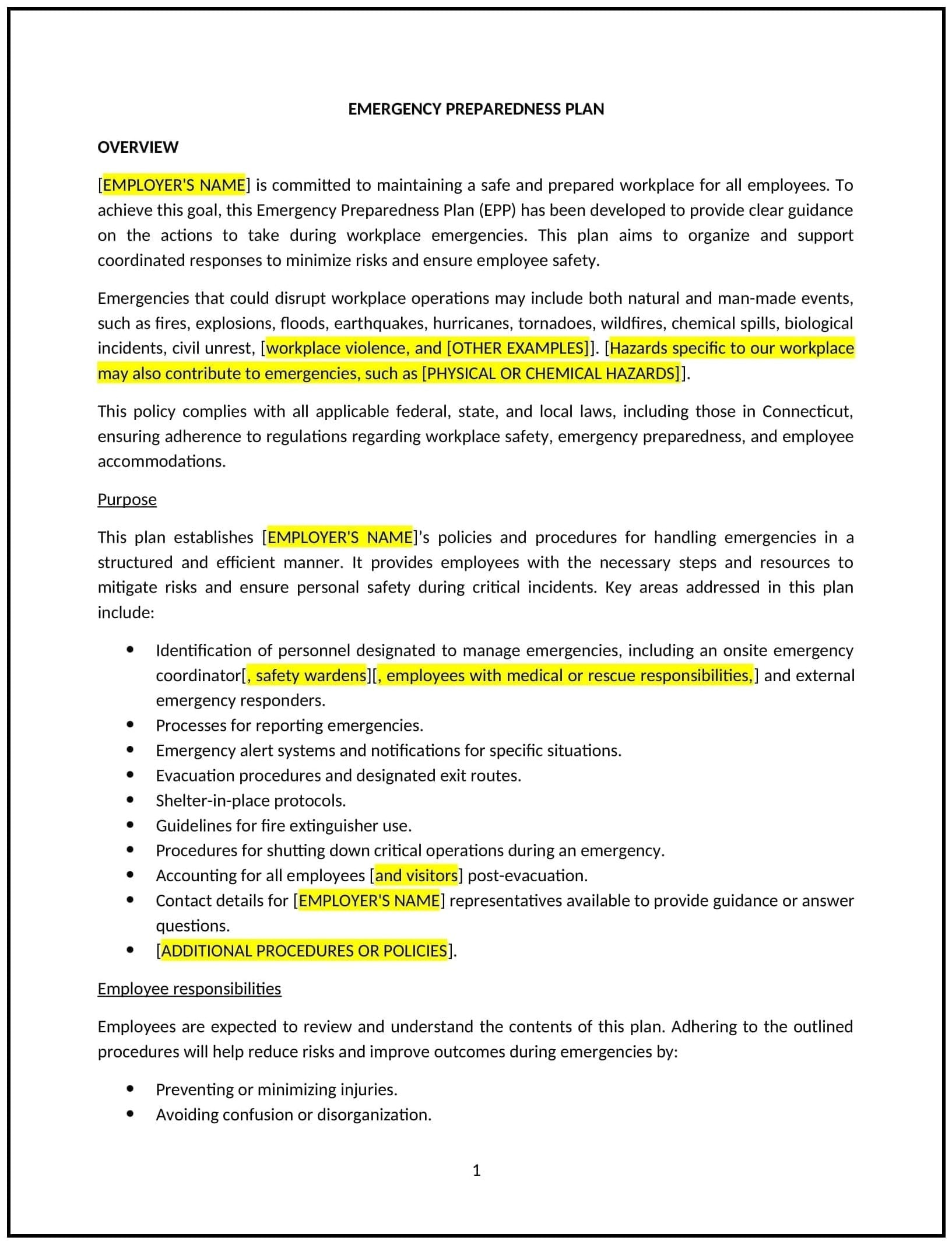
Emergency preparedness plan (Connecticut)
An emergency preparedness plan helps Connecticut businesses establish clear procedures for responding to various emergencies, including natural disasters, fires, medical emergencies, or security threats. This policy outlines the steps to take before, during, and after an emergency to protect employees, minimize damage, and ensure business continuity.
By implementing this plan, businesses can ensure a swift and coordinated response to emergencies, reduce risks to employees and assets, and maintain operational resilience.
How to use this emergency preparedness plan (Connecticut)
- Define emergency scenarios: Identify potential emergencies that could impact the business, such as fires, floods, power outages, medical emergencies, or workplace violence.
- Establish roles and responsibilities: Assign specific roles and responsibilities to employees, including who will lead the response, who will communicate with external agencies, and who will ensure employee safety.
- Develop response procedures: Outline clear and actionable steps for each type of emergency, including evacuation routes, emergency contacts, and first aid procedures.
- Create communication protocols: Establish a communication plan to inform employees of emergencies, both in the workplace and remotely, and to maintain contact with first responders and external authorities.
- Review and practice: Conduct regular drills and training to ensure that employees are familiar with the emergency response procedures and know what to do in case of an emergency.
Benefits of using this emergency preparedness plan (Connecticut)
This plan offers several benefits for Connecticut businesses:
- Protects employee safety: Ensures that employees are prepared for emergencies and know how to respond quickly to minimize harm.
- Minimizes damage: Helps the business reduce the potential damage to assets, facilities, and operations by having a clear, organized response.
- Supports business continuity: Improves the company’s ability to continue operations even during or after an emergency, ensuring minimal disruption to services.
- Meets legal requirements: Complies with workplace safety regulations and local emergency response guidelines, reducing the risk of legal liabilities.
- Boosts employee confidence: Demonstrates the company’s commitment to safety, which can improve employee morale and retention.
Tips for using this emergency preparedness plan (Connecticut)
- Communicate the plan clearly: Ensure all employees are aware of the emergency preparedness plan, their roles, and the procedures for various emergency scenarios.
- Conduct regular training: Provide ongoing training and drills to keep employees informed and ready to respond effectively in an emergency.
- Review and update regularly: Reassess the plan periodically to ensure it remains relevant and up to date with new risks, business operations, or changes in Connecticut laws.
- Engage external resources: Work with local authorities, emergency responders, and insurance providers to align the plan with local safety regulations and resources.
- Monitor and adjust: After each emergency drill or actual event, review the plan's effectiveness and make adjustments as needed to improve future responses.