Emergency preparedness plan (Florida): Free template
Got contracts to review? While you're here for policies, let Cobrief make contract review effortless—start your free review now.
Customize this template for free
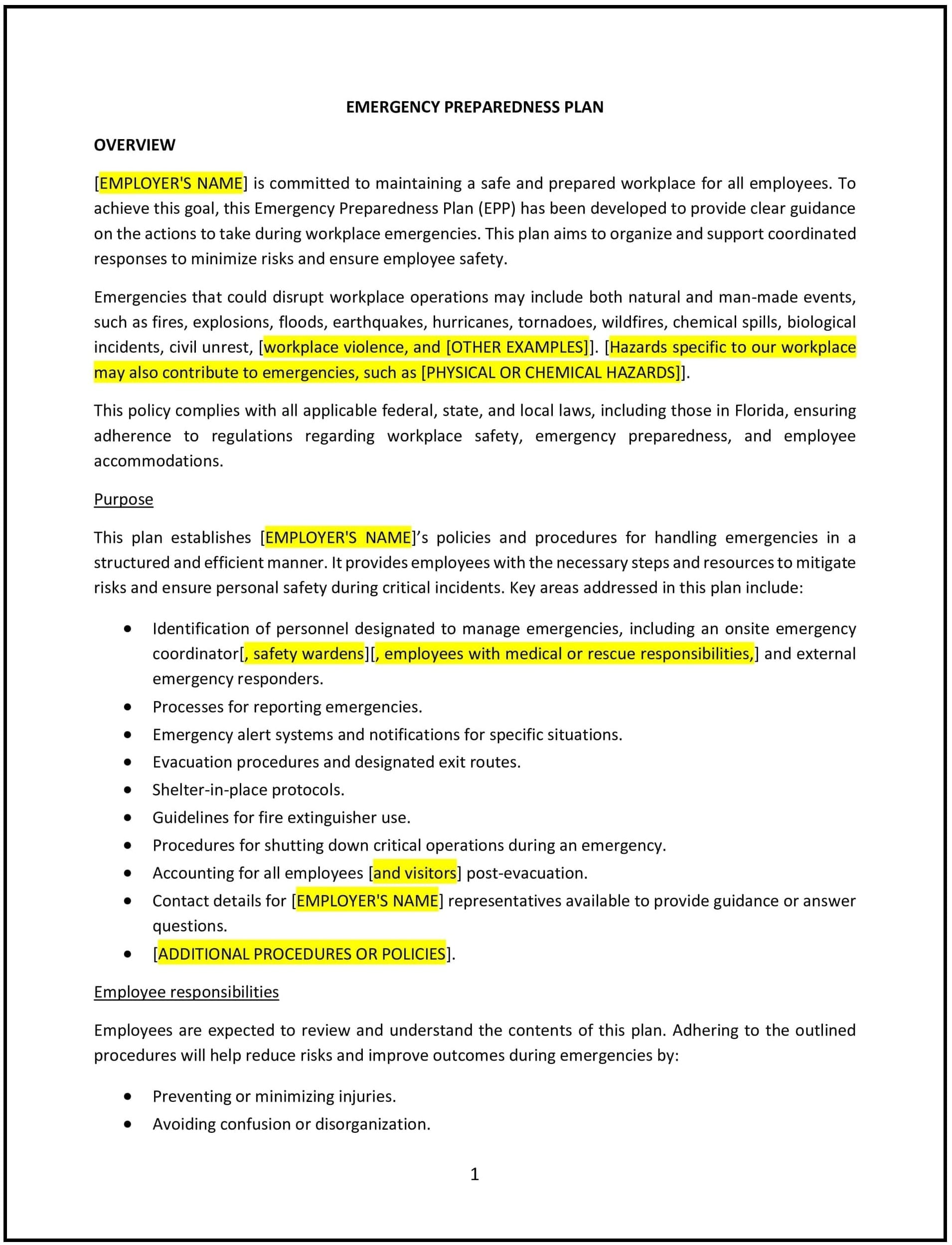
Emergency preparedness plan (Florida)
An emergency preparedness plan helps Florida businesses prepare for and respond to unforeseen events such as natural disasters, accidents, or other emergencies. This policy outlines the steps the company will take to ensure the safety of employees, protect company assets, and ensure continuity of operations during and after an emergency. The plan includes procedures for evacuation, communication, and recovery, as well as designated roles and responsibilities for key personnel.
By implementing this policy, businesses can minimize the impact of emergencies, ensure employee safety, and maintain operational resilience in the face of unexpected events.
How to use this emergency preparedness plan (Florida)
- Identify potential emergencies: Clearly define the types of emergencies that may impact the business, such as hurricanes, floods, fires, medical emergencies, or workplace violence. The plan should address both natural disasters and man-made emergencies.
- Develop response procedures: Outline step-by-step procedures for responding to each type of emergency, including evacuation routes, shelter locations, and emergency contacts. Ensure that all employees are familiar with these procedures.
- Assign roles and responsibilities: Designate specific individuals or teams to be responsible for managing emergency situations. This may include leadership roles, first responders, and other employees tasked with ensuring safety and coordinating efforts during an emergency.
- Establish communication protocols: Set up a communication system to keep employees informed during an emergency, including how to contact employees in case of evacuation or relocation. This should include both internal communication (e.g., company-wide notifications) and external communication (e.g., contacting authorities, media, or clients).
- Create an evacuation plan: Develop and communicate evacuation procedures, including assembly points, emergency exits, and transportation plans. Ensure that employees with disabilities or other special needs have accommodations during evacuations.
- Prepare for business continuity: Develop a plan to continue essential operations during and after an emergency. This may include identifying critical business functions, backup systems, and alternative work locations. Ensure that employees know their roles in maintaining business continuity.
- Provide training and drills: Regularly train employees on emergency preparedness procedures, including conducting drills to ensure everyone is familiar with the plan and can act quickly in the event of an emergency.
- Review and update the plan regularly: Periodically review the emergency preparedness plan to ensure it remains effective, up-to-date, and compliant with Florida state laws and federal regulations.
Benefits of using this emergency preparedness plan (Florida)
This policy offers several benefits for Florida businesses:
- Protects employee safety: The plan ensures that employees know how to respond to emergencies, minimizing the risk of injury or harm during a crisis.
- Ensures business continuity: A well-prepared business can continue essential operations even during or after an emergency, reducing downtime and minimizing financial losses.
- Reduces risk of damage: By having a plan in place, businesses can reduce the potential for physical damage to company property, equipment, or inventory during emergencies.
- Enhances legal compliance: Many industries have regulatory requirements regarding emergency preparedness, and this policy helps ensure that businesses comply with those requirements, avoiding potential fines or penalties.
- Builds trust and credibility: A business that is prepared for emergencies is seen as more reliable by clients, partners, and employees, enhancing its reputation and fostering trust.
Tips for using this emergency preparedness plan (Florida)
- Communicate the plan clearly: Ensure that all employees are aware of the emergency preparedness plan, understand their roles in an emergency, and know where to find the necessary resources and information.
- Provide regular training: Offer regular training sessions and emergency drills to ensure employees are prepared to act quickly and effectively in the event of an emergency.
- Monitor and update: Regularly review and update the plan to account for changes in the business environment, new potential risks, or changes in Florida laws or regulations. Make sure all updates are communicated to employees.
- Test the plan: Conduct periodic tests of the plan, including evacuation drills and scenario-based exercises, to ensure that employees are comfortable with the procedures and can respond effectively under pressure.
- Collaborate with local authorities: Work with local emergency services to ensure the plan aligns with community resources and protocols, and ensure that employees know how to access external help if needed.