Got contracts to review? While you're here for policies, let Cobrief make contract review effortless—start your free review now.
Customize this template for free
Emergency preparedness plan (Iowa)
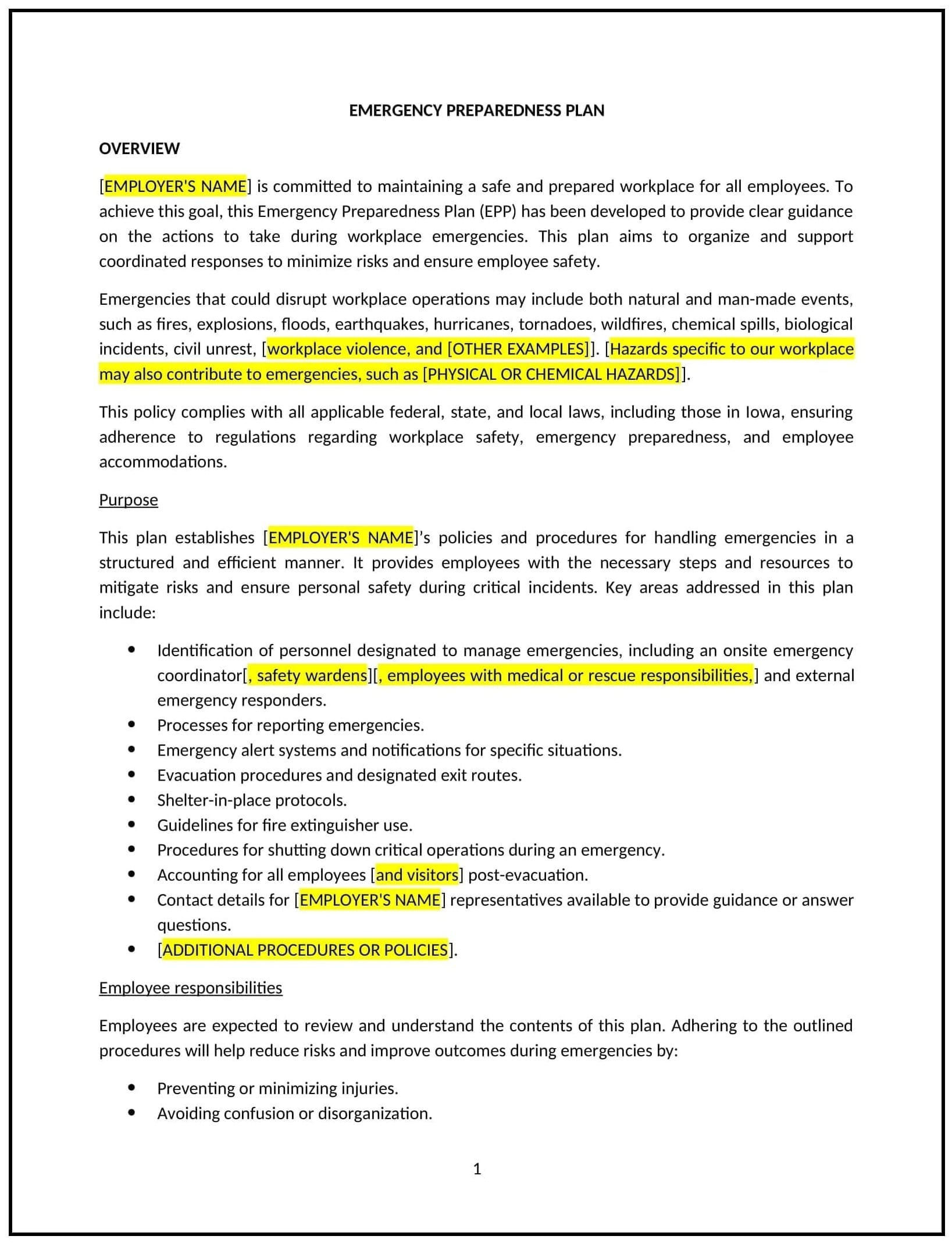
An emergency preparedness plan helps Iowa businesses establish clear procedures for responding to emergencies such as natural disasters, fires, power outages, and workplace threats. A well-structured plan enhances employee safety, minimizes operational disruptions, and provides guidance during critical situations.
This policy outlines emergency response procedures, evacuation plans, and communication strategies to ensure employees know how to react in different emergency scenarios. It helps businesses prepare for unexpected events while maintaining business continuity.
By implementing this policy, businesses in Iowa can protect employees, reduce risks, and create a structured approach to handling emergencies effectively.
How to use this emergency preparedness plan (Iowa)
- Identify potential emergencies: Assess risks such as severe weather, fires, medical emergencies, or workplace security threats.
- Establish evacuation procedures: Define clear exit routes, designated meeting points, and roles for evacuation leaders.
- Develop communication protocols: Outline how employees will receive emergency alerts, including text notifications, emails, or loudspeaker announcements.
- Assign emergency response roles: Designate employees responsible for first aid, emergency coordination, and communication.
- Outline shelter-in-place procedures: Provide instructions for employees if they must remain indoors due to extreme weather or security threats.
- Stock emergency supplies: Maintain first aid kits, flashlights, food, water, and other essential emergency resources.
- Provide employee training: Conduct regular emergency drills and safety training sessions to ensure preparedness.
- Review and update: Regularly assess emergency response procedures and adjust based on lessons learned from drills or actual incidents.
Benefits of using this emergency preparedness plan (Iowa)
This policy offers several advantages for Iowa businesses:
- Enhances workplace safety: Helps employees respond effectively to emergencies.
- Reduces operational disruptions: Provides a structured response plan to minimize downtime.
- Improves communication: Ensures employees receive timely and accurate emergency information.
- Increases employee confidence: Gives employees clear steps to follow during critical situations.
- Supports business continuity: Helps businesses resume operations quickly after an emergency.
- Strengthens risk management: Reduces liability by preparing for potential workplace hazards.
Tips for using this emergency preparedness plan (Iowa)
- Conduct regular drills: Businesses should schedule fire drills, evacuation exercises, and emergency response training.
- Maintain updated emergency contacts: Businesses should ensure emergency contact lists are accurate and accessible.
- Use multiple communication channels: Businesses should send alerts through email, text messages, and loudspeaker systems.
- Establish clear leadership roles: Businesses should assign emergency coordinators to manage responses and guide employees.
- Keep emergency supplies stocked: Businesses should check first aid kits and emergency equipment regularly.
- Adjust plans based on feedback: Businesses should update emergency procedures after drills or real incidents.