Emergency preparedness plan (Kansas): Free template
Got contracts to review? While you're here for policies, let Cobrief make contract review effortless—start your free review now.
Customize this template for free
Emergency preparedness plan (Kansas)
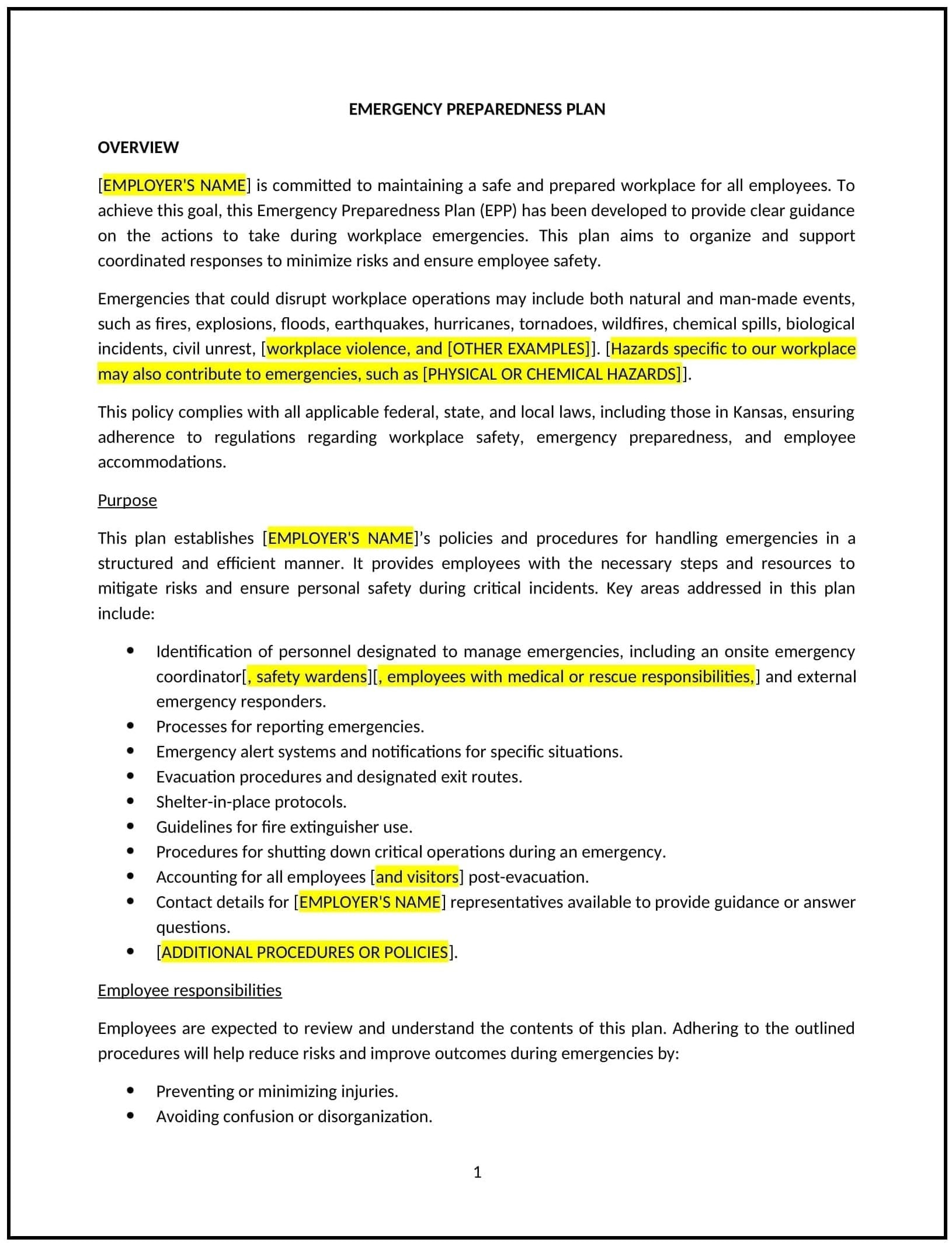
An emergency preparedness plan helps Kansas businesses prepare for unexpected events, such as natural disasters, fires, medical emergencies, or other crises. This policy outlines the procedures, roles, and resources needed to protect employees, customers, and assets during an emergency.
By implementing this plan, businesses can minimize risks, ensure a quick and effective response, and promote a safe working environment in the event of an emergency.
How to use this emergency preparedness plan (Kansas)
- Identify potential risks: Businesses should assess common risks specific to their location and industry, such as tornadoes, floods, fires, or medical emergencies, and plan accordingly.
- Define emergency procedures: Businesses should outline specific actions to take during an emergency, such as evacuation routes, shelter-in-place protocols, and emergency contact procedures.
- Assign roles and responsibilities: Businesses should designate emergency response teams, including employees responsible for directing evacuations, providing first aid, or communicating with emergency services.
- Create communication plans: Businesses should establish clear communication protocols for informing employees, clients, and emergency responders during a crisis, ensuring that everyone knows how to access critical information.
- Maintain emergency supplies: Businesses should keep emergency kits stocked with first-aid supplies, flashlights, batteries, food, water, and other essential items needed during an emergency.
- Test and practice regularly: Businesses should conduct drills and tests to ensure that employees are familiar with emergency procedures and that the plan functions effectively.
- Review and update regularly: Businesses should periodically review and update the emergency preparedness plan to reflect new risks, changes in the workplace, or lessons learned from drills or real events.
Benefits of using an emergency preparedness plan (Kansas)
- Enhances safety: Provides a clear framework for protecting employees and visitors during emergencies, minimizing harm.
- Improves response times: Clearly defined roles and procedures help businesses respond quickly and efficiently during a crisis.
- Reduces business disruption: Having a plan in place helps businesses continue operations or recover quickly after an emergency.
- Increases employee confidence: Employees feel safer and more secure knowing there are clear procedures in place to protect them in an emergency.
- Supports legal and regulatory compliance: Having an emergency preparedness plan helps businesses meet safety and emergency management requirements under state and federal laws.
- Promotes continuity of operations: Helps businesses plan for business continuity, ensuring that critical operations can resume swiftly after an emergency.
Tips for using this emergency preparedness plan (Kansas)
- Conduct regular risk assessments: Businesses should assess risks regularly, especially if the environment or operational activities change, to ensure the plan is relevant.
- Educate employees: Businesses should provide training to employees on emergency procedures, including evacuation routes, first aid, and how to use emergency equipment.
- Include employees in planning: Involve employees in developing and refining the emergency preparedness plan to ensure it is comprehensive and practical.
- Establish clear communication: Businesses should make sure employees know how to communicate during an emergency, including how to access emergency contact information and updates.
- Keep emergency kits up to date: Businesses should regularly check that emergency supplies are stocked, functional, and up to date with current needs.
- Evaluate after incidents: After an emergency or drill, businesses should evaluate the plan’s effectiveness and make necessary adjustments.