Emergency preparedness plan (Kentucky): Free template
Got contracts to review? While you're here for policies, let Cobrief make contract review effortless—start your free review now.
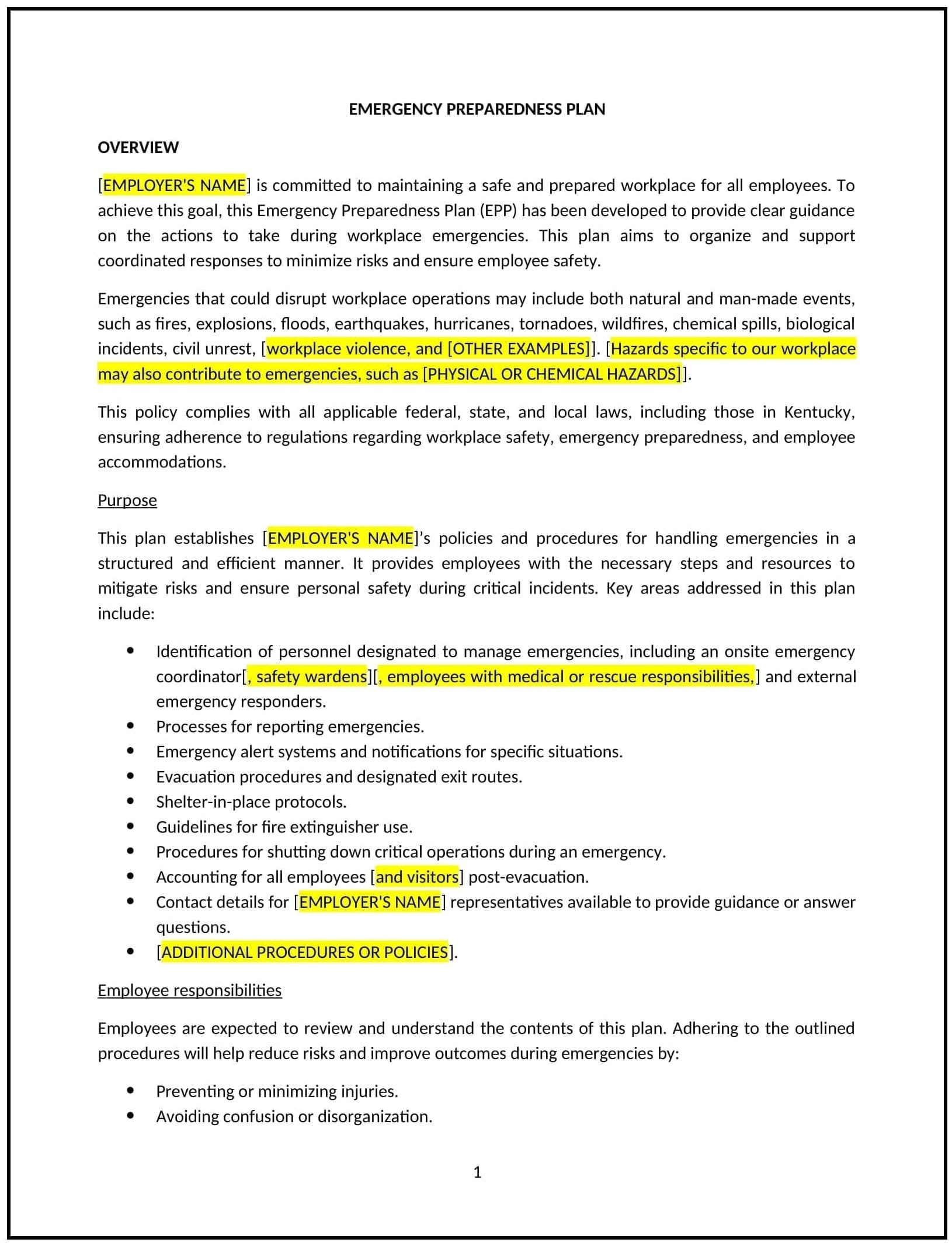
Customize this template for free
Emergency preparedness plan (Kentucky)
An emergency preparedness plan outlines the procedures and protocols Kentucky businesses follow in response to emergencies, including natural disasters, workplace accidents, or other unforeseen events. This plan ensures that employees know how to react in emergency situations, maintain safety, and minimize disruption to business operations.
By adopting this plan, businesses can enhance employee safety, reduce risks, and ensure quick, coordinated responses during emergencies.
How to use this emergency preparedness plan (Kentucky)
- Define emergency scenarios: Identify the types of emergencies covered by the plan, such as fires, floods, earthquakes, medical emergencies, or active shooter situations.
- Establish roles and responsibilities: Specify the responsibilities of key personnel, such as emergency coordinators, safety officers, and department heads, during an emergency.
- Create evacuation procedures: Provide clear instructions on evacuation routes, assembly points, and transportation options to ensure safe movement of employees.
- Develop communication protocols: Outline how employees will be informed of emergencies, including phone trees, emergency alert systems, or mass communication tools.
- Set up emergency supplies: Ensure that the business has essential emergency supplies, such as first-aid kits, flashlights, and emergency food and water, readily available.
- Provide training and drills: Conduct regular emergency preparedness training sessions and drills to familiarize employees with procedures and identify any gaps.
- Address business continuity: Outline how the business will continue to operate or recover after an emergency, including backup plans for data, equipment, and facilities.
Benefits of using this emergency preparedness plan (Kentucky)
This plan offers several key benefits for Kentucky businesses:
- Protects employees: Helps safeguard the health and safety of employees during emergencies by providing clear instructions and support.
- Minimizes business disruption: Ensures that critical operations can continue or resume quickly after an emergency.
- Reduces legal risks: Establishes procedures for handling emergencies in a way that meets safety regulations and reduces liability.
- Promotes employee confidence: Shows that the business is prepared to protect employees, which can enhance morale and retention.
- Supports compliance with regulations: Meets Kentucky state and federal requirements for emergency preparedness and workplace safety.
Tips for using this emergency preparedness plan (Kentucky)
- Communicate the plan: Share the emergency preparedness plan with all employees, ensuring they understand their roles and the procedures to follow.
- Conduct regular drills: Hold regular emergency drills to familiarize employees with the plan and identify any necessary adjustments.
- Review the plan periodically: Regularly assess the plan’s effectiveness and make updates as needed, especially after an emergency or drill.
- Include leadership involvement: Ensure that leadership is actively involved in planning and response efforts, providing guidance and decision-making.
- Collaborate with local authorities: Work with local emergency services to ensure the plan aligns with community resources and practices.