Emergency preparedness plan (Mississippi): Free template
Got contracts to review? While you're here for policies, let Cobrief make contract review effortless—start your free review now.
Customize this template for free
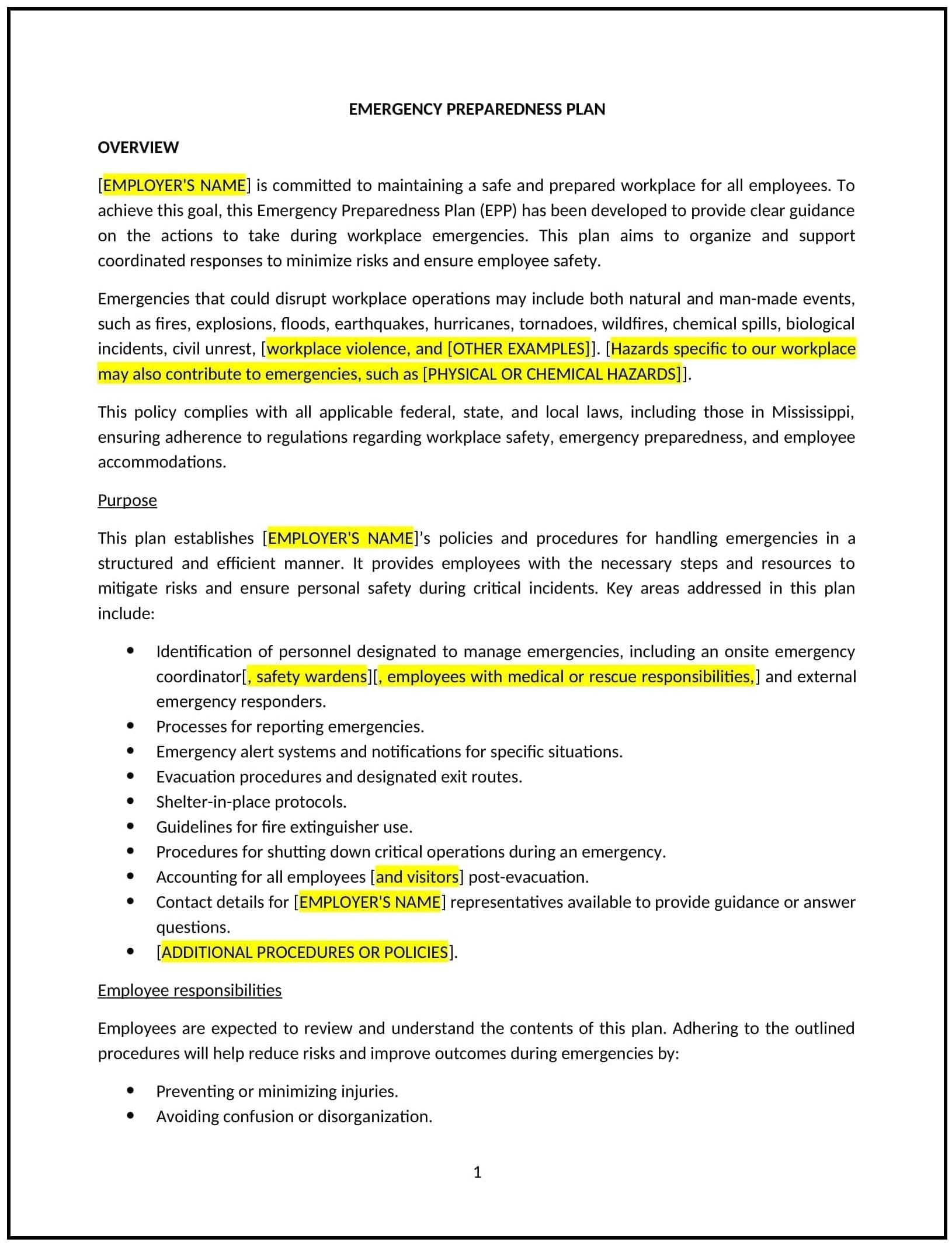
Emergency preparedness plan (Mississippi)
An emergency preparedness plan helps Mississippi businesses develop procedures for handling various emergencies, ensuring the safety and well-being of employees, clients, and visitors. This plan outlines how to respond to situations such as natural disasters, workplace accidents, fires, or other crises, providing a structured approach to minimize risks and protect resources.
By implementing an emergency preparedness plan, businesses can ensure a swift and coordinated response during emergencies, reduce potential harm, and promote a culture of safety within the workplace.
How to use this emergency preparedness plan (Mississippi)
- Identify potential risks: Begin by identifying the types of emergencies that may occur in your business environment, such as fires, floods, medical emergencies, power outages, or security threats.
- Develop response procedures: For each identified risk, establish clear response procedures that outline the steps employees should take to protect themselves and others. This may include evacuation plans, first aid protocols, and communication strategies.
- Assign roles and responsibilities: Designate individuals or teams who will take charge during emergencies. These roles could include first responders, evacuation leaders, or safety officers.
- Provide training and drills: Regularly train employees on the emergency procedures and hold drills to ensure that everyone is familiar with the plan and knows how to act during an emergency.
- Establish communication systems: Set up reliable communication methods for notifying employees about emergencies, such as alarms, text alerts, or public address systems.
- Create evacuation plans: Develop evacuation routes and assembly points, ensuring that all employees are familiar with them. Consider accessibility needs for individuals with disabilities or other special requirements.
- Ensure resources are in place: Stock emergency supplies such as first aid kits, fire extinguishers, flashlights, and other necessary equipment.
- Maintain continuity of operations: Develop plans for business continuity, including backup power sources and off-site data storage, to minimize downtime and protect critical business functions during and after an emergency.
- Review and update regularly: Regularly review the plan to account for new risks, changes in the workplace environment, or changes in personnel.
Benefits of using this emergency preparedness plan (Mississippi)
This policy offers several benefits for Mississippi businesses:
- Protects employees and customers: Having an emergency preparedness plan in place ensures that businesses can respond quickly and effectively to protect their employees, customers, and visitors from harm.
- Reduces damage and downtime: A well-prepared response can help minimize damage to property, reduce the impact of disruptions, and speed up the recovery process after an emergency.
- Promotes workplace safety: Businesses with a clear emergency plan create a safer work environment by ensuring that employees understand the steps they should take to protect themselves during emergencies.
- Improves legal compliance: Having an emergency preparedness plan helps businesses meet safety regulations and industry standards, reducing the risk of legal liabilities following an emergency.
- Enhances business resilience: A business with a solid emergency plan is better equipped to handle unexpected events and continue operations with minimal interruptions, ensuring long-term resilience.
Tips for using this emergency preparedness plan (Mississippi)
- Communicate the plan effectively: Ensure all employees are familiar with the emergency preparedness plan, its procedures, and their roles in an emergency. Regular communication and reminders are key.
- Train employees regularly: Conduct regular training sessions and drills to ensure that employees know what to do in an emergency. This includes understanding evacuation routes, first aid protocols, and how to use emergency equipment.
- Make the plan accessible: Keep the emergency preparedness plan easily accessible to all employees, such as in the employee handbook, on the company intranet, or posted in common areas.
- Keep up with changes: Update the plan regularly to reflect changes in the workplace, such as new employees, changes in the physical environment, or new potential risks.
- Test and improve the plan: Regularly evaluate the effectiveness of the plan by conducting drills and reviewing the outcomes. Make adjustments as needed to improve response times and ensure the plan's success.