Emergency preparedness plan (Missouri): Free template
Got contracts to review? While you're here for policies, let Cobrief make contract review effortless—start your free review now.
Customize this template for free
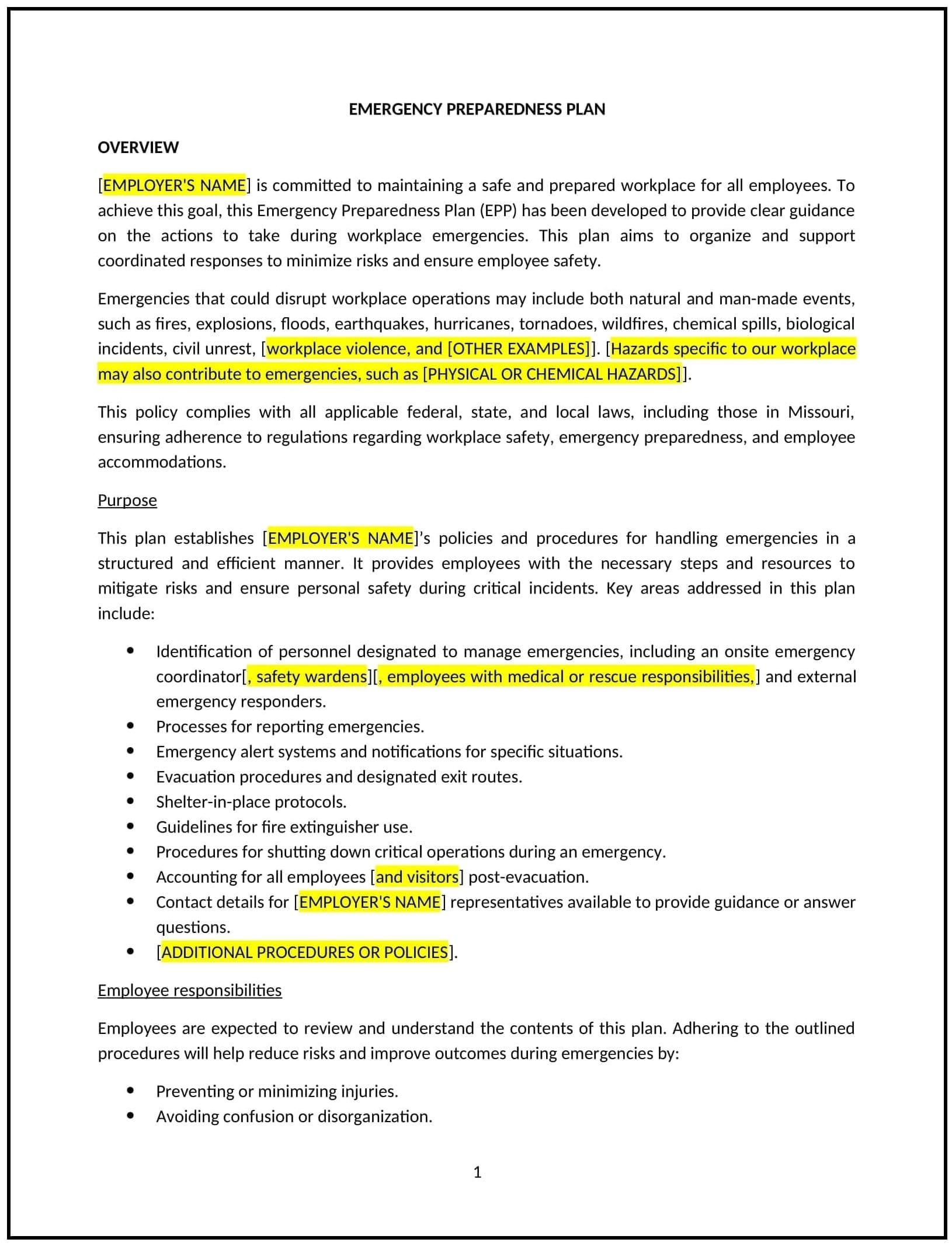
Emergency preparedness plan (Missouri)
An emergency preparedness plan helps businesses in Missouri prepare for, respond to, and recover from emergencies or disasters that could impact operations. This policy outlines procedures for responding to various emergencies, such as natural disasters, fire, medical emergencies, or workplace accidents. It provides employees with clear instructions on how to act in the event of an emergency, how to ensure their safety, and how to minimize potential business disruptions.
By adopting this policy, businesses in Missouri can improve workplace safety, protect employees, and ensure continuity of operations in the face of unexpected events.
How to use this emergency preparedness plan (Missouri)
- Identify potential emergencies: Clearly outline the types of emergencies that could impact the workplace, including natural disasters, fire, chemical spills, medical emergencies, or active shooter situations.
- Develop response procedures: Specify the steps employees should take during each type of emergency, including evacuation plans, shelter-in-place procedures, first aid response, and emergency contact information.
- Designate emergency response teams: Identify specific employees or teams responsible for coordinating emergency response efforts, such as fire safety officers, first responders, or evacuation leaders.
- Provide training and drills: Offer regular training sessions and conduct emergency drills to ensure that all employees understand the procedures and know how to react in an emergency situation.
- Set communication protocols: Outline how employees will receive emergency notifications (e.g., alarms, text messages) and establish procedures for notifying emergency services, family members, or other stakeholders.
- Establish recovery procedures: Develop steps for recovering business operations after an emergency, including data backup procedures, supply chain management, and employee support services.
- Review and update the plan regularly: Periodically review and update the emergency preparedness plan to reflect changes in business operations, employee roles, or Missouri state regulations.
Benefits of using this emergency preparedness plan (Missouri)
This policy provides several benefits for businesses in Missouri:
- Enhances workplace safety: A well-prepared emergency plan helps protect employees during emergencies, reducing injuries and ensuring a safe working environment.
- Minimizes business disruption: Clear procedures for dealing with emergencies allow businesses to resume operations as quickly as possible, minimizing downtime and financial loss.
- Reduces legal risks: Having a formal emergency preparedness plan demonstrates that the business has taken proactive steps to protect employees and comply with safety regulations.
- Builds employee confidence: Employees who are well-trained and informed about emergency procedures feel more secure in the workplace, leading to improved morale and productivity.
- Protects business assets: The plan helps businesses safeguard physical and intellectual assets during emergencies, ensuring that important data, equipment, and infrastructure are protected.
- Aligns with Missouri’s safety standards: This policy ensures that businesses adhere to Missouri’s health and safety regulations, helping companies meet both state and federal preparedness requirements.
Tips for using this emergency preparedness plan (Missouri)
- Communicate the plan clearly: Ensure that all employees are familiar with the emergency preparedness plan by providing training, distributing materials, and displaying key procedures in accessible locations.
- Conduct regular drills: Regularly conduct emergency drills to test the effectiveness of the plan and ensure employees are familiar with the procedures and can react quickly in an emergency.
- Designate responsible personnel: Identify specific individuals or teams responsible for managing emergency response, ensuring that everyone knows who to turn to in the event of an emergency.
- Update the plan regularly: Regularly review the plan and update it based on any changes in business operations, new risks, or changes in Missouri state or federal regulations.
- Ensure accessibility: Make sure that the emergency preparedness plan is accessible to all employees, including those with disabilities, and that the necessary accommodations are made for all individuals.
- Prepare for business continuity: Plan for recovery by establishing procedures for critical operations, such as maintaining business records, securing backup power, or contacting suppliers and customers during an emergency.