Got contracts to review? While you're here for policies, let Cobrief make contract review effortless—start your free review now.
Customize this template for free
Employee referral policy (Colorado)
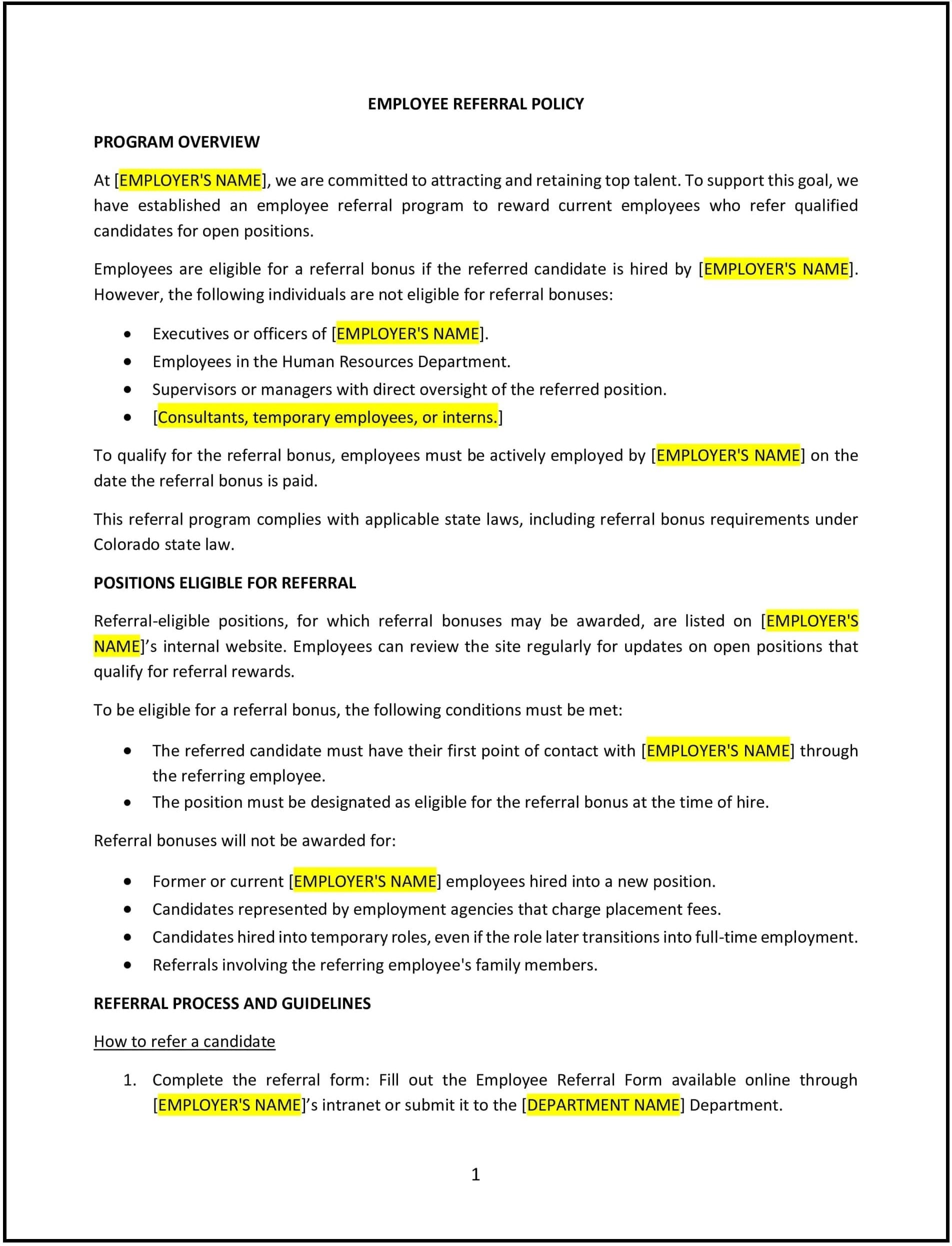
In Colorado, an employee referral policy provides businesses with guidelines for encouraging and managing employee referrals for open positions. This policy supports businesses in attracting top talent by leveraging the networks of current employees. It also outlines how referral programs will be structured, including rewards, eligibility, and the process for submitting referrals. The policy ensures that the business attracts diverse candidates while promoting internal employee engagement.
By implementing this policy, Colorado businesses can streamline the hiring process, increase employee involvement in recruitment, and benefit from quality candidate recommendations from trusted sources.
How to use this employee referral policy (Colorado)
- Define referral eligibility: Clearly state who can participate in the referral program, typically including all employees, and define any exclusions or conditions that apply (e.g., hiring managers may not refer candidates for positions they oversee).
- Offer incentives: Specify the rewards or incentives employees will receive for successful referrals, which can include monetary bonuses, gift cards, or additional time off, based on the level of the position filled.
- Set guidelines for referrals: Outline the process employees should follow to submit referrals, such as completing a referral form, submitting candidate resumes, and providing supporting details to help assess the candidate.
- Manage confidentiality: Address confidentiality concerns, ensuring that personal and sensitive information provided through referrals is handled with respect and kept confidential.
- Establish follow-up procedures: Define how referrals will be reviewed and followed up on, including timelines for acknowledgment, interviews, and feedback for employees who made the referrals.
- Ensure compliance with non-discrimination laws: Clearly state that the referral program will be conducted in compliance with Colorado’s anti-discrimination laws, ensuring that all referrals are treated fairly.
Benefits of using this employee referral policy (Colorado)
This policy offers several advantages for Colorado businesses:
- Supports compliance: Supports compliance with Colorado’s non-discrimination laws and ensures a fair and transparent hiring process.
- Improves candidate quality: Referrals often lead to higher-quality candidates who are familiar with the company culture and values, improving the overall hiring process.
- Boosts employee engagement: Involving employees in recruitment through referrals fosters a sense of ownership and pride in the hiring process, increasing job satisfaction and morale.
- Reduces hiring costs: Referral programs can reduce the time and resources spent on external recruitment efforts and advertising, streamlining the hiring process.
- Expands network: Taps into employees’ professional networks, expanding the talent pool beyond traditional recruitment methods and often attracting candidates who might not otherwise apply.
Tips for using this employee referral policy (Colorado)
- Reflect Colorado-specific laws: Ensure the policy complies with Colorado’s laws on non-discrimination and labor practices, promoting a fair and equal hiring process for all candidates.
- Communicate the policy clearly: Regularly communicate the referral program details to employees, making sure they understand how to refer candidates and the rewards they can earn.
- Monitor and evaluate: Track the effectiveness of the referral program, including how many hires are made through referrals and the quality of these candidates, to optimize the program over time.
- Encourage diverse referrals: Promote diversity in the referral program by encouraging employees to refer candidates from different backgrounds, ensuring a diverse applicant pool.
- Review regularly: Periodically assess the policy to reflect any changes in recruitment strategies, legal requirements, or business goals.