Employee referral policy (Connecticut): Free template
Got contracts to review? While you're here for policies, let Cobrief make contract review effortless—start your free review now.
Customize this template for free
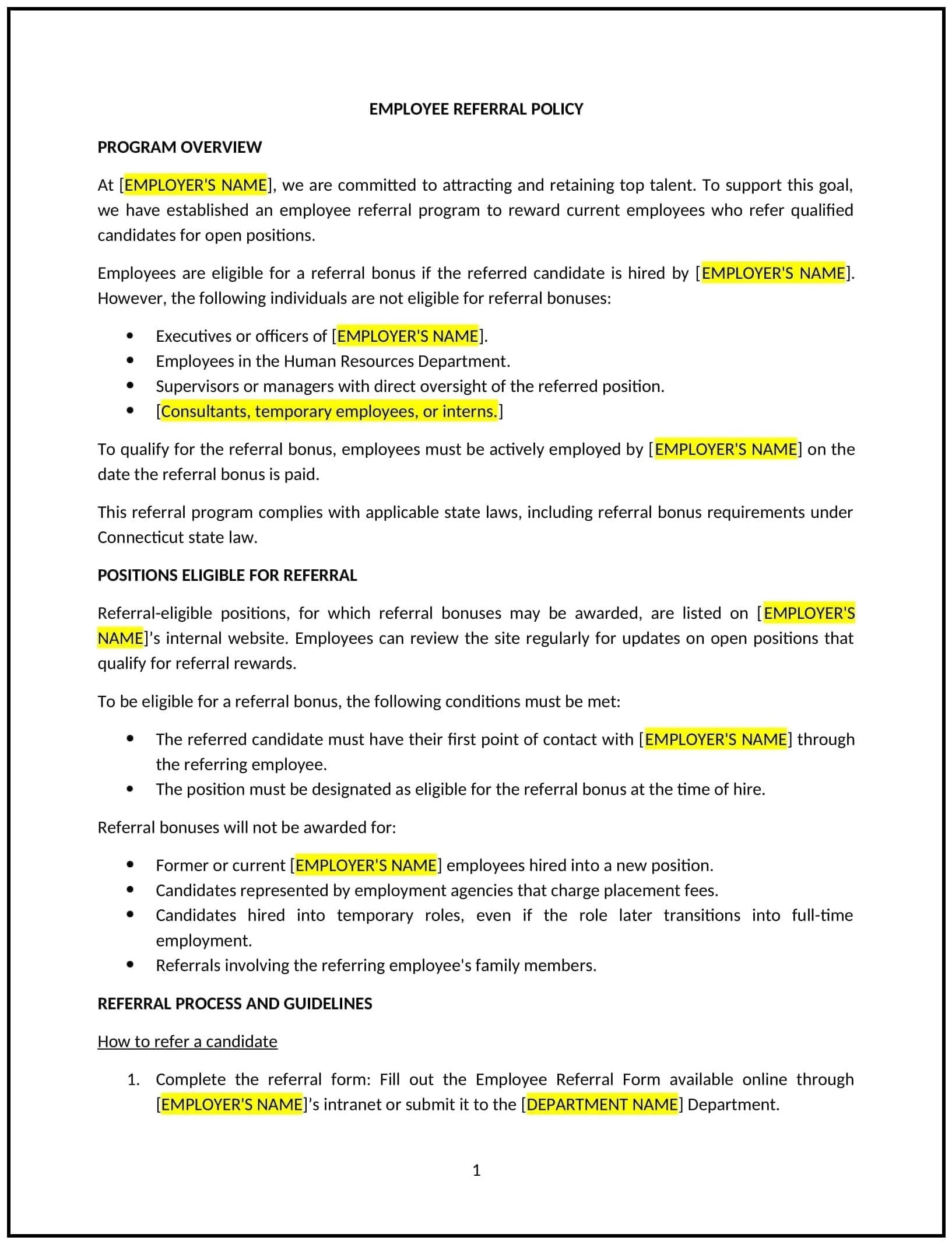
Employee referral policy (Connecticut)
An employee referral policy helps Connecticut businesses encourage current employees to recommend candidates for open positions. This policy outlines the process for submitting referrals, the incentives for employees who refer successful candidates, and the guidelines for ensuring fairness and consistency in the referral program.
By implementing this policy, businesses can tap into their employees' networks, attract top talent, and improve the recruitment process while maintaining transparency and equity.
How to use this employee referral policy (Connecticut)
- Define eligibility: Specify which employees are eligible to participate in the referral program, including any exclusions (e.g., HR or hiring managers).
- Set referral guidelines: Outline how referrals should be submitted, including the format (e.g., through a referral form or email) and any necessary information (e.g., resume or candidate details).
- Establish incentives: Clearly define the rewards or incentives for employees whose referrals result in successful hires, such as monetary bonuses, gift cards, or other benefits.
- Ensure fairness: Provide guidelines for how referrals will be evaluated and how the hiring process will remain fair and transparent. Avoid favoritism or biases in selecting candidates.
- Track and communicate progress: Set up a system for tracking referred candidates and communicate the outcome to the referring employee, ensuring they know the status of their referral.
Benefits of using this employee referral policy (Connecticut)
This policy offers several benefits for Connecticut businesses:
- Expands the talent pool: Taps into employees' personal and professional networks, helping the business access qualified candidates who may not be reached through traditional recruitment methods.
- Reduces recruitment costs: Employee referrals often reduce advertising and agency fees associated with recruiting, saving the business money.
- Improves retention: Candidates hired through referrals are often a better cultural fit and have higher retention rates, leading to long-term success for both the employee and the company.
- Enhances employee engagement: Engaging employees in the hiring process boosts morale and fosters a sense of ownership in the company’s growth.
- Encourages diversity: A well-structured referral program can promote diversity by encouraging employees to recommend candidates from diverse backgrounds.
Tips for using this employee referral policy (Connecticut)
- Communicate clearly: Ensure all employees understand the referral program, the benefits, and how to submit referrals.
- Provide incentives: Offer attractive and meaningful incentives to motivate employees to participate in the referral program.
- Track and monitor: Regularly monitor the referral process to ensure that all referrals are being handled fairly and efficiently, and that the rewards are being given appropriately.
- Avoid biases: Ensure that the referral process remains equitable by evaluating all candidates based on merit and ensuring that referrals do not lead to discrimination or favoritism.
- Review periodically: Evaluate the effectiveness of the referral program regularly and make adjustments as needed to keep it engaging and beneficial for both the business and employees.